
Yoga Strap support can be the difference between “I can’t reach” and “I can practice safely,” especially when hamstrings, shoulders, or hips feel tight.
If you’ve ever yanked on a stretch, held your breath, or felt like you were forcing a pose just to “get deeper,” a strap is one of the simplest tools to bring control back. It gives you extra reach, but more importantly, it helps you keep alignment while your tissues gradually adapt.
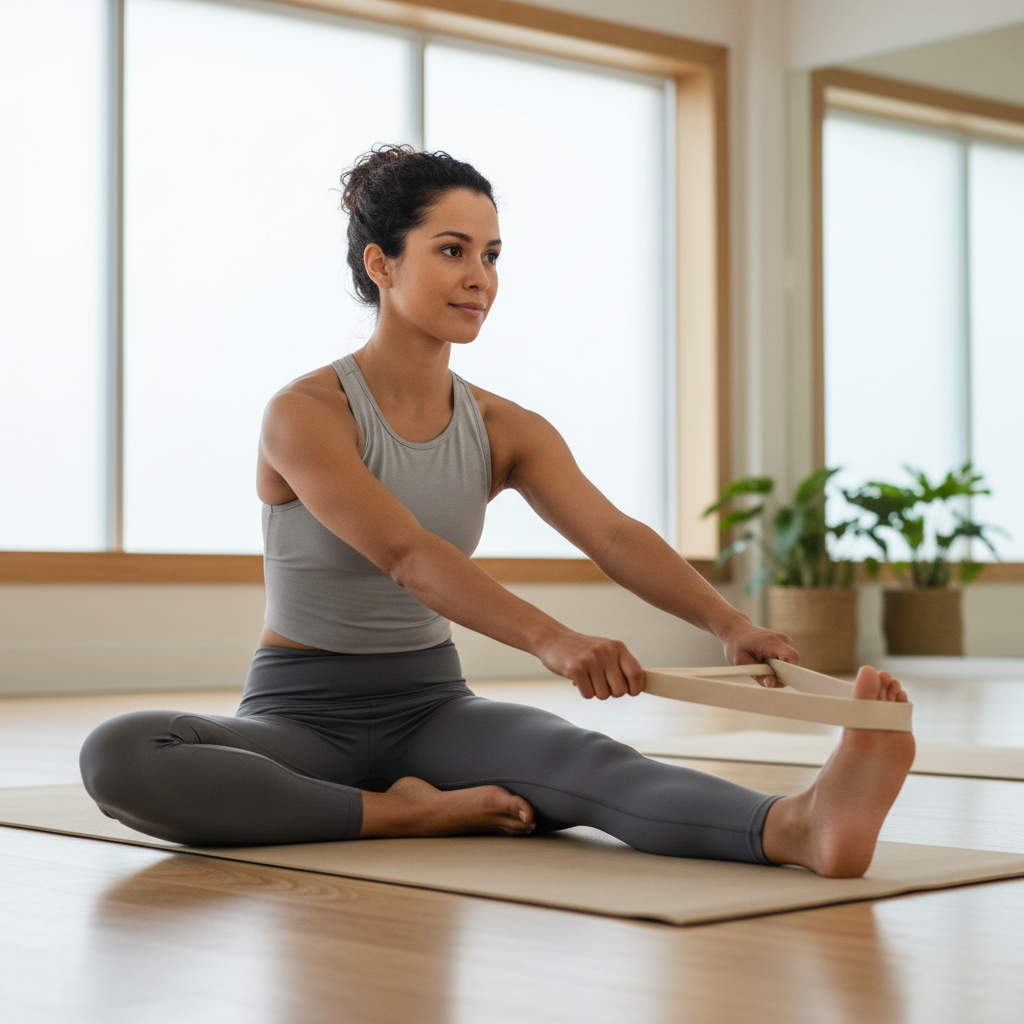
Below, you’ll get a practical way to choose a strap, a quick self-check to avoid common form mistakes, and several go-to stretches you can repeat without turning your session into a wrestling match.
Why a yoga strap helps (and when it doesn’t)
A strap works because it changes leverage. Instead of collapsing your posture to “reach,” you keep the pose shape and use the strap as an extension of your arms.
- Better alignment under tension: You can keep ribs stacked, spine long, and shoulders down while still loading the target muscle.
- Less strain on joints: Many people compensate by twisting knees, shrugging shoulders, or yanking the neck. A strap reduces that urge.
- More consistent progress: You can measure improvement by moving your hands closer on the strap over time, rather than guessing.
Where a strap may not help: sharp pain, numbness/tingling, or a “pinch” deep in a joint. In those cases, backing off and consulting a qualified clinician or physical therapist is usually smarter than adding more leverage.
Choosing the right Yoga Strap: length, material, and buckle
Most straps look similar online, yet small details matter in day-to-day use. If you buy one and stop using it, it’s often because it feels slippery, too short, or annoying to adjust.
Quick selection guide
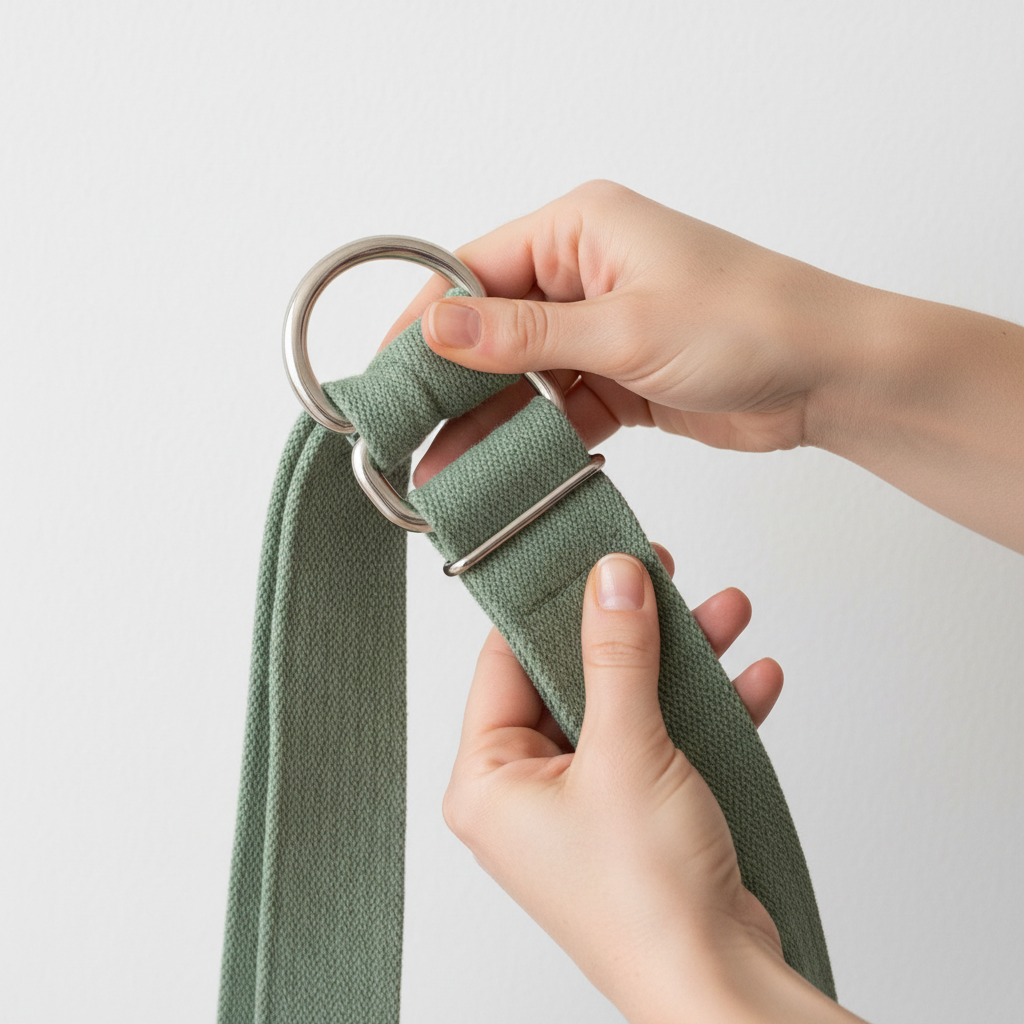
- Length: Many adults do well with 6 ft; taller users or anyone working on binds often prefer 8–10 ft.
- Width: Around 1.5 in feels comfortable in hands and distributes pressure better on feet.
- Material: Cotton tends to grip and feel less “slick.” Nylon can slide a bit, though it’s durable and easy to clean.
- Buckle: A D-ring typically locks securely; a cinch buckle adjusts fast. Either can work if it holds under load.
According to Yoga Alliance, props can support safe, accessible practice for a wide range of bodies and experience levels. In real life, the “best” strap is the one you’ll actually keep within reach and use consistently.
Self-check: are you using the strap safely?
Before adding new stretches, run this quick checklist. It catches the sneaky stuff that makes straps feel “ineffective.”
- You can breathe smoothly while holding the stretch, no breath-holding or bracing.
- Tension feels muscular (back of leg, outer hip, chest) rather than sharp joint pain.
- Shoulders stay away from ears; hands pull with control, not a jerking motion.
- Spine stays organized; you’re not rounding hard just to get “farther.”
- You can release slowly; if you spring out, you likely pulled too aggressively.
If two or more items fail, don’t “push through.” Shorten the range, use more bend in the knee or elbow, and treat the strap as a guide rather than a winch.
How to use a strap for stretching support: 6 practical moves
These are the repeats. They show up in a lot of classes because they work, and they scale well. Keep each hold around 20–45 seconds, 1–3 rounds, staying in a sensation zone you can breathe through.
1) Supine hamstring stretch (most reliable starting point)
- Lie on your back, loop strap over the ball of one foot.
- Keep the opposite leg bent or long, whichever helps your low back feel neutral.
- Raise the strapped leg until you feel a strong stretch, then soften the knee slightly.
2) Seated forward fold support (stop collapsing your chest)
- Sit tall, loop strap around feet.
- Pull gently to lengthen the spine first, then hinge forward a little.
- Think “longer,” not “lower.”
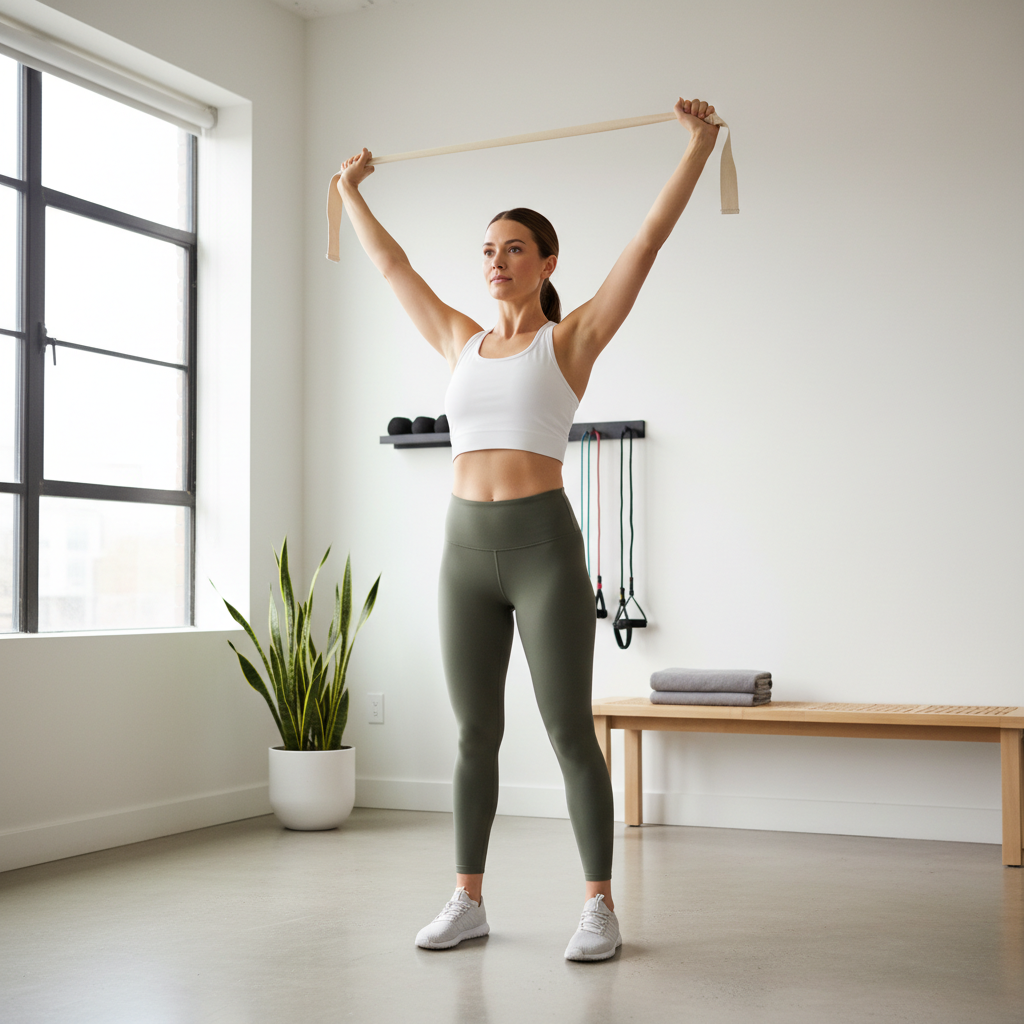
3) Shoulder opener with strap (great for desk posture)
- Hold strap overhead wider than shoulder width.
- Move arms forward and back slowly, keeping ribs from flaring.
- If it pinches the shoulder, widen your grip and reduce range.
4) Reclined figure-four (hip external rotation)
- Cross ankle over opposite thigh.
- Loop strap behind the supporting thigh and draw the legs toward you.
- Keep the crossed knee tracking outward, not collapsing in.
5) Bound angle support (butterfly without forcing)
- Soles of feet together, knees out.
- Loop strap around your low back and over the feet to create gentle “hugging” support.
- Let gravity work; avoid pressing knees down with your hands.
6) Supported quad stretch (reduce knee crank)
- From a side-lying position, loop strap around the ankle.
- Gently guide heel toward glutes while keeping hips stacked.
- If the knee complains, back off and focus on hip extension instead.
Common mistakes that stall progress
A Yoga Strap can create a false sense of “I’m being careful,” while you’re actually adding force. These are the patterns worth catching early.
- Pulling to the end range immediately: tissues respond better to gradual load, not sudden max effort.
- Chasing sensation instead of position: if posture collapses, you often stretch the wrong area.
- Over-gripping: death-grip hands and locked elbows make shoulders tense, which limits mobility.
- Ignoring asymmetry: one side usually differs; treat each side independently rather than “matching numbers.”
- Using pain as feedback: pain is a stop sign more often than a growth sign.
According to the American Council on Exercise (ACE), flexibility work is most effective when it stays controlled and avoids bouncing or aggressive end-range forcing. That advice fits strap work perfectly.
How to build a simple strap routine (10 minutes)
If you want something repeatable, keep it boring in a good way. Two lower-body stretches, one shoulder move, then one “reset” position.
- 2 minutes: Shoulder opener with strap, slow reps
- 3 minutes: Supine hamstring stretch, both sides
- 3 minutes: Reclined figure-four, both sides
- 2 minutes: Seated forward fold support, gentle hinge and breathe
Key point: you should finish feeling clearer and calmer, not “wrecked.” If you feel unstable or sore in joints afterward, reduce range and intensity next time.
Comparison table: strap vs towel vs resistance band
People substitute a towel or resistance band all the time. Sometimes it’s fine, sometimes it’s a hassle. Here’s the practical difference.
| Tool | Best for | Pros | Watch-outs |
|---|---|---|---|
| Yoga strap | Stretching support, alignment, holds | Stable grip, consistent length, easy adjustments | Too-short straps limit shoulder work |
| Towel | Occasional use, travel | Already at home, soft feel | Slips easily, hard to keep even tension |
| Resistance band | Mobility + strengthening blend | Elastic feedback, versatile for activation drills | Stretchy recoil can pull joints if you relax control |
If you already own a band, you can stretch with it, but many people prefer the strap for long holds because it doesn’t “fight back.”
When to get professional guidance
If you’re using a strap because mobility feels stuck, that’s normal. If you’re using it because something hurts or feels unstable, that’s a different category.
- Persistent sharp pain, swelling, or loss of range of motion
- Numbness, tingling, or radiating symptoms down an arm or leg
- Recent surgery, major injury, or known joint instability
- Symptoms that worsen after stretching for a week or two
In those situations, consider working with a physical therapist or a qualified yoga teacher who has experience with modifications. A small tweak in setup can matter more than “more stretching.”
Wrap-up: the goal is control, not depth
A Yoga Strap is simple, but it nudges your practice toward patience: better positions, smoother breathing, and progress you can repeat. Pick a strap that fits your body, use it to maintain alignment, and treat intensity like a dial, not a switch.
If you want one next step, try the 10-minute routine three times this week and keep notes on what feels easier, not what looks deeper.
FAQ
What length Yoga Strap should I buy for stretching?
Many people do fine with 6 ft for hamstrings and basic stretches, but 8–10 ft often feels easier for shoulder mobility and binds, especially if you’re tall or broad-shouldered.
Can I use a yoga strap if I’m a beginner?
Yes, and beginners often benefit the most because the strap reduces compensation patterns like rounding the back or shrugging shoulders. Keep the pull gentle and steady.
Is it okay to stretch harder by pulling more on the strap?
Usually no. More force can shift sensation into joints or irritate tendons. Aim for strong-but-breathable tension, and increase range gradually over days and weeks.
Should I feel pain when I use a strap?
Pain is not a requirement for flexibility gains. A deep stretch sensation can be normal, but sharp pain, pinching, or numbness suggests you should reduce range and consider professional advice.
Can a strap replace a yoga block for flexibility work?
Not always. A block supports you against the floor, while a strap extends reach or maintains alignment in mid-air. Many routines use both for different jobs.
How often should I use a yoga strap to see progress?
Many people respond well to short sessions 3–5 days a week. Consistency tends to matter more than long holds, especially if you’re trying to stay pain-free.
Why does my shoulder feel “pinchy” during strap openers?
Common causes include too-narrow grip, ribs flaring, or moving too far behind the body. Widen your hands, reduce range, and move slower; if pinching persists, get a form check.
If you’re trying to make stretching feel more controlled and less like a tug-of-war, a well-chosen strap and a simple routine usually beat random “deep stretches.” If you want a more personalized setup, a teacher or clinician can help you match strap length, angles, and poses to your body and goals.