
how to protect scalp from sun cycling comes down to two things most riders underestimate: UV gets through “open” areas (parts, thinning hair, vents), and sweat/helmet friction makes protection fail faster than you expect.
If you’ve ever finished a ride with a tender part line, red patches near your hairline, or scalp flaking a day later, you already know it’s not just a cosmetic issue. Sunburn on the scalp can make helmets feel miserable, trigger itching, and keep you off the bike for a few days.
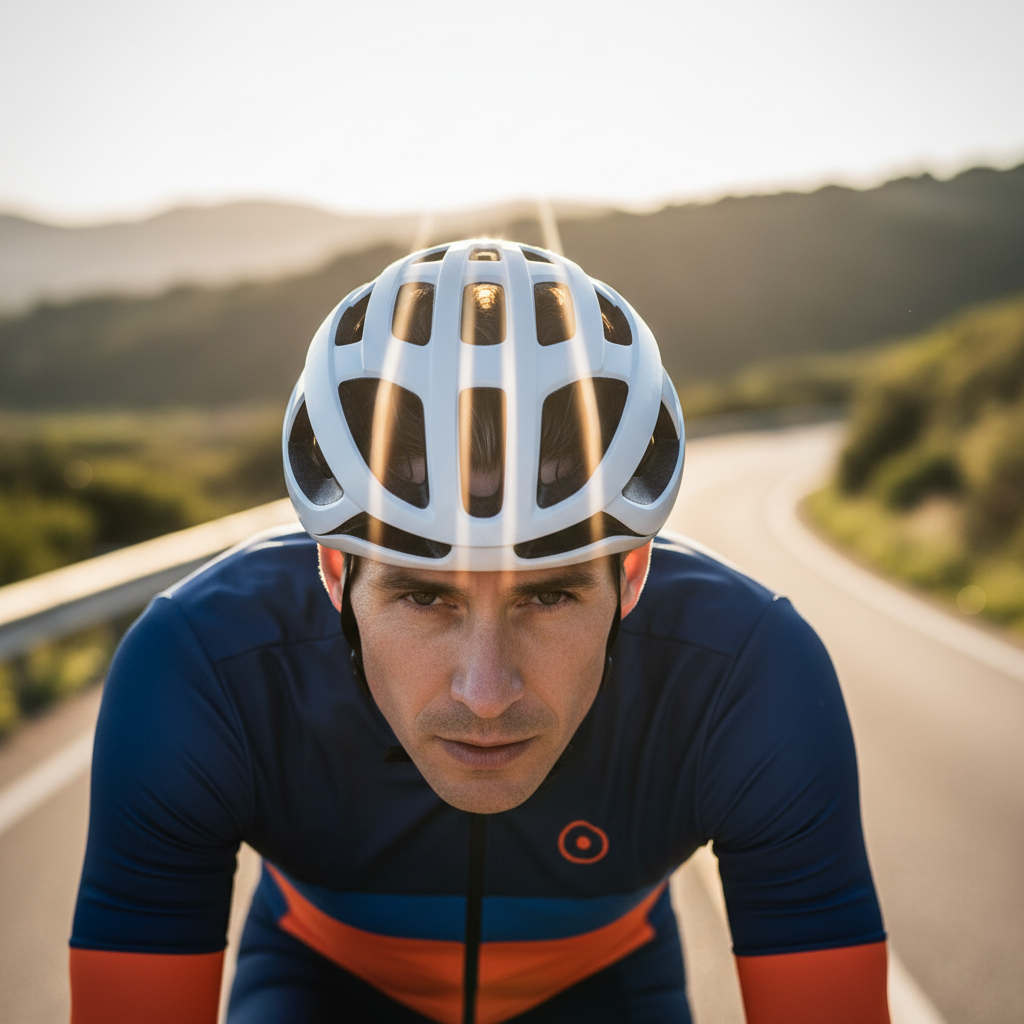
This guide keeps it practical: what actually causes scalp exposure on rides, how to choose helmet-compatible sun protection, and a quick routine you can repeat without turning cycling into a skincare project. I’ll also flag the moments when you should consider checking in with a dermatologist, because not every “sun issue” is only sun.
Why cyclists get scalp sunburn (even with a helmet)
The surprise for many riders is that a helmet reduces impact risk, not UV exposure. In bright conditions, UV can reach skin through multiple paths.
- Helmet vents and gaps: Sun can hit the same small strips of skin for hours, which is why you see “vent pattern” burns.
- Hair part lines and thinning areas: A clean part or diffuse thinning acts like a target for UV, especially midday.
- Sweat + friction: Sweat can dilute sunscreen, and helmet movement can rub product off, so coverage fades faster.
- Reflection: Pavement, water, and light-colored gravel can bounce UV upward onto the scalp line and forehead.
According to the American Academy of Dermatology, broad-spectrum sunscreen and protective clothing are key tools for reducing UV-related skin damage. For cyclists, “protective clothing” often means what you can wear under a helmet without overheating or ruining fit.
Quick self-check: are you high-risk for scalp exposure?
You don’t need to be bald to need a scalp plan. Use this quick list before you spend money or change gear.
- You ride 60+ minutes in direct sun at least once a week
- You have a visible part line, a short cut, or thinning at crown/temples
- Your helmet has large vents and you notice “stripe” redness after rides
- You sweat heavily or ride in humid conditions
- You’ve had a scalp sunburn before, or your scalp gets itchy/flaky after sunny rides
If two or more match, it’s worth building a repeatable routine for how to protect scalp from sun cycling, not just “remembering sunscreen” on perfect days.
Pick your protection: sunscreen, physical cover, or both
Most riders do best with a layered approach: a thin physical barrier plus targeted sunscreen where hair is sparse. The goal is consistent coverage that survives sweat and movement.
Sunscreen options that usually work better on the scalp
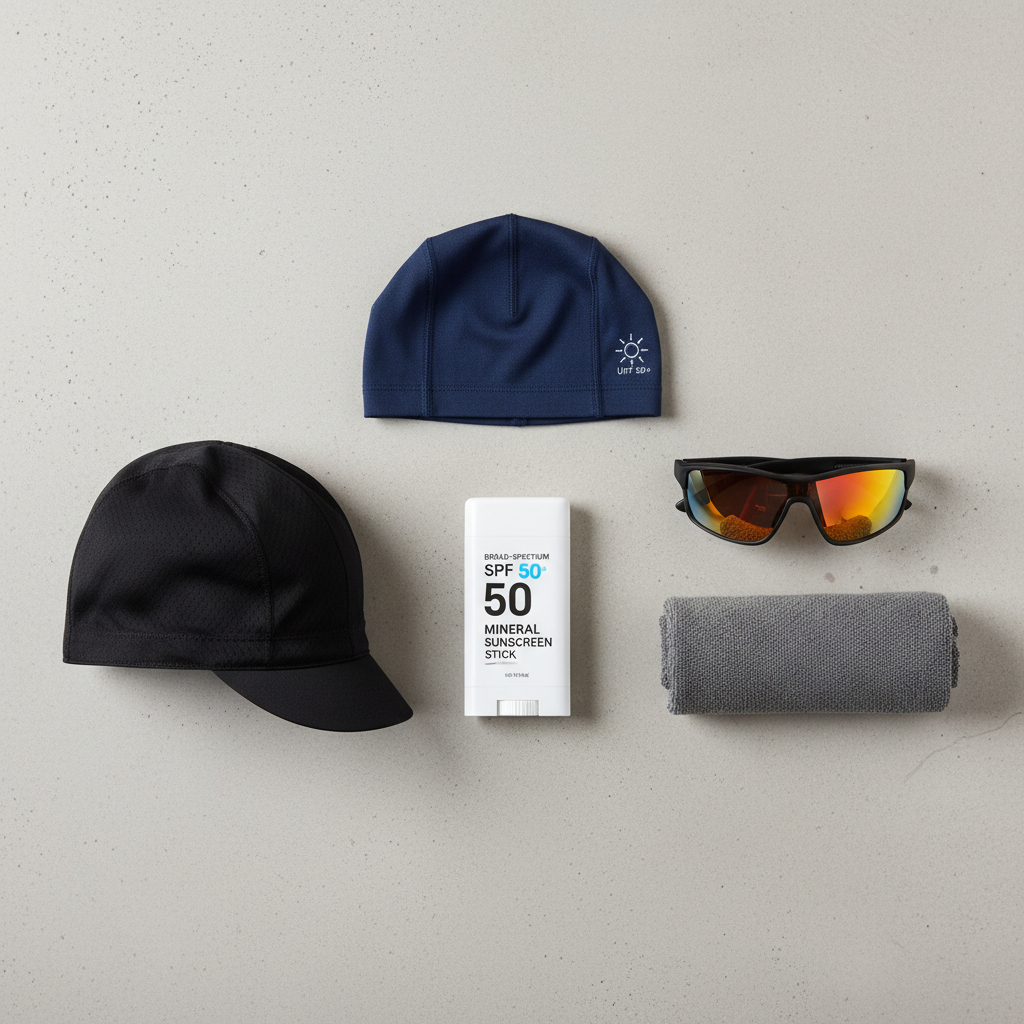
- Mineral sunscreen (zinc oxide/titanium dioxide): Often less irritating, but can leave a white cast on hair/scalp lines.
- Chemical sunscreen: Can feel lighter, but some people get stinging when sweat runs.
- Sticks and solid balms: Easy to target part lines and edges, and they tend to stay put under helmets.
- Powder sunscreens: Convenient for touch-ups, but coverage can be inconsistent if you rely on them alone.
According to the U.S. Food and Drug Administration (FDA), choosing broad-spectrum and an appropriate SPF matters, and sunscreen needs reapplication to maintain protection. On rides, friction and sweat shorten the real-world window, so plan for that.
Physical coverage that fits under a helmet
- Cycling cap (with a short brim): Adds shade to hairline and part, helps manage sweat, and still works with most helmets.
- UPF skull cap or liner: Good for shaved heads or very short hair, also reduces sunscreen transfer into helmet pads.
- Buff/neck gaiter used as a liner: Works in a pinch, but watch heat buildup on hot days.
What to use when: a simple table for real rides
If you’re deciding on the fly, this matrix helps. Think “conditions + duration + scalp coverage.”
| Ride situation | Most practical approach | Why it works |
|---|---|---|
| 1–2 hr sunny road ride, light breeze | Stick sunscreen on part line + cycling cap | Cap blocks vent stripes, stick stays put on exposed lines |
| Hot, humid ride with heavy sweating | UPF skull cap + minimal sunscreen at hairline | Fabric keeps coverage stable when sweat would wash product away |
| Long ride (3+ hr) with stops | Cap/liner + reapply at stops | Lets you refresh protection before you feel the burn |
| High altitude or desert sun | Liner + generous broad-spectrum sunscreen on exposed areas | More intense UV calls for redundancy |
| Short commute, mixed shade | Targeted sunscreen on part line | Quick and low-fuss, still covers the common burn zones |
A ride-day routine you can actually stick with
Most people don’t fail at how to protect scalp from sun cycling because they don’t care, they fail because the steps feel annoying at 7 a.m. Here’s a routine that stays realistic.
Before the ride (3–5 minutes)
- Check your “exposure map”: part line, crown, temples, hairline edges, ears.
- Apply broad-spectrum product to exposed scalp: use a stick or lotion, then press it in so it doesn’t sit on top of hair.
- Add a liner if you burn through vents: cycling cap or UPF skull cap, then helmet on.
During the ride (only if it’s 90+ minutes)
- Plan one touch-up moment: at a café stop, a refill, or a regroup point.
- Use a clean hand or a small towel: wiping sweat first helps product actually stick.
- Focus on the smallest areas: part line and hairline, not your whole head.

After the ride (so your scalp calms down)
- Shower sooner when possible: salt and sunscreen residue can irritate skin.
- If you feel heat or tenderness: cool water, gentle cleanser, and consider a bland moisturizer; avoid harsh scrubs.
- Watch for delayed redness: scalp burns sometimes “show up” later that day.
According to the Centers for Disease Control and Prevention (CDC), limiting UV exposure and using protective measures helps reduce sunburn risk. That includes reapplying sunscreen and using shade and clothing when you can, which maps well to cycling stops and helmet liners.
Mistakes that make scalp protection fail
A few common habits quietly undo your effort, even if you bought the “right” products.
- Relying on helmet coverage alone: vents create focused exposure, and the burn ends up worse than you expect.
- Spraying sunscreen onto hair and calling it done: a lot of spray never reaches skin, and wind makes it less predictable.
- Skipping ears and hairline edges: those spots burn fast, and they hurt under straps.
- Not reapplying on long rides: sweat, rubbing, and towel wipes reduce protection.
- Using irritating products “because it’s sport sunscreen”: stinging can make you avoid reapplication, which defeats the point.
When to ask a professional (and what to watch for)
Most scalp sunburn improves with basic care, but some signs should nudge you to get medical advice, especially if they repeat.
- Blistering, significant swelling, fever, or worsening pain
- Persistent sores on the scalp that do not heal
- New or changing spots on the scalp, especially in frequently exposed areas
- Severe flaking/itch that continues weeks after sun exposure, which may be dermatitis or another skin condition
If you’re unsure, a dermatologist can help you separate sun damage from conditions like seborrheic dermatitis or psoriasis, and recommend products that fit your scalp sensitivity and hair type.
Key takeaways to remember on busy mornings
- Vents burn patterns into scalps, so a liner or cap often matters as much as sunscreen.
- Use targeted application on part lines, crown, and hairline edges, not your entire head.
- Plan one reapply window for rides over 90 minutes, especially in heat.
- Comfort drives consistency; if a product stings or feels greasy, you won’t keep using it.
Conclusion: build a scalp plan that matches your rides
If you’ve been guessing, the simplest upgrade is pairing a helmet-friendly liner with a broad-spectrum product on the small zones hair doesn’t fully cover. That combination tends to hold up better to sweat and friction, which is the real enemy mid-ride.
Pick one setup for your most common ride, put it with your helmet straps so you don’t forget, and treat scalp protection the same way you treat hydration: small, consistent actions beat big intentions. If you want one action today, make it this, do a quick part-line check before you roll out and protect that spot every time.
FAQ
What’s the easiest way for how to protect scalp from sun cycling if I’m in a rush?
Use a sunscreen stick along your part line and hairline edges, then add a cycling cap under the helmet. It’s fast, less messy, and usually more reliable than spraying into hair.
Can I use regular face sunscreen on my scalp?
Often yes, especially on exposed areas like a part line or temples. The bigger issue is feel and staying power, so many riders prefer a stick or a sport formula that doesn’t run as easily.
How do I stop sunscreen from getting into my eyes while riding?
Keep product off the forehead crease where sweat runs, and consider a cap or liner to absorb sweat. If stinging keeps happening, a mineral sunscreen around the hairline can be less irritating for some people.
Is a cycling cap enough on its own?
For some riders and some helmets, a cap provides solid coverage, but it can still leave edges exposed, especially near temples and ears. Many people do best with a cap plus targeted sunscreen in sparse areas.
What about shaved heads or very short hair?
That’s typically higher exposure, so a UPF skull cap or liner helps a lot, with sunscreen on any uncovered skin. You’ll also notice vent-pattern burns more clearly with very short hair.
Do I need to reapply sunscreen during a ride?
On longer rides, usually yes. Sweat, towel wipes, and helmet movement wear it down, so building one reapply stop into your plan is a realistic way to keep protection consistent.
Why does my scalp peel after sunny rides even when I used sunscreen?
It may be mild sunburn, but peeling can also happen from irritation, product buildup, or an underlying scalp condition. If it repeats or comes with persistent itching, a dermatologist can help narrow the cause.
If you’re trying to solve scalp burn without adding a lot of extra steps, it can help to set up a small “ride kit” with a sunscreen stick, a UPF liner, and a sweat towel so you’re not improvising in the driveway every weekend.