
Cool down stretches are the small habit that often decides whether you feel “fine” tomorrow or wake up tight and cranky after training. If you usually finish a workout, grab your stuff, and rush out, this is for you.
The point is not to force flexibility gains in five minutes. A good cool down helps your heart rate settle, gives your nervous system a clear “we’re done” signal, and restores comfortable range of motion so your next session starts smoother.
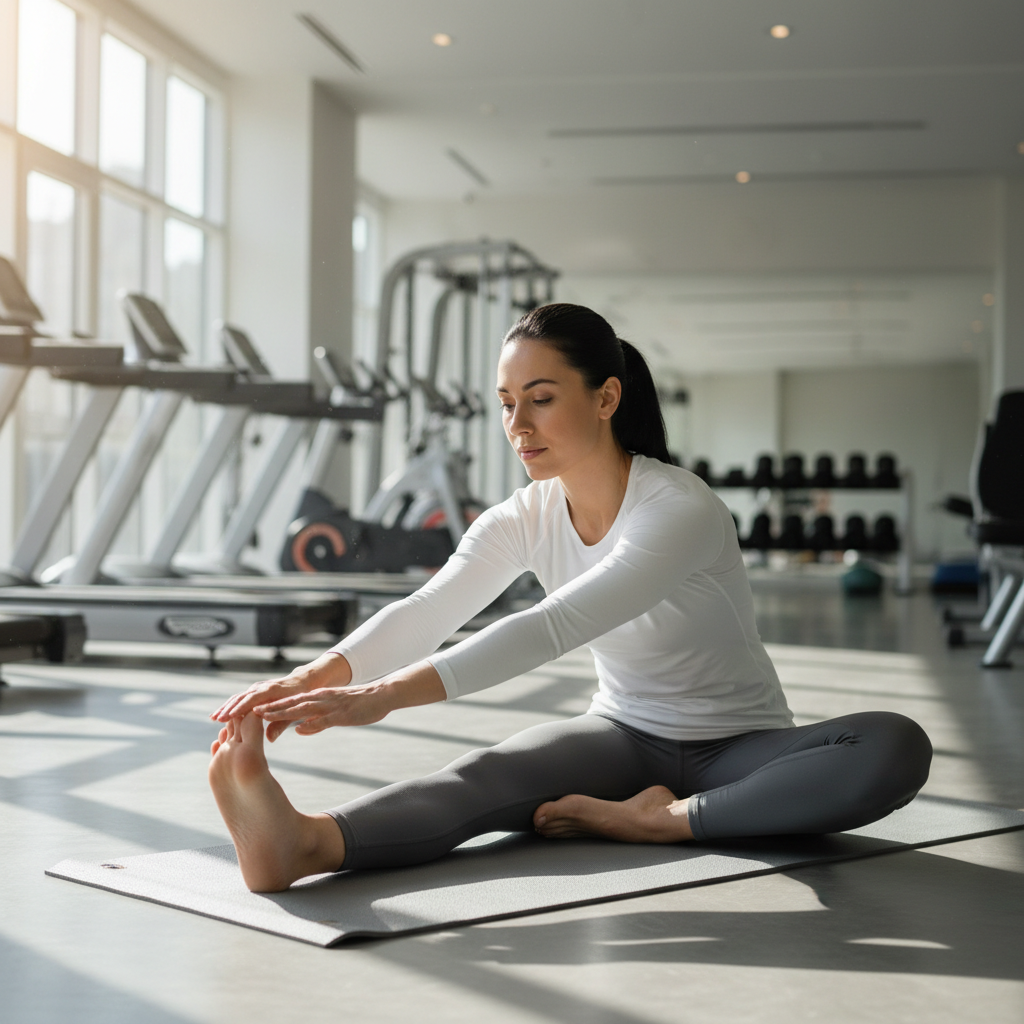
A quick heads-up: stretching can feel intense, but it should not feel sharp, electrical, or “wrong.” If you have a recent injury, nerve symptoms, or joint instability, it may be smarter to get a clinician or qualified coach involved.
What a good cool down actually does (and what it doesn’t)
Most people treat stretching like a moral test: either you do it, or you “don’t care about recovery.” Realistically, the cool down is a tool, and it works best when you use it for the right job.
- It helps you downshift: breathing slows, heart rate drops, and you leave the session less wired.
- It may reduce next-day tightness in many cases, especially if you train hard or sit a lot afterward.
- It reinforces positions you want to own (hip extension, overhead range, ankle mobility), which can support better technique.
- It won’t “erase” soreness: delayed onset muscle soreness still happens, and sleep, load management, and nutrition matter more.
According to the American Heart Association, a cool-down after physical activity helps your body return to its usual state more gradually, which is a sensible safety baseline for most people.
Why you feel tight after workouts: common real-world causes
“Tight” is a messy word. Sometimes it’s true muscle stiffness, sometimes it’s fatigue, and sometimes it’s your nervous system protecting an area that felt shaky under load.
- You stopped too fast: ending on a high heart rate and jumping into the car keeps you in go-mode.
- High-volume eccentric work: lots of lowering phases (downhill running, lunges, negatives) tends to increase next-day soreness.
- Training in shortened ranges: cycling, heavy pressing, or lots of sitting can bias you toward hips/shoulders that feel “closed.”
- Dehydration or low sleep: not a stretching problem, but it shows up as cranky tissue and reduced tolerance.
- You stretch too aggressively: hard end-range pulling can make things feel worse, not better.
Quick self-check: which cool down do you need today?
If you do the same routine every time, you’ll miss the days you need something different. Use this quick checklist, it takes 30 seconds.
- Breathing feels high and chesty? Do 1–2 minutes of easy walking or cycling plus slow exhales.
- Quads/hip flexors feel “short” after running or squats? Prioritize hip flexor and quad positions.
- Back feels pumped after deadlifts or rows? Go gentle: child’s pose variations and supported hamstrings.
- Shoulders feel pinchy after pressing? Choose chest/lat stretches that don’t jam the front of the shoulder.
- Knees or ankles feel stiff? Add calf and ankle mobility holds, not deep forced stretches.
Rule of thumb: if a position makes you hold your breath or grit your teeth, scale it down. Cool down stretches should feel like relief, not a battle.
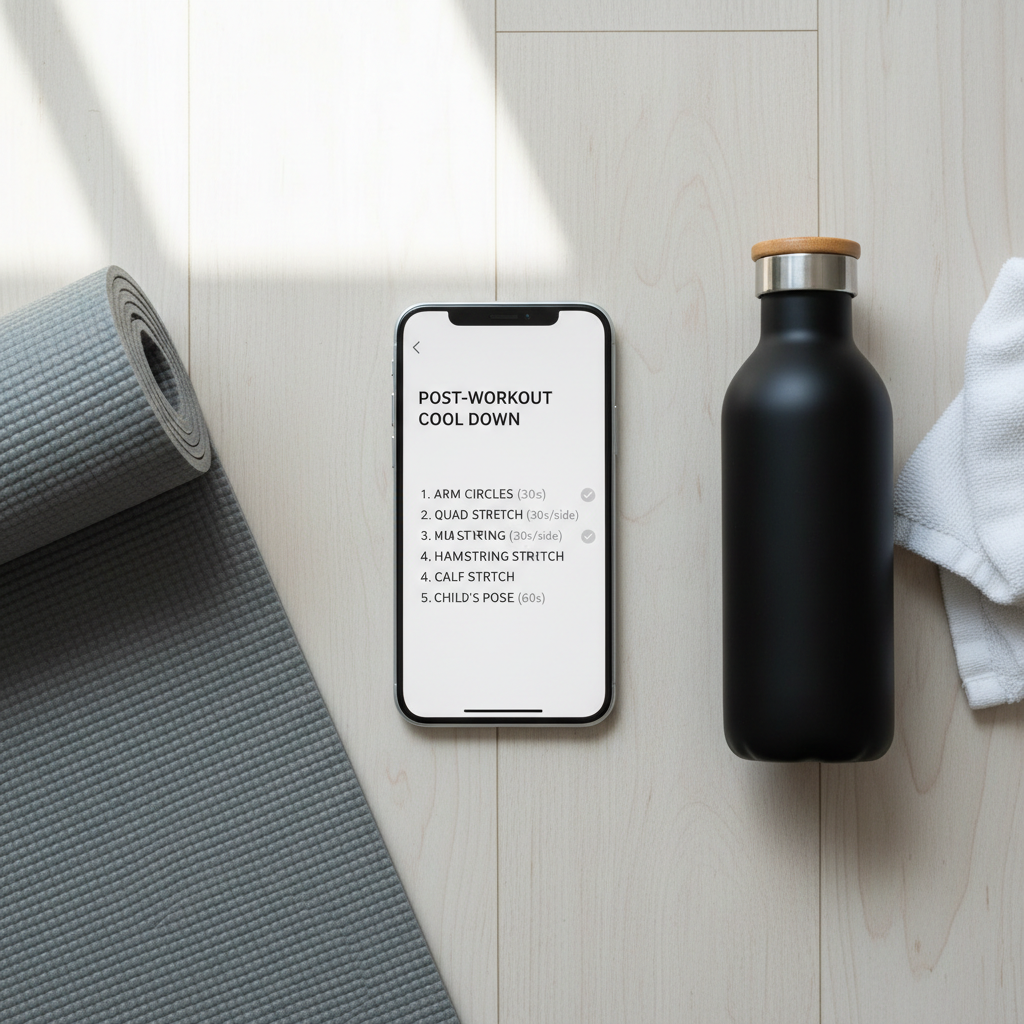
The 10-minute cool down routine (most people can use)
This is a practical default when you don’t want to think. Keep the intensity at about 4–6 out of 10, and breathe slowly through the holds.
Step 1: 2 minutes easy movement
- Walk, spin, or do very light rowing
- Goal: nasal breathing if possible, shoulders relaxed
Step 2: 6 minutes stretching (choose 4 positions)
- Hip flexor stretch (half-kneeling): 45–60 seconds per side, glutes lightly on, ribs down.
- Hamstring stretch (supine with strap): 45–60 seconds per side, knee slightly bent if needed.
- Calf stretch (wall lean): 45–60 seconds per side, heel heavy, toes forward.
- Chest stretch (doorway, low angle): 30–45 seconds per side, no shoulder pinch.
- Lat stretch (bench or wall): 30–45 seconds, breathe into the side ribs.
- Glute stretch (figure-4): 45–60 seconds per side, keep it gentle.
Step 3: 2 minutes downshift breathing
- Lie on your back with feet on a bench, or sit comfortably
- Inhale 3–4 seconds, exhale 6–8 seconds, let your jaw unclench
If you want one performance-oriented tweak: match stretches to what you trained. Legs day usually benefits from hips, quads, calves; upper day tends to like chest, lats, and gentle forearm work.
Cool down stretches by workout type (table)
Different sessions create different “tight spots.” This table keeps the choices realistic and not overly fancy.
| Workout | What often feels tight | Best stretch picks | Hold & notes |
|---|---|---|---|
| Running / HIIT | Calves, hip flexors, quads | Wall calf, half-kneeling hip flexor, quad (standing or side-lying) | 45–60s, keep breathing slow |
| Heavy squats / lunges | Hips, adductors, glutes | Figure-4, adductor rock-back, hip flexor | Gentle intensity, avoid knee pain positions |
| Deadlifts / posterior chain | Hamstrings, back “pump” | Supine hamstring with strap, child’s pose, calf | Keep spine comfortable, no hard rounding |
| Bench / overhead press | Chest, lats, forearms | Doorway chest (low angle), lat stretch, forearm flexor stretch | Stop if shoulder pinches in front |
| Cycling | Hip flexors, quads, calves | Hip flexor, quad stretch, wall calf | Long exhales help a lot here |
Form cues that make stretching work (without forcing it)
Most “stretching doesn’t work for me” stories come down to two issues: pushing too hard, or setting up a shape that irritates a joint. A few cues fix a lot.
- Chase sensation, not pain: mild-to-moderate tension is enough for most cool downs.
- Exhale into the hold: longer exhales tend to lower guarding, so you get range without yanking.
- Stabilize first: lightly brace your ribs and pelvis, then move into the stretch, especially for hip flexors.
- Use support: straps, walls, benches make positions repeatable and reduce strain.
- 30–60 seconds beats bouncing: dynamic moves can fit warm-ups, but the cool down usually benefits from calmer holds.
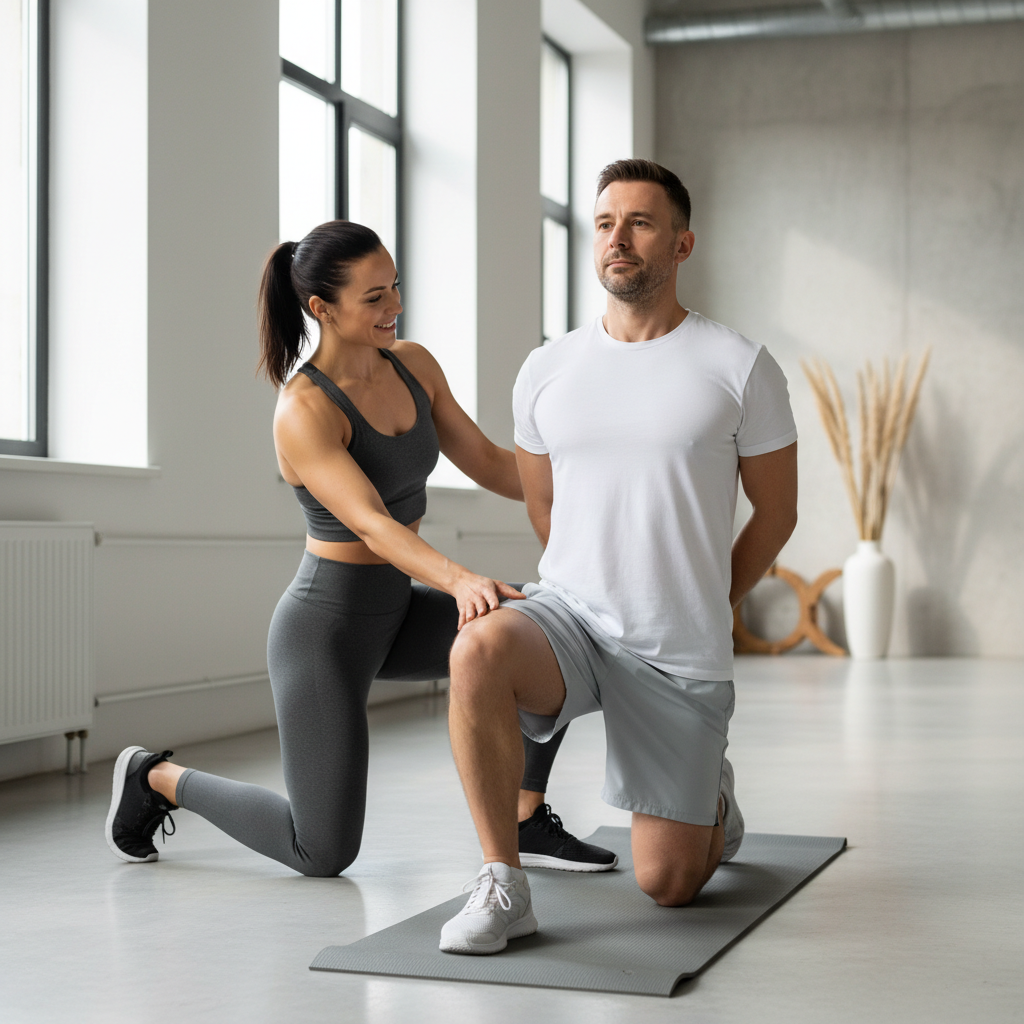
Key takeaway: the goal is to leave the gym feeling more comfortable than when you started the cool down, not to “win” a stretch.
Common mistakes (and what to do instead)
- Mistake: stretching cold right after you stop moving.
Try: 1–2 minutes of easy movement first, then stretch. - Mistake: holding your breath.
Try: count the exhale, if you can’t exhale slowly, back off the range. - Mistake: copying extreme mobility clips.
Try: pick boring basics you can repeat, consistency usually beats novelty. - Mistake: forcing “symmetrical” stretches.
Try: spend a bit more time on the side that feels limited, but keep intensity even. - Mistake: stretching through joint pain.
Try: change angle, reduce range, or choose a different position that targets the muscle without joint stress.
According to the American College of Sports Medicine, flexibility training is generally recommended on a regular basis and should be performed in a controlled manner, which lines up with the “gentle and consistent” approach for most cool downs.
When to get professional help
Cool down stretches are a low-risk tool, but some situations deserve a more careful plan. Consider talking with a physical therapist, athletic trainer, or qualified coach if you notice any of the following:
- Sharp pain, numbness, tingling, or symptoms traveling down an arm or leg
- Swelling, bruising, or a recent injury that changes how you move
- Persistent joint pain that lasts more than a couple weeks despite reducing training load
- Repeated “tightness” that returns immediately and alters your form, especially in the back, hip, or shoulder
In those cases, the best solution may be a mix of mobility, strength work, and load adjustments, not simply more stretching.
Practical takeaways for your next workout
If you want this to stick, make it small and automatic: choose four stretches, set a 10-minute timer, and treat it like the last set of your workout.
- Do 2 minutes easy movement, then 6 minutes of holds, then 2 minutes breathing
- Keep intensity moderate, and aim for calmer breathing by the end
- Rotate stretches based on the day’s training, not a fixed list forever
If you try this for two weeks, most people notice fewer “stuck” areas and a smoother start in the next session, even if soreness still shows up sometimes.
FAQ
How long should I hold cool down stretches after a workout?
Many people do well with 30–60 seconds per position, repeated once if it feels helpful. If you only have a few minutes, fewer stretches with calmer breathing usually beats rushing through eight moves.
Are static stretches okay right after lifting?
For a cool down, static holds are typically fine because you’re finished with performance work. If you plan to do sprinting or heavy sets again soon, keep it lighter and save longer holds for later.
What if stretching makes me feel more sore the next day?
That often means the intensity was too high or the position stressed a joint. Back off range, use supports, and keep the sensation mild; if soreness spikes consistently, consider getting a professional opinion.
Do cool down stretches prevent injury?
It’s hard to promise injury prevention from any single habit. Stretching can support movement quality and comfort, but training load, sleep, and technique usually play bigger roles.
Should I stretch every muscle after every workout?
Not necessary. Focus on the areas that feel restricted or that your sport tends to shorten, like calves and hip flexors for runners or chest and lats for lifters.
Is foam rolling better than stretching for a cool down?
They can complement each other. Many people like 1–2 minutes of easy rolling for a sensitive area, then a gentle stretch; if rolling feels like torture, you don’t need it.
Can I do my cool down later at home instead?
Yes, especially if you’re commuting. Just do a short downshift right after training, then a longer mobility session later when you have time and can relax.
If you’re trying to build a routine you’ll actually repeat, it can help to keep a short “menu” of cool down stretches matched to your workouts, then rotate them based on how your body feels that day.