
Fitness Journal is one of the simplest ways to turn “I work out sometimes” into steady progress you can actually see, without relying on motivation to carry the whole plan.
A lot of people train hard for a few weeks, then stall, get bored, or feel like nothing changes. Usually it’s not because they lack effort, it’s because they can’t tell what’s working. A journal fixes that by giving you feedback: what you did, how it felt, and what to adjust next.
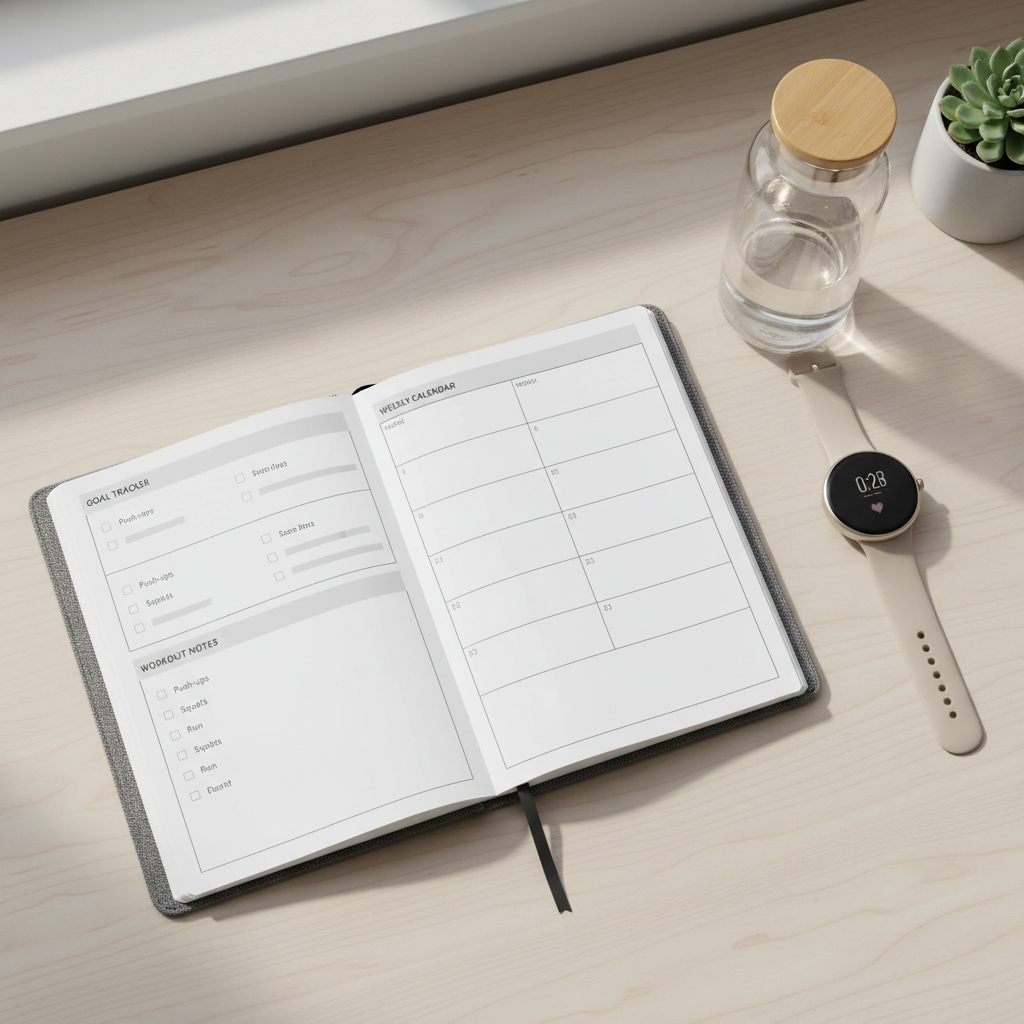
This guide keeps it practical: what to write, what to ignore, and how to set up a routine that takes 5 minutes a day. No perfect planner vibes, just a system you can stick with.
What a Fitness Journal does (and what it does not)
A journal is not a magic program. It’s a decision tool. It helps you spot patterns that your memory edits out, like pushing too hard on low-sleep days or skipping protein when work gets busy.
What it does well:
- Makes progress visible when changes feel slow, especially for strength, body composition, and posture.
- Creates consistency through small routines, even if your schedule shifts week to week.
- Supports smarter training decisions: load, volume, recovery, and deload timing.
What it does not do well:
- Replace coaching or medical advice when pain, injury, or health conditions show up.
- Guarantee results if training and nutrition basics stay inconsistent.
- Make you “more disciplined” by itself, it just removes excuses and confusion.
According to Centers for Disease Control and Prevention (CDC), adults benefit from both aerobic activity and muscle-strengthening activity each week. A journal makes it easier to see if your week actually matches that intention, instead of guessing.
Why most people struggle with goal tracking
If your notes are random, you’ll stop using them. Many folks start with good energy, then the journal turns into a second job.
- Goals stay vague: “get fit” offers no daily decision rule, so it’s hard to know what to write.
- Too many metrics: steps, calories, macros, PRs, HRV, sleep score, mood, supplements, water… it becomes noisy.
- No review habit: writing without reviewing is like saving receipts and never doing taxes.
- All-or-nothing thinking: missing two days feels like failure, so people quit the system.
Realistically, your tracking system needs to survive busy weeks. If it can’t handle travel, deadlines, or family stuff, it won’t last.
Quick self-check: what type of tracker are you?
Pick the closest match. This matters because the “best” Fitness Journal format depends on how you think.
- Numbers-first: you like sets, reps, load, pace, and seeing trends.
- Structure-seeker: you follow plans well but drift when the plan ends.
- Consistency-challenged: you train in bursts, then disappear for a week.
- Stress-loaded: recovery and energy swing a lot, workouts feel unpredictable.
If you’re numbers-first, keep it quantitative but short. If you’re stress-loaded, build in recovery notes so you stop repeating the same “push through” cycle.
Set up a simple Fitness Journal (the 5-minute daily template)
The winning setup is boring on purpose. You want a page you can fill out even when you’re tired.
Daily entry (2–5 minutes)
- Workout done: session type + main lifts or intervals
- Key numbers: top set (weight x reps) or total time/distance
- Effort: RPE 1–10 (how hard it felt)
- Recovery check: sleep (poor/ok/good) + soreness (low/med/high)
- One note: “knees felt off on lunges” or “energy great after lunch”
Keep food tracking optional unless nutrition is your main lever. Many people do better logging protein + veggies + water as simple checkboxes rather than full macro math.
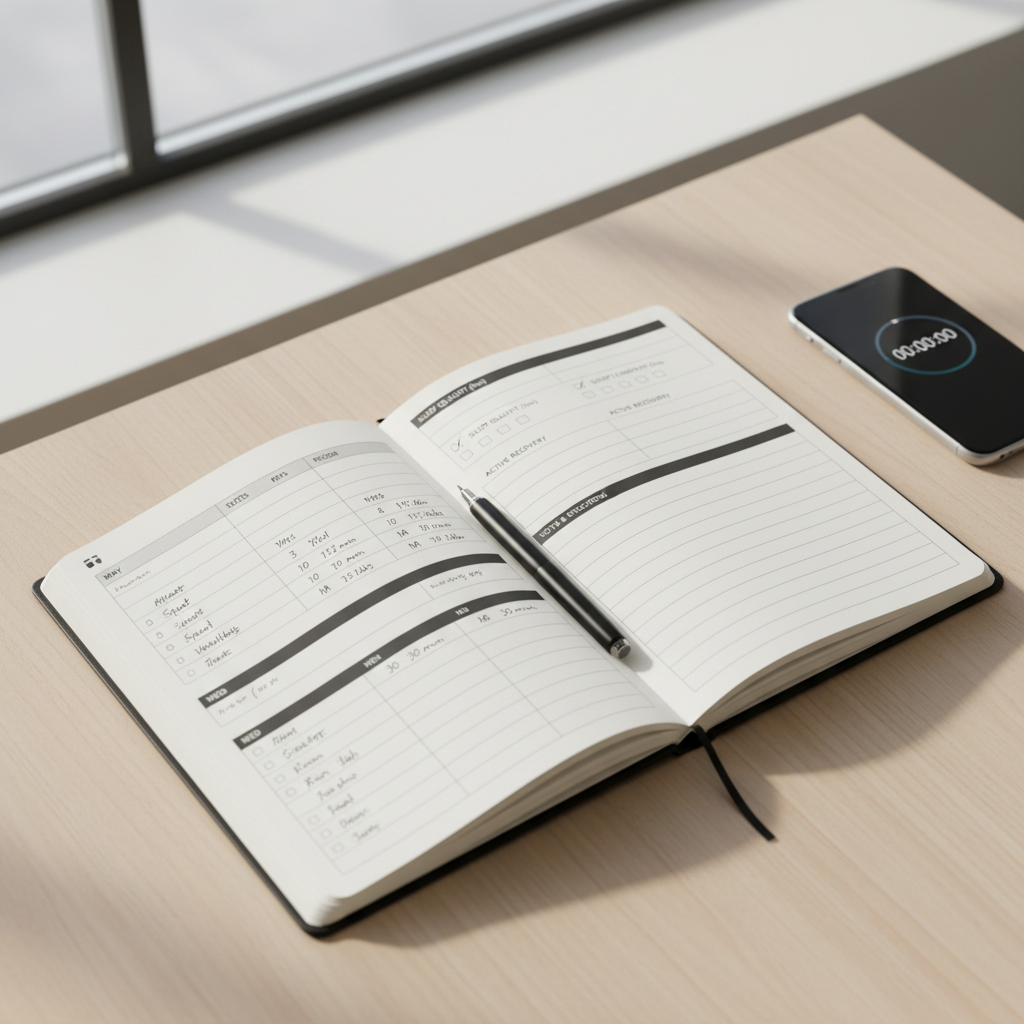
Weekly review (10–15 minutes, once a week)
- Circle 1–2 wins you want to repeat next week
- Identify 1 bottleneck: recovery, time, stress, technique, or plan design
- Choose one change for next week (not five)
That weekly check-in is where goal tracking becomes actionable. Without it, the journal turns into a memory dump.
A goal-tracking table you can copy
Use this as a starting point, then edit it. The point is to connect your goal to a measurable behavior you can control.
| Goal | What to track weekly | Daily “process” check | What success looks like (realistic) |
|---|---|---|---|
| Get stronger | Main lift top set + back-off volume | Show up + warm-up quality | Small load/reps increases over 8–12 weeks |
| Lose body fat | Waist measure, weigh-ins trend, workouts completed | Protein target + steps range | Slow trend down, fewer energy crashes |
| Run a faster 5K | One quality workout + one easy long run | Easy pace stays easy | Lower average pace at same effort |
| Build consistency | Number of sessions + streaks | “Minimum workout” completed | 3–4 weeks without long gaps |
| Improve recovery | Sleep quality notes + soreness patterns | Bedtime window + caffeine cutoff | More stable energy across the week |
Notice the “success” column avoids perfection. Many plans fail because the bar is set at a level your real life can’t support.
Practical goal tracking by scenario
Different goals need different journal emphasis. If you log everything the same way, you miss the levers that matter.
If your goal is strength
- Track performance plus effort: weight/reps and RPE
- Write one technique cue that worked
- When performance dips 2 sessions in a row, consider reducing volume or checking sleep
If your goal is fat loss
- Track trends, not single-day weigh-ins
- Log hunger and energy in one short line, it often explains adherence
- Use a “minimum viable day” list: steps, protein, one workout or brisk walk
If your goal is endurance
- Track easy days honestly, many people run them too hard
- Note any niggles early, especially in foot, knee, and hip
- Keep a simple fatigue score so you know when to back off
According to American College of Sports Medicine (ACSM), progression and recovery matter for safe, sustainable improvements. Journaling helps you see when progression turns into overreaching, which is where many people get stuck or hurt.

Common mistakes (and how to avoid wasting weeks)
Most journal problems are not “you’re not disciplined,” they’re design flaws.
- Mistake: tracking too much. Fix: pick 3 core metrics and 1 short note, nothing else.
- Mistake: copying influencer templates. Fix: build around your schedule, equipment, and recovery reality.
- Mistake: ignoring pain signals. Fix: log location, trigger movement, and severity. If pain persists or worsens, consider a qualified professional evaluation.
- Mistake: setting only outcome goals. Fix: add process goals you can control today.
One more thing people hate hearing: if you never look back at your notes, you will repeat the same week forever. A weekly review is not optional if the goal is progress.
When to get professional help
A Fitness Journal can highlight issues, but it cannot diagnose them. If you notice any of the following, it’s smart to consult a qualified professional, depending on the situation that might be a physician, physical therapist, or certified coach.
- Pain that sharpens, spreads, or changes your movement pattern
- Dizziness, chest pain, fainting, or unusual shortness of breath during training
- Recurring sleep disruption, extreme fatigue, or signs you might be under-recovering
- Confusion about technique that keeps causing the same aches
According to National Institutes of Health (NIH), health guidance varies by individual context and conditions. If you have medical concerns or a pre-existing condition, personalized advice beats generic templates.
Key takeaways you can use today
- Keep daily logging short, consistency beats detail.
- Do a weekly review and choose one adjustment for the next week.
- Match your tracking to your goal: strength, fat loss, endurance, or consistency.
- Use notes to protect recovery, not to shame yourself for imperfect weeks.
Conclusion: make tracking feel doable, not dramatic
If your training feels random, a Fitness Journal is a low-tech way to bring clarity back. You write a little, you review once a week, and you make one change that actually fits your life.
Your next step can be simple: set up tomorrow’s page with the 5-minute template, then schedule a 10-minute review for the end of the week. If you can keep that rhythm for a month, you’ll usually learn more than any new program could teach you.
FAQ
What should I write in a Fitness Journal if I’m a beginner?
Log the workout you did, one or two key numbers, and how it felt. Beginners improve fast, but form and recovery matter, so a short note about technique or soreness is useful.
Is a paper journal better than an app for goal tracking?
It depends on what you stick with. Paper often feels simpler and more intentional, apps can be easier for charts and reminders. Pick the format you will open every day without negotiating with yourself.
How often should I review my journal?
Once a week works for most people because it’s frequent enough to adjust training, but not so frequent that you overreact to a single rough session.
What metrics matter most for strength training?
Main lift performance (weight and reps), total weekly sets for key movements, and an effort measure like RPE. If recovery feels shaky, add sleep quality as a simple rating.
Can journaling help with weight loss plateaus?
It can help you see adherence gaps you might not notice, like weekend overeating or step counts dropping. Plateaus can also reflect normal rate changes, so consider consulting a qualified professional if you feel stuck for a long time or symptoms appear.
How do I track progress without obsessing?
Limit yourself to a few metrics and focus on process habits. If a number triggers stress, switch to weekly trends or performance markers instead of daily weighing or constant body checks.
What if I miss a week of logging?
Restart with today’s entry and skip the guilt recap. Many people maintain consistency by keeping a “minimum entry” rule: workout + one number + one note.
If you’re trying to build a routine that survives real life, a Fitness Journal with a short daily template and a weekly review tends to be the most “low drama” option. If you prefer an even more plug-and-play setup, consider using a printable template or a guided journal format so you spend your energy training, not designing pages.