
Home Cardio doesn’t require a treadmill, fancy programs, or a garage gym, it requires a plan you can actually repeat when you’re tired, busy, and your space is limited. If you want to sweat, raise your heart rate, and build endurance using just your body, you’re in the right place.
A lot of people quit equipment-free cardio for one of two reasons, it feels too easy so they don’t trust it, or it feels too punishing so they dread it. The sweet spot is learning how to scale intensity, pick moves that fit your joints, and structure intervals so effort stays high without your form falling apart.
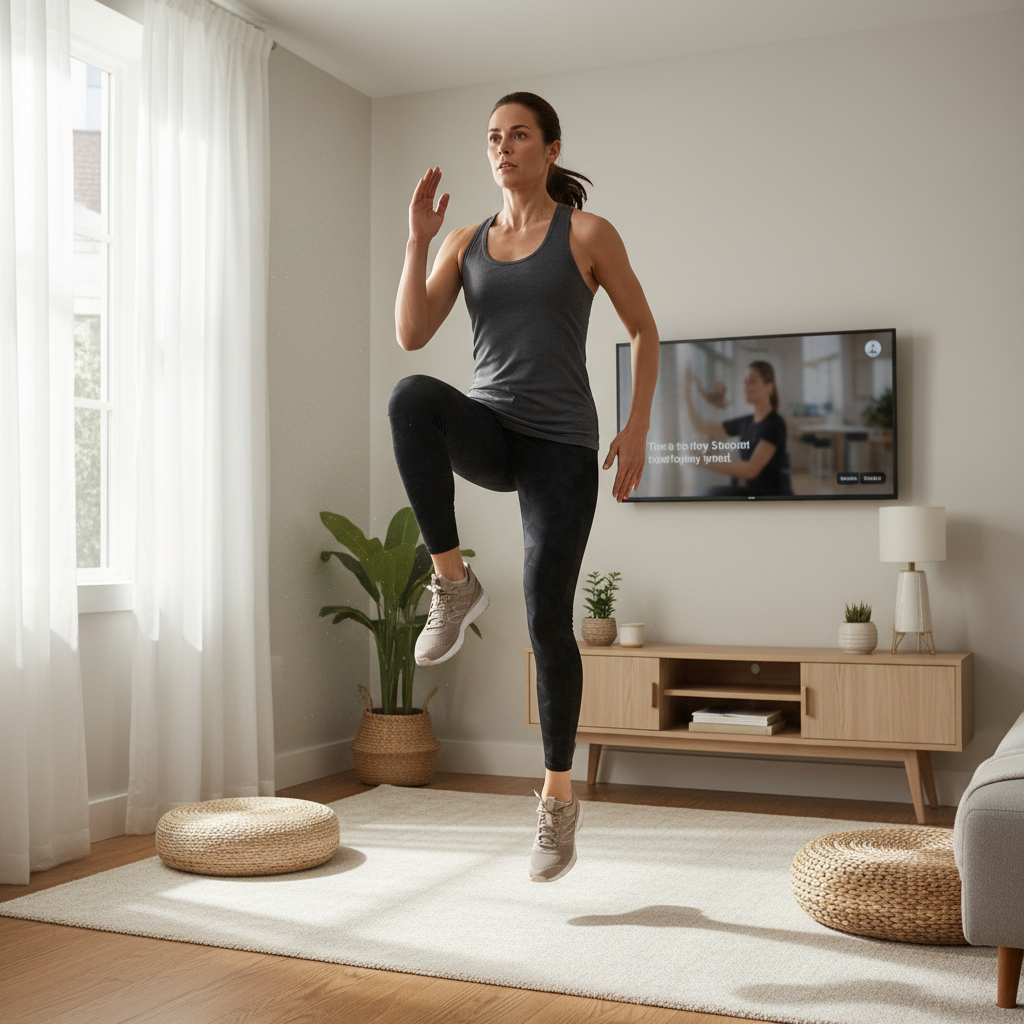
This guide breaks down why home workouts work, how to test what intensity you need, and a few repeatable routines you can rotate all week. I’ll also flag common mistakes, because “more sweat” is not always “better cardio.”
What “counts” as Home Cardio without equipment
Cardio is really about sustained effort that challenges your heart and lungs, not about a specific machine. When you move continuously or do intervals with short rests, your heart rate climbs, breathing changes, and your body adapts over time.
According to the Centers for Disease Control and Prevention (CDC), adults generally benefit from regular aerobic activity as part of weekly movement. You don’t need to chase a perfect heart-rate number at home, but you do want a clear signal that the work is meaningful.
Quick intensity cues that work at home
- Talk test: If you can speak in short phrases but not sing, you’re usually in a moderate-to-vigorous zone.
- Breathing: You should notice deeper, faster breathing during work periods, and partial recovery during rest.
- Form check: If technique collapses, intensity is too high for the move, swap it.
Why equipment-free cardio often fails (and how to avoid that)
Most “no equipment” routines fail for boring reasons, not motivation. The plan is random, the jumps bother knees, or the workout has too many hard moves stacked back-to-back.
Here are patterns I see a lot, and what to do instead:
- All-impact, all the time: Jumping works, but constant pounding can irritate joints. Mix impact and low-impact intervals.
- No progression: Doing the same 10 minutes forever stalls results. Progress by adding rounds, shortening rests, or choosing harder variations.
- Too much “burn,” not enough pacing: If you sprint every set, you crash early. Build repeatable intervals you can maintain.
- Skipping warm-up: Cold joints plus fast moves is a common injury setup. Give yourself 3–6 minutes to ramp up.

Once you treat Home Cardio like training instead of “random sweating,” it gets simpler and more effective.
Self-check: choose the right style for your body and space
Before you copy a routine, do a quick reality check. The goal is to pick a format you can stick with for weeks, not a one-time heroic session.
Pick your track
- If you live in an apartment (noise matters): favor marching, step jacks, shadow boxing, fast feet with soft landings, and low-impact burpee variations.
- If knees or hips get cranky: reduce jumping, shorten your stance, and use boxing, lateral steps, and controlled squats to a comfortable depth.
- If you get bored easily: choose interval circuits with 4–6 moves and short rounds.
- If you’re returning after time off: start with 10–15 minutes, build consistency first, then intensity.
A simple readiness checklist
- You can do 5 minutes of brisk marching without sharp pain.
- You can squat to a comfortable depth and stand without wincing.
- You have a clear 6×6 ft space and stable shoes or a non-slip surface.
- You can recover breathing within about a minute after a moderate interval.
The move menu: reliable no-equipment options (with swaps)
Equipment-free doesn’t mean limited, it means you need good building blocks. Rotate moves to keep effort high and joints happier.
| Movement | Why it works | Low-impact swap |
|---|---|---|
| Jumping jacks | Quick heart-rate spike, full-body rhythm | Step jacks (one foot out at a time) |
| High knees | Great intensity in small space | Power march with strong arm drive |
| Burpees | Total-body conditioning | Hands to chair/sofa + step back plank |
| Mountain climbers | Core + cardio blend | Slow climbers or elevated hands on couch |
| Shadow boxing | Low-impact, surprisingly challenging | Same move, slower pace, longer rounds |
| Skater steps | Lateral work many routines miss | Side steps with a reach |
Key point: if a move hurts in a sharp or “pinchy” way, don’t push through just to keep the workout “hard,” swap the movement and keep the interval structure.
3 done-for-you Home Cardio workouts (no equipment)
These are designed to be repeated. Put on a timer app, keep water nearby, and aim for controlled intensity. If you have medical concerns, it’s smart to check with a qualified healthcare professional before pushing hard.
Workout A: Low-impact sweat (15–20 minutes)
- Warm-up (4 minutes): march + arm circles, hip hinges, gentle side steps
- Main set (12 minutes): 40 sec work / 20 sec rest, repeat 2 rounds
- Step jacks
- Power march (drive elbows back)
- Skater steps (small range)
- Shadow boxing (jab-cross)
- Squat to comfortable depth + reach up
- Plank walkouts (slow)
- Cool-down (2–4 minutes): easy marching, calf stretch, slow breathing
Workout B: Classic intervals (20 minutes)
- Warm-up (5 minutes): brisk march, step jacks, light squats
- Main set: 30 sec hard / 30 sec easy, 10 rounds
- Hard options: high knees, jumping jacks, fast mountain climbers
- Easy options: march in place, side-to-side step, slow shadow boxing
- Finisher (3 minutes): 20 sec on / 10 sec off x 6 (your favorite move)
Workout C: Strength-leaning cardio circuit (18–24 minutes)
- Warm-up (4–6 minutes)
- Circuit: 45 sec work / 15 sec rest, 3 rounds
- Squat + alternating knee drive
- Push-up variation (wall/couch/floor)
- Reverse lunge or split squat (hold onto a wall if needed)
- Mountain climbers (or elevated climbers)
- Glute bridge + fast feet (bridge hold, then stand and march)
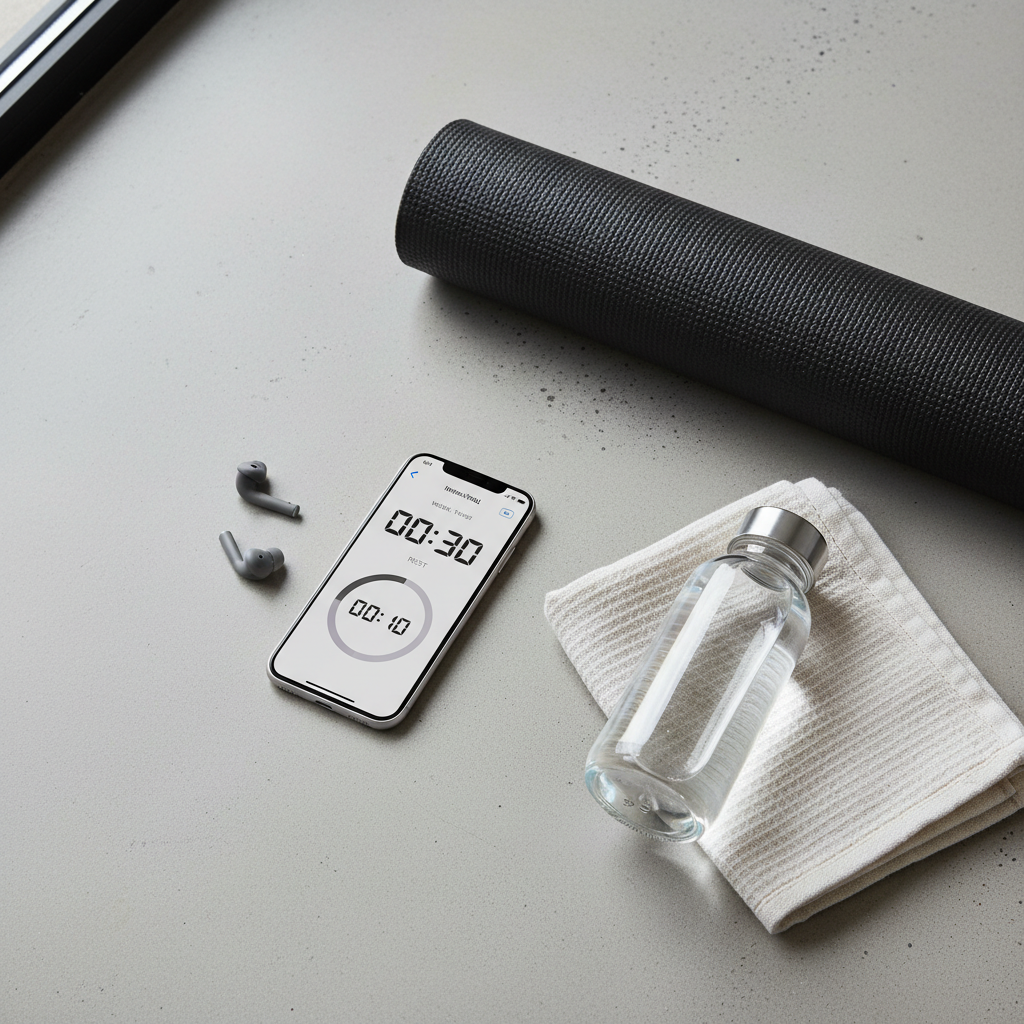
Rotate these across the week and you’ll cover variety without constantly hunting for new routines.
Make it a weekly plan (and keep it realistic)
Consistency beats intensity spikes. According to the American Heart Association, many adults aim for regular aerobic activity across the week, and mixing in muscle-strengthening work can support overall fitness. Your exact target may vary, but a simple structure helps most people stick with it.
Sample week (adjust time up or down)
- Mon: Workout B (20 min)
- Tue: Easy walk or Workout A (15 min)
- Wed: Workout C (18–24 min)
- Thu: Rest or gentle mobility
- Fri: Workout B, reduce rounds if you’re tired
- Sat: Longer low-impact session, 25–35 min steady pace
- Sun: Rest
Progression ideas that won’t wreck you
- Keep the moves, reduce rest by 5–10 seconds.
- Add one extra round, only if form stays clean.
- Upgrade one move per workout, not all of them.
- Track one metric, like rounds completed or total minutes, avoid tracking everything.
Safety notes and common mistakes (especially for beginners)
This is the part many people skip, then blame themselves when something flares up. Most issues come from mismatched movement choices, not “lack of toughness.”
- Too much jumping on a hard floor: use a rug or mat for grip, soften landings, or switch to step-based options.
- Rushing burpees and planks: fast reps with sagging hips can irritate wrists, shoulders, or low back. Slow down the transition.
- Holding your breath: exhale on effort, especially during squat drives and push-up variations.
- Chasing soreness: cardio progress often feels like easier breathing and better recovery, not being sore for days.
If you feel dizziness, chest pain, unusual shortness of breath, or sharp joint pain, stop and consider getting medical guidance. If you’re pregnant, managing a chronic condition, or returning after injury, a clinician or certified trainer can help tailor intensity and movement selection.
Conclusion: how to start today without overthinking
Home Cardio works best when you pick joint-friendly moves, build a repeatable interval structure, and progress in small steps. You don’t need a perfect routine, you need one you can do again next week.
Action steps: choose Workout A or B, set a timer for 15–20 minutes, and commit to three sessions this week. Once that feels normal, add a round or swap in one tougher move, not five.
FAQ
Is Home Cardio without equipment enough for weight loss?
It can be, many people use it to increase daily calorie burn and improve fitness, but results usually depend on overall consistency, food intake, sleep, and stress. If progress stalls, it’s often a routine structure issue or an overall activity issue, not a “wrong move” problem.
What’s the best low-impact option if jumping hurts my knees?
Shadow boxing, power marching, step jacks, and lateral steps tend to be easier on joints while still driving heart rate up. Keep intervals honest by using strong arm swings and a quicker cadence.
How long should a beginner do cardio at home?
Many beginners do well with 10–20 minutes, 3 times per week, then build from there. If you finish totally wiped out, scale down the work interval or choose lower-impact swaps so recovery stays manageable.
How do I know if my workout is “hard enough” without a heart-rate monitor?
The talk test is practical, you want breathing to feel challenged during work periods, but you should still be able to recover during rests. If you can chat comfortably the whole time, increase pace or shorten rest.
Can I do Home Cardio every day?
Some people can if intensity varies, but doing high-intensity intervals daily often backfires with fatigue or nagging aches. A smarter approach is mixing harder interval days with easier low-impact sessions or walks.
What should I do if neighbors complain about noise?
Switch to low-impact versions, step-based moves, boxing intervals, and controlled fast feet without jumping. You can still build a sweat, the timer structure matters more than airtime.
Do I need a warm-up and cool-down for short workouts?
It’s still a good idea, even 3–5 minutes helps joints and breathing transition. The cool-down can be brief, but it often reduces that “crashed” feeling after intervals.
If you’re trying to build a simple at-home routine but keep getting stuck on “what to do today,” a lightweight plan with preset timers and substitutions can save you a lot of mental friction, especially when life gets busy and motivation runs low.