Fitness recovery tools can make the difference between “I’m a little sore” and “I can’t train well for three days,” especially if you lift heavy, run a lot, or stack workouts back-to-back. The goal isn’t to erase soreness overnight, it’s to help your body calm down, restore range of motion, and get you ready for the next session with less friction.
A lot of people buy one gadget, use it twice, then decide recovery “doesn’t work.” The missing piece is usually fit: the right tool for the right tissue problem, used with the right pressure and timing. A massage gun can feel great, but it’s not always the best first move for cranky tendons, and stretching harder rarely fixes a tight hip that actually needs soft-tissue work.
Below is a practical, editor-style roundup of tools that tend to earn their keep, plus a quick self-check to pick what matches your situation, and simple post-workout routines you can actually repeat. If you have sharp pain, numbness, or symptoms that keep worsening, it’s worth checking in with a qualified clinician.
What “recovery” really means after a workout
Recovery is not one thing. It’s a mix of tissue repair, nervous system downshifting, hydration and fuel replenishment, and getting your joints moving well again. That’s why one tool rarely covers everything.
According to ACSM (American College of Sports Medicine), recovery supports overall training adaptation and helps you manage training load, which is a fancy way to say you can keep progressing without repeatedly digging a hole you can’t climb out of.
- Muscle soreness and stiffness: often responds to gentle soft-tissue work and low-intensity movement.
- Joint “tight” feeling: usually needs mobility and position-specific work more than brute force stretching.
- Energy crash: often points to sleep, carbs, total calories, or hydration, not another gadget.
Quick decision checklist: which tool fits your problem?
If you only skim one section, make it this one. Many people buy the most aggressive option and then wonder why recovery feels worse.
- You feel generalized muscle tightness (quads, glutes, lats): start with a foam roller or massage ball, add a massage gun later.
- You have one “hot spot” trigger point (upper trap, piriformis area): massage ball or targeted gun head, short doses.
- Your calves/feet feel beat up from running: massage ball + compression socks/sleeves, and keep the gun pressure conservative.
- Your hips/shoulders feel restricted in specific positions: mobility tools like bands or a simple stick, plus controlled mobility drills.
- You’re wrecked systemically (poor sleep, elevated stress): breathwork and light movement tend to outperform “harder” tissue work.
Red flags: sharp pain, tingling, numbness, swelling that increases, or pain that changes your gait or form. Those call for caution and possibly a professional assessment.
The core lineup: top tools for post-workout recovery (and how to use them)
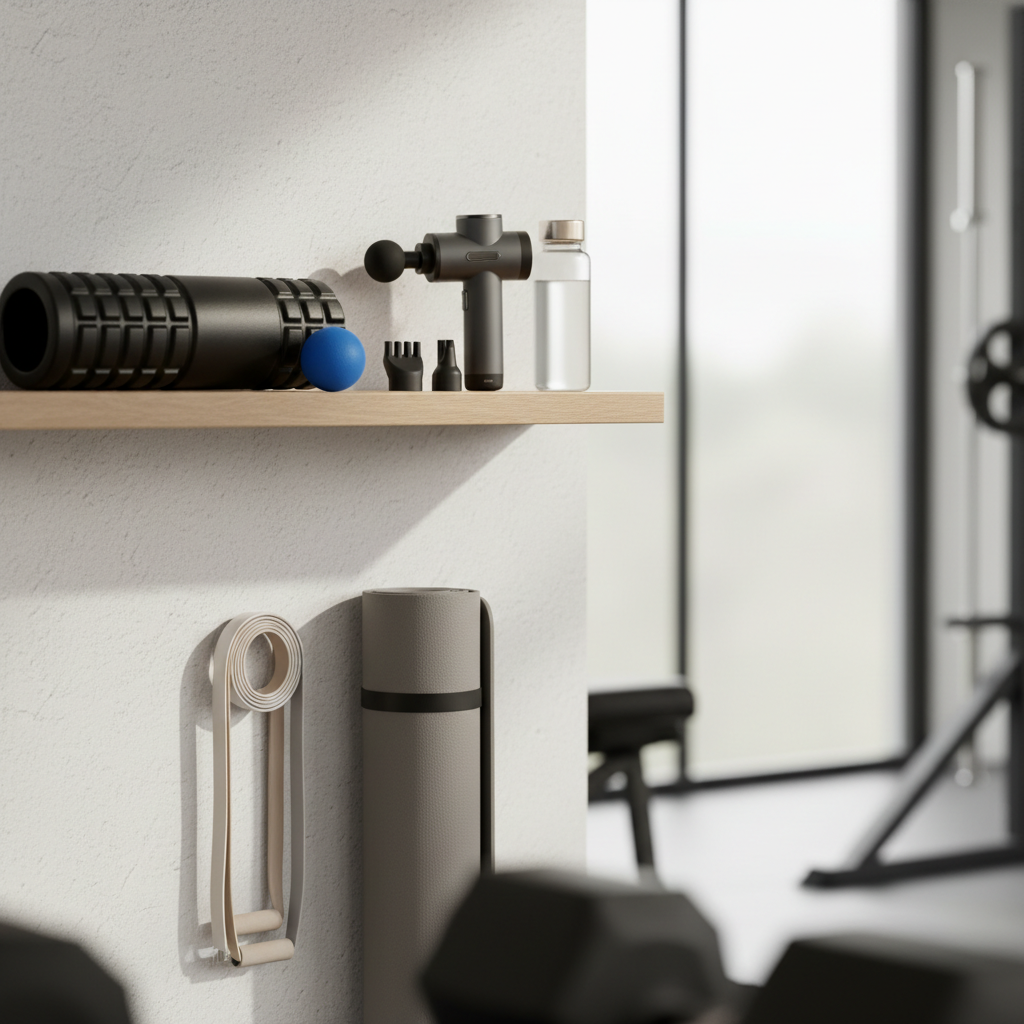
Here are the tools that most consistently show up in real routines. None are mandatory, but each has a clear job.
Foam roller (the reliable baseline)
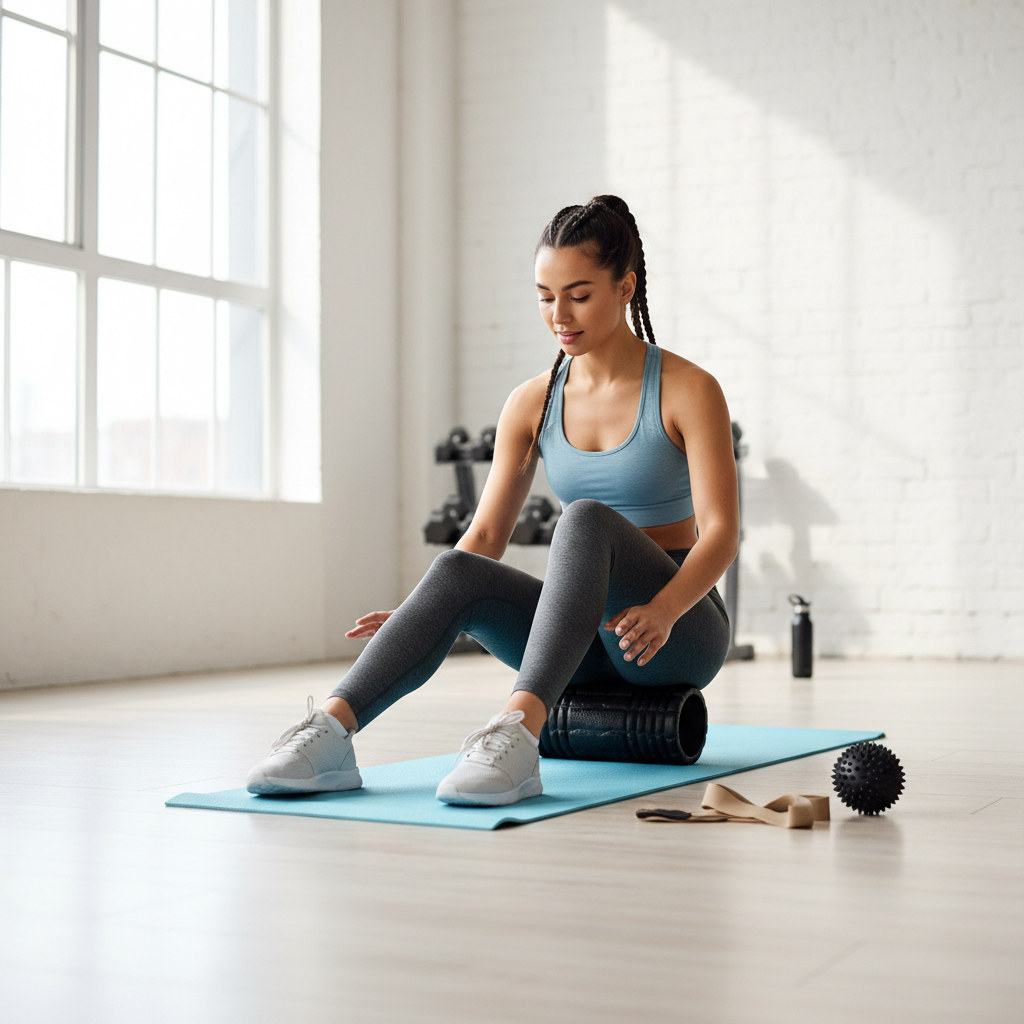
A foam roller is still one of the best-value fitness recovery tools because it’s simple, scalable, and hard to overcomplicate. It’s useful for large muscle groups and for “turning down the volume” before mobility work.
- Best for: quads, hamstrings, glutes, upper back, lats.
- How long: 30–90 seconds per area, slow passes, pause on tender spots and breathe.
- Common mistake: rolling too fast and too hard, then calling it “deep tissue.”
Massage gun (fast relief, easy to misuse)
Massage guns can help reduce the “locked up” feeling after training, and many people like how quickly they can target an area. That said, aggressive percussive work can irritate sensitive tissues if you chase pain.
- Best for: major muscles that feel heavy or guarded, like glutes and quads.
- How long: 10–20 seconds per spot, 1–2 rounds, moderate pressure.
- Avoid: bony areas, the front/side of the neck, and direct work on inflamed tendons.
Massage ball (small tool, big payoff)
A lacrosse-style ball or firm massage ball is the “precision” option. It shines when a foam roller feels too broad and a massage gun feels too intense.
- Best for: feet, glute med area, upper back along the shoulder blade.
- How long: 45–60 seconds, keep it tolerable, then move the joint through a comfortable range.
Mobility bands and straps (when tightness is really position-specific)
Bands help you explore end range without forcing it. If you constantly feel “stuck” in a squat, overhead position, or sprint stride, this category often matters more than more pressure.
- Best for: hip flexors, ankles, shoulders, thoracic spine positioning.
- How to use: 1–2 drills, 60–120 seconds each, then retest the movement that felt limited.
Compression gear (simple, travel-friendly)
Compression socks/sleeves are popular with runners and lifters who get lower-leg heaviness. The benefit can be subtle, but the cost is low and it doesn’t require extra “work” when you’re tired.
- Best for: calves and lower legs after long runs, lots of jumping, or high-volume leg days.
- How to use: post-session or later in the day for a few hours, comfort first.
Heat and cold options (context matters)
Heat tends to feel good for stiffness and general relaxation. Cold is often used when you feel hot, swollen, or beat up, though response varies a lot by person and training style.
According to Mayo Clinic, cold therapy is commonly used to help manage pain and inflammation after acute strain, while heat is often used for muscle relaxation and improved tissue flexibility. If you’re unsure, use the option that reduces symptoms without leaving you more achy after.
Comparison table: tool, best use, and a realistic “buy priority”
If you’re building your kit from scratch, prioritize tools that cover more scenarios first, then add specialists.
| Tool | Best for | When it’s worth buying | Typical time to use |
|---|---|---|---|
| Foam roller | Large muscle tightness | High priority for most people | 5–10 min |
| Massage ball | Trigger points, feet, small areas | High priority, low cost | 3–8 min |
| Massage gun | Quick muscle relief | Good add-on if you’ll use it weekly | 2–6 min |
| Mobility band/strap | Position-specific restrictions | High priority if mobility limits lifts | 4–10 min |
| Compression socks/sleeves | Lower-leg fatigue | Useful for runners and travelers | 1–3 hours |
| Heat/cold packs | Comfort, symptom management | Helpful if soreness disrupts sleep | 10–20 min |
Practical routines you can repeat (10, 20, or 30 minutes)
The best recovery plan is the one you’ll do when you’re busy. These routines use fitness recovery tools without turning the evening into a second workout.
10-minute “minimum effective” reset
- 2 minutes: easy nasal breathing, feet up or lying down.
- 4 minutes: foam roll one big area that feels worst.
- 2 minutes: massage ball on a hot spot or feet.
- 2 minutes: one mobility drill you can retest (ankle rocks, hip opener, thoracic rotations).
20-minute post-leg-day routine
- Foam roller: quads and adductors, slow passes.
- Massage ball: glute med area against the wall, tolerable pressure.
- Mobility band: ankle or hip drill, then bodyweight squat reps to check range.
- Optional: compression socks later if lower legs feel heavy.
30-minute “sleep support” routine (when soreness keeps you up)
- 5 minutes: low-intensity walk or easy bike to cool down.
- 10 minutes: foam rolling + massage ball combo.
- 10 minutes: gentle mobility, no aggressive stretching.
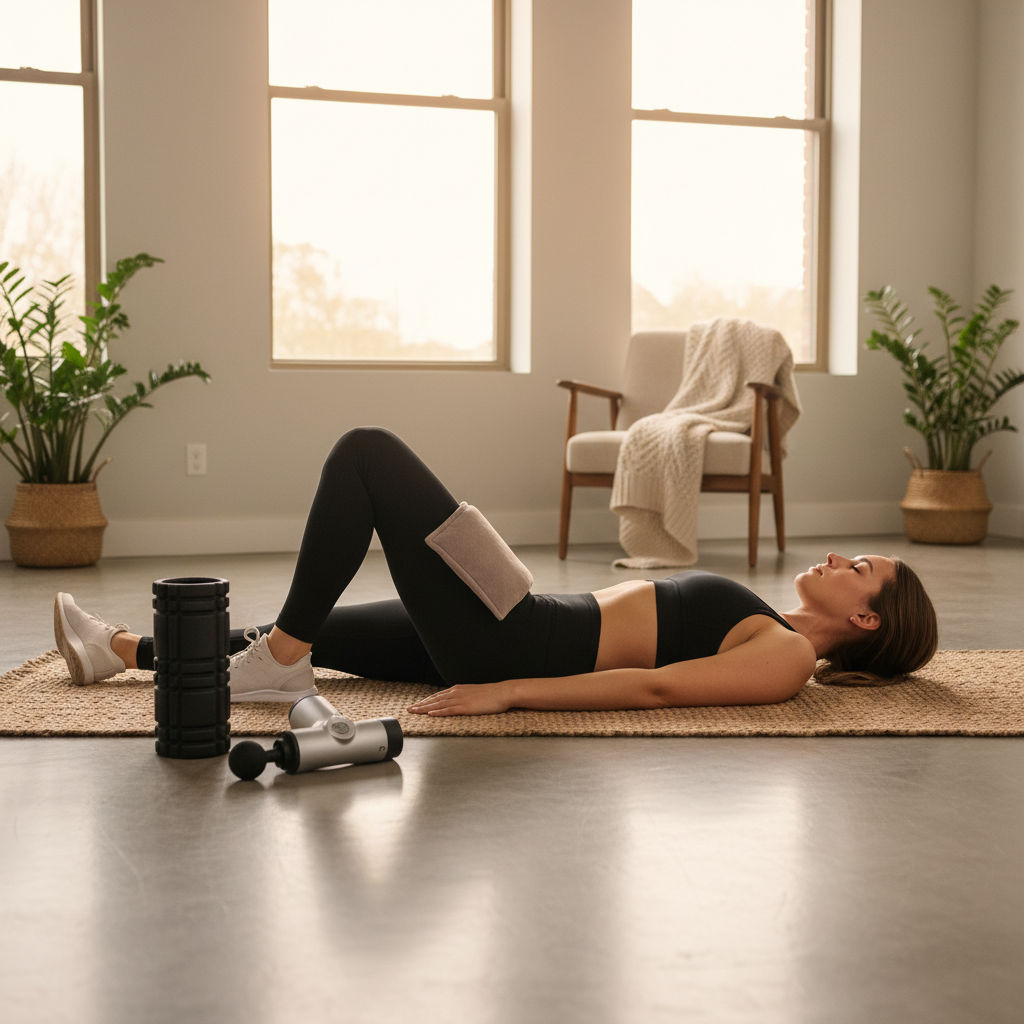
- 5 minutes: heat on the tight area if it feels soothing, stop if symptoms worsen.
Key points that keep recovery tools from becoming expensive clutter
- Chase function, not pain: pressure should feel productive, not like a punishment.
- Retest a movement: squat, reach overhead, hinge, or jog in place to see if the tool helped.
- Pair soft-tissue work with motion: rolling alone can feel nice, but adding controlled mobility makes it stick.
- Don’t ignore basics: hydration, protein, carbs, and sleep often decide whether tools “work.”
According to CDC, adults generally benefit from regular physical activity and adequate rest, and sleep plays a meaningful role in overall health. If you’re chronically underslept, recovery gadgets tend to feel underwhelming.
Common mistakes and safety notes
Most issues come from using a good tool with the wrong intent. Keep these in mind, especially if you’re new to self-massage or mobility work.
- Hammering tendons with a massage gun: if the pain is sharp and localized near a joint, back off and consider professional guidance.
- Stretching harder when you’re already irritated: intense stretching can increase symptoms in some cases, especially when tissues feel “angry.”
- Ignoring bruising or lingering soreness: a little tenderness is normal, but deep bruising is a sign you’re doing too much.
- Copying influencer routines: your training volume, injury history, and anatomy differ, adjust pressure and time.
If you’re pregnant, have a bleeding disorder, take blood thinners, have osteoporosis, or have a known injury, it’s smart to consult a licensed professional before aggressive soft-tissue work.
When to get professional help (and what to ask for)
Fitness recovery tools help with normal training soreness and stiffness, but they are not a substitute for diagnosis. If pain changes how you move, keeps returning in the same spot, or comes with numbness or weakness, you may need an evaluation.
- Consider a physical therapist if you suspect tendon or joint issues, recurring strains, or mobility limits that don’t improve.
- Consider a certified coach if recovery problems track with programming errors, like too much intensity too often.
- Good questions to ask: “What tissues seem irritated?” “Which movements should I temporarily modify?” “Which recovery work is safe for me?”
Conclusion: build a small kit, use it consistently, and keep it honest
Most people do best with a simple setup: a foam roller, a massage ball, and one mobility tool, then add a massage gun or compression gear if you know you’ll use them. If you pick fitness recovery tools based on your real pattern of tightness and fatigue, and you keep sessions short and repeatable, recovery stops feeling like a chore and starts feeling like part of training.
If you want one action today, pick one area that consistently limits your next workout, choose one tool from the table, and run the 10-minute routine after your next session. Re-test, adjust, repeat.
FAQ
What are the best fitness recovery tools for beginners?
Most beginners do well with a foam roller and a massage ball, because they cover broad tightness and targeted hotspots without much setup. Add a basic mobility band if certain positions feel consistently restricted.
Is a massage gun better than a foam roller?
Not universally. A massage gun is faster and more targeted, while a foam roller is easier to control over large areas. Many people end up using both, but the roller usually wins on value and simplicity.
How soon after a workout should I use recovery tools?
Often within an hour works well, especially after you cool down and rehydrate. If you’re too tired, later the same day can still help, just keep intensity moderate so you don’t “wake up” soreness before bed.
Can recovery tools reduce DOMS?
They may reduce the perception of soreness and improve how you move, but DOMS can still show up after new or high-volume training. If DOMS is severe every week, the bigger fix is usually programming and sleep.
How long should a recovery session be?
For most people, 10–20 minutes is enough if you stay focused. Longer sessions can help, but they’re harder to sustain, and too much pressure can leave tissues more irritated.
Are compression boots worth it compared to socks or sleeves?
They can feel great, but they’re expensive and not necessary for many lifters and recreational runners. If you travel often, train high volume, and already handle basics well, they might be a reasonable upgrade.
What if rolling and massage make me feel worse?
That usually means pressure is too high, the area is too sensitive, or the issue isn’t “tight muscle” in the first place. Scale back, switch to gentle movement and breathing, and consider professional input if it persists.
If you’re trying to choose fitness recovery tools without overbuying, it helps to map your training week, your most common sore spots, and how much time you realistically have post-workout, a simple checklist can narrow options fast and keep your kit small on purpose.