
how to charge an electric bike battery is less about “plug it in and wait” and more about building a routine that protects range, safety, and long-term capacity.
If your battery seems to drain faster than it used to, runs hot while charging, or you’re unsure about charging after a ride in the rain or cold, you’re not overthinking it, these are the exact moments when good habits matter.
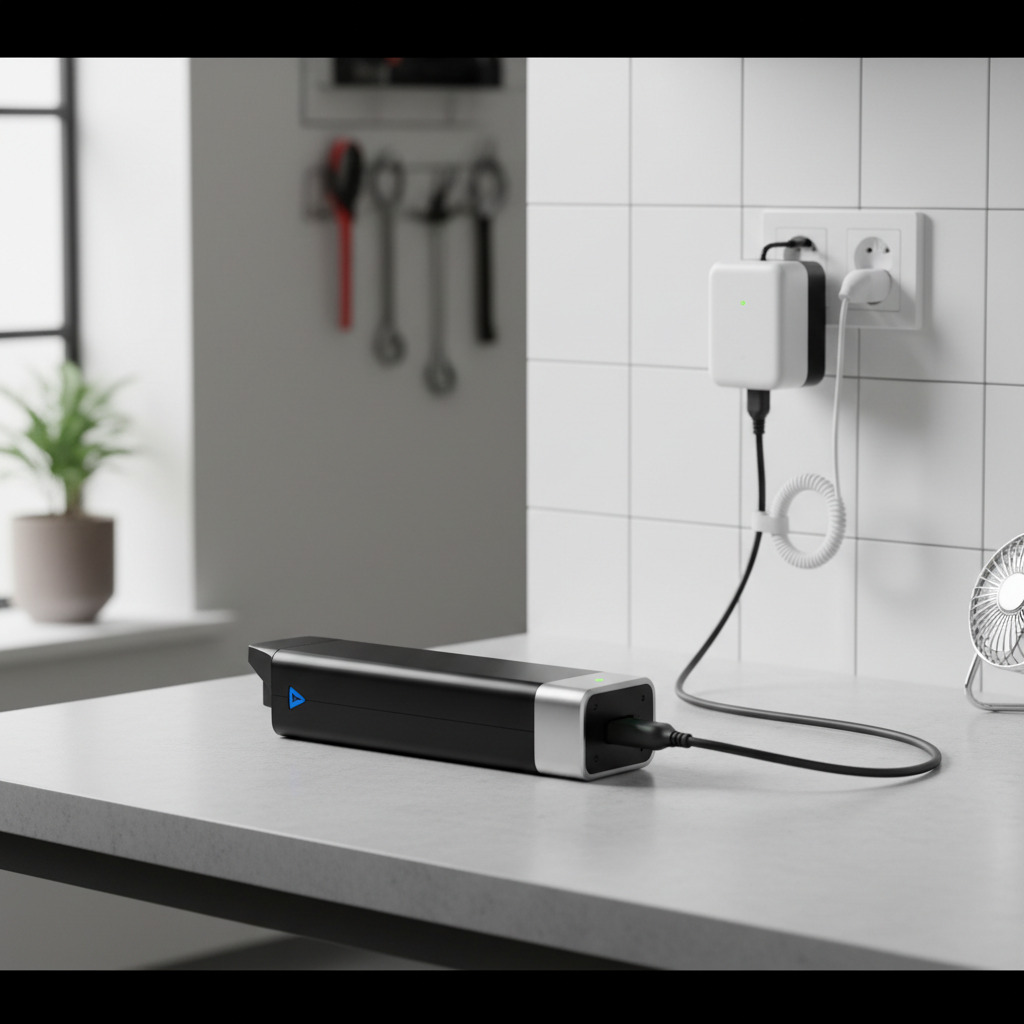
Below is a practical, US-focused guide you can actually follow: what to do day-to-day, what to avoid, and how to handle edge cases like storage, commuting, and temperature swings.
What matters most when charging an e-bike battery
Most e-bikes in the US use lithium-ion packs. They’re efficient and powerful, but they prefer “gentle” use: moderate temperatures, moderate charge levels, and the right charger.
- Heat is the quiet battery killer. Warm packs age faster, and charging creates extra heat.
- Very high and very low states of charge add stress. Camping at 100% or repeatedly hitting near-empty often accelerates wear.
- The charger is part of the system. The wrong voltage or poor-quality charger is a real safety risk, not just a performance issue.
According to UL Solutions, using certified batteries and chargers helps reduce fire risk in lithium-ion devices, especially in light electric vehicles where energy density is high.
Step-by-step: how to charge an electric bike battery safely
If you want one repeatable process that works for most riders, this is it.
1) Let the battery cool down after riding
If you just climbed hills or rode fast in hot weather, give the pack time to return closer to room temp. Charging a hot battery can add more heat and stress.
2) Charge in a dry, stable place
Indoors is usually safer than a damp garage corner. Use a hard surface, keep it away from paper piles, solvents, and clutter, and avoid leaving it under direct sun through a window.
3) Plug order that reduces surprises
- Many manufacturers suggest: charger into wall first, then connect to the battery.
- When done, disconnect from the battery, then the wall.
This won’t magically extend lifespan, but it can reduce arcing and keeps your routine consistent.
4) Aim for a daily target, not always 100%
For regular commuting, many riders do well charging to somewhere around 80–90% most days, then going to 100% only when they need maximum range soon after.
Not every e-bike lets you set a charge limit in the app or display. If yours can, use it. If it can’t, you can still time your charge (more on that below).
5) Don’t ignore warning signs
- Unusual heat from the battery or charger
- Swelling, cracking, odd smells
- Charger fan screaming or intermittent on/off behavior
If any of these show up, stop charging and consider contacting the bike manufacturer or a qualified e-bike shop. When safety feels uncertain, it’s not worth improvising.
Best charge levels for daily riding vs. long trips
A lot of confusion comes from mixing two different goals: maximum range today versus maximum battery health over time. You can balance both with a simple plan.
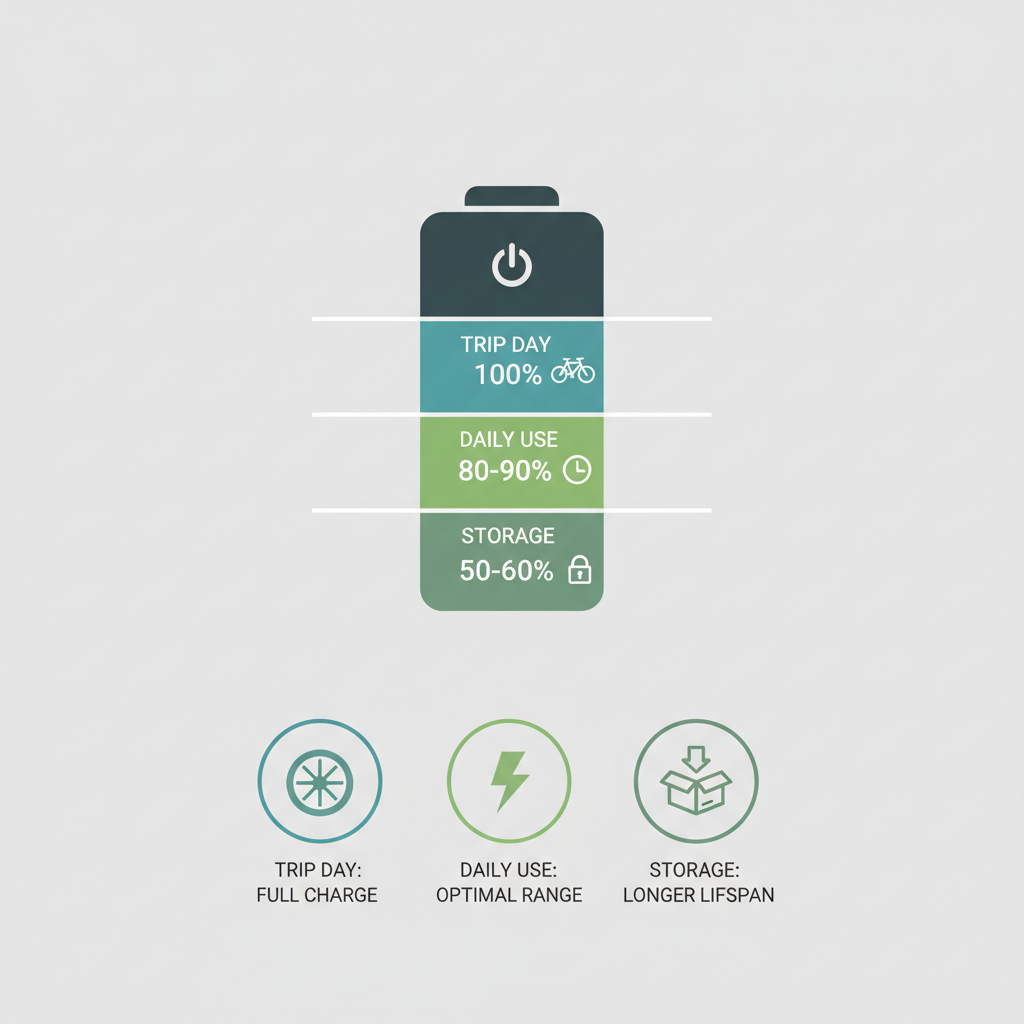
Quick table: practical targets most riders use
| Scenario | Target charge | Why it helps |
|---|---|---|
| Daily commute, plenty of range buffer | ~80–90% | Often reduces high-voltage stress without limiting usefulness |
| Long ride planned (same day or next morning) | 100% shortly before leaving | Maximizes range when you actually need it |
| Battery sitting 1–4 weeks | ~50–60% | Common “happy middle” for storage stability |
| Cold weather riding | Charge indoors, start near 90–100% if range matters | Cold reduces usable capacity, warmer starts feel stronger |
According to Battery University, lithium-ion batteries generally experience less stress when kept away from both full charge and deep discharge, which is why partial charging is a common best practice.
A fast self-check: what kind of charger routine fits you?
If you’re unsure where to start, use this quick list to sort yourself into a realistic routine.
- I ride short trips and usually come home above 50%: prioritize partial charging, don’t chase 100% nightly.
- I regularly drain below 20%: consider topping up earlier, deep dips can be harder on packs over time.
- I rely on max range (delivery, long commute): charge to full, but time it so it doesn’t sit at 100% for days.
- I store the bike often (seasonal rider): focus on storage level and temperature more than daily micromanagement.
- I charge in a shared building: prioritize safety setup, certified equipment, and supervision.
Charging time, timers, and when it’s okay to leave it plugged in
Many modern chargers stop pushing current when the pack is full, but “leave it plugged in forever” still isn’t a great default. The battery may top off repeatedly, and the pack stays at a high state of charge.
A practical approach
- Use a wall timer if your bike can’t set an 80–90% limit and you charge at predictable times.
- Finish near departure when you need 100%, charge overnight only if you’re comfortable with the setup and you’ve cleared the safety basics.
- If you must charge unattended, reduce risk: clear area, hard surface, airflow, certified charger, no damaged cables.
According to the U.S. Fire Administration, lithium-ion battery fires can be intense and fast-moving, so safe charging location and equipment quality matter as much as charging percentage.
Temperature, water, and real-world commuting headaches
This is where most people get tripped up, because the manual rarely matches daily life.
Cold weather
- Charge indoors at room temperature when possible.
- Avoid charging a battery that feels near-freezing; let it warm up naturally.
- Expect lower range in winter, that’s normal, not automatically a battery problem.
Hot weather
- Don’t charge in a parked car or direct sun.
- If your battery is hot after a ride, wait before plugging in.
Rain and wet rides
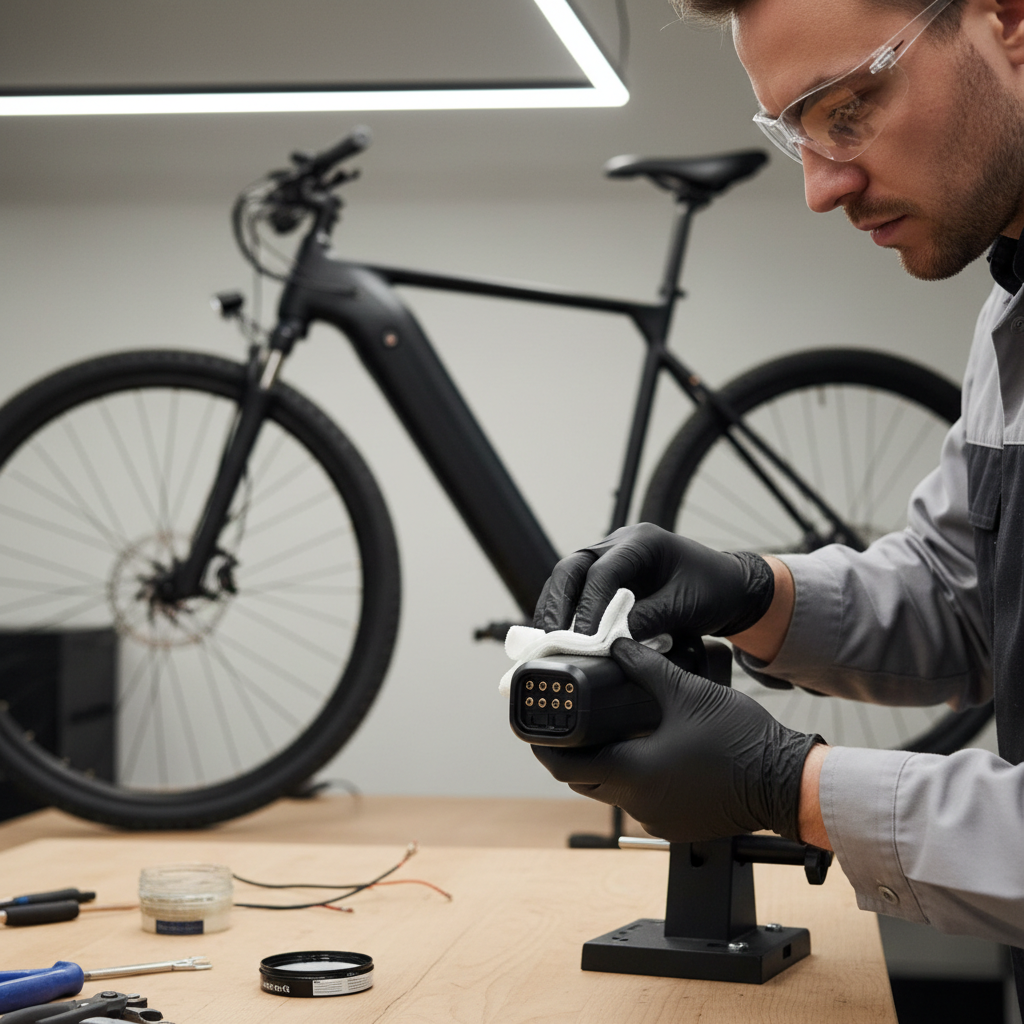
Many e-bikes handle rain, but charging introduces exposed connectors and electricity. Dry the battery case and contacts, wait until everything feels dry, then charge. If you see corrosion or moisture inside connectors, a shop inspection is usually the safer call.
Common mistakes that shorten battery life (and how to avoid them)
Some mistakes are obvious, others look harmless until months later when range drops.
- Using a non-matching charger: even if the plug fits, voltage and charging profile may not, stick to the manufacturer-recommended model.
- Storing fully charged for weeks: for many packs, mid-charge storage tends to age better.
- Running to empty every ride: occasional deep rides happen, but making it a habit often increases wear.
- Charging immediately after hard riding: heat stacking is real, wait for cooldown.
- Ignoring physical damage: a dropped battery that cracked its case deserves caution, not “it seems fine.”
When you should stop and get professional help
Battery systems are not a good place for DIY guesswork. If anything below applies, getting a qualified e-bike technician involved is usually the smart move.
- Battery swells, vents, smells sweet/chemical, or shows burn marks
- Charger gets extremely hot or repeatedly fails to complete a charge
- Range drops suddenly, or the bike shuts off under moderate load
- You suspect water intrusion inside the battery housing
If your building has specific storage/charging rules, follow them. Local fire codes and landlord policies vary, and your safest setup is the one that fits your actual living situation.
Key takeaways + a simple routine you can start today
If you only change two things, make them these: charge in a safer spot, and stop defaulting to 100% when you don’t need it.
- Daily rides: aim for partial charges, keep the pack cool, use the correct charger.
- Big ride tomorrow: charge to full close to departure, not three days early.
- Storage: park the battery around mid-level and keep it in a temperature-stable place.
Try this for two weeks, then adjust based on your range needs, because the best charging plan is the one you can stick with without stressing every night.
Quick FAQ
- Is it bad to charge an e-bike battery after every ride?
Not automatically. Many riders benefit from topping up, but if you barely used the battery, charging to 100% every time can add unnecessary high-voltage time. Partial top-ups often make more sense. - Should I charge to 100% before my commute?
If your commute uses most of your capacity, yes, but try to finish that full charge close to when you leave. If you arrive home with lots of battery left, a lower target is usually enough. - Can I use a generic charger if the connector matches?
It’s risky. Matching connector does not guarantee correct voltage, current, or charging profile. Stick with the manufacturer-approved charger whenever possible. - How long should an e-bike battery cool before charging?
There’s no universal number, because pack size and weather vary. A simple rule: if it feels warm from riding, wait until it feels closer to room temperature. - Is overnight charging safe?
It can be, but it depends on equipment quality and environment. Use certified gear, charge on a non-flammable surface, keep the area clear, and don’t charge damaged batteries. If you’re uncertain, ask a local e-bike shop. - What’s the best battery percentage for winter storage?
Many manufacturers recommend storing lithium-ion batteries around mid-charge, often roughly 40–60%. Check your manual if it specifies a range. - Why does my battery show 100% but range still feels low?
Cold weather, high assist levels, low tire pressure, and aging cells can all reduce real-world range. If the drop is sudden, it may be worth a diagnostic.
If you want a more hands-off setup, look into whether your e-bike system supports a charge limit feature or a compatible smart outlet timer, it’s a small change that can make how to charge an electric bike battery feel far less fussy while still staying safety-conscious.