
A gym training plan works best for beginners when it removes guesswork, keeps workouts repeatable, and progresses slowly enough that your joints and confidence can keep up.
Most people don’t quit because the gym is “too hard”, they quit because they don’t know what to do next, they bounce between random machines, or they push too much too soon and end up sore for days. This guide gives you a clear weekly structure, a short exercise menu, and simple rules to adjust the plan when life gets messy.
One more thing before we get into sets and reps, beginner progress is usually less about “perfect programming” and more about showing up consistently, using good form, and tracking a few basics so you can see momentum.

What a beginner gym training plan should do (and what it should avoid)
For most beginners, the job of a plan is simple, it should build full-body strength, improve basic conditioning, and teach repeatable movement patterns you can load over time.
According to the CDC, adults benefit from muscle-strengthening activity at least two days per week alongside aerobic activity. In practice, that usually means 2–4 weekly lifting sessions plus a little walking, cycling, or similar work you can recover from.
- Do: prioritize big patterns (squat, hinge, push, pull, carry), repeat them weekly, add small amounts of weight or reps.
- Do: keep workouts to 45–70 minutes so you leave with energy, not dread.
- Avoid: daily “destroy your legs” sessions, maxing out, or copying an advanced bodybuilder split too early.
- Avoid: changing exercises every workout, beginners need practice more than novelty.
Quick self-check: which beginner are you?
This part matters because the “best” gym routine depends on your schedule, stress, and injury history. Pick the description that fits you most days, not your ideal week.
- Time-tight beginner (2–3 days/week): you need full-body sessions and minimal extras.
- Consistency-ready beginner (4 days/week): you can use an upper/lower split with more practice per lift.
- Deconditioned or higher-soreness beginner: you need lower volume, more walking, and slower progression.
- Old injury concern: you need exercise swaps, conservative loading, and maybe a coach’s eyes on form.
If you’re unsure where you land, start with the 3-day option for 4 weeks, then adjust upward once soreness and scheduling feel predictable.
Your 3-day full-body gym training plan (simple and repeatable)
This gym training plan uses three full-body workouts that repeat each week. You’ll train the same patterns often enough to learn them, without cramming too much into one day.
Schedule option: Mon/Wed/Fri or Tue/Thu/Sat. Keep at least one rest day between lifting sessions when possible.

Workout A
- Squat pattern: Goblet squat or leg press, 3 sets x 8–10 reps
- Push: Dumbbell bench press or machine chest press, 3 x 8–12
- Pull: Lat pulldown or assisted pull-up, 3 x 8–12
- Hinge: Romanian deadlift (dumbbells) or hip hinge machine, 2–3 x 8–10
- Carry/core: Farmer carry 4 x 30–45 seconds or plank 3 x 30–45 seconds
Workout B
- Hinge pattern: Trap bar deadlift (light) or cable pull-through, 3 x 5–8
- Push: Incline dumbbell press or push-up variation, 3 x 8–12
- Pull: Seated cable row, 3 x 8–12
- Single-leg: Split squat or step-up, 2–3 x 8–10 per side
- Core: Dead bug or Pallof press, 3 x 8–12 per side
Workout C
- Squat pattern: Hack squat machine or goblet squat, 3 x 8–12
- Push: Overhead press (dumbbells) or machine shoulder press, 3 x 8–12
- Pull: One-arm dumbbell row or chest-supported row, 3 x 8–12
- Posterior chain: Hip thrust (bench or machine), 2–3 x 8–12
- Optional finisher: 8–12 minutes easy bike/rower at conversational pace
The exercise table: swaps that keep the plan working
Machines are not “cheating” for beginners, they’re often a smart way to learn effort and control. Use the table to swap based on equipment, comfort, or crowded gym reality.
| Movement pattern | Primary choice | Beginner-friendly swap | What to feel |
|---|---|---|---|
| Squat | Goblet squat | Leg press / hack squat | Quads, glutes, steady feet |
| Hinge | Dumbbell RDL | Cable pull-through | Hamstrings, glutes, long spine |
| Horizontal push | Dumbbell bench | Machine chest press | Chest and triceps, controlled range |
| Vertical push | Dumbbell overhead press | Machine shoulder press | Shoulders, ribs down, no low-back pinch |
| Vertical pull | Lat pulldown | Assisted pull-up | Lats, elbows drive down |
| Horizontal pull | Cable row | Chest-supported row | Mid-back, shoulder blades move smoothly |
| Core/bracing | Pallof press | Dead bug / plank | Abs working while spine stays stable |
How to warm up, choose weights, and progress without stalling
Beginners often miss two things, warming up just enough to move well, and progressing slowly enough to stay consistent. Your plan only works if you can repeat it next week.
Warm-up (8–12 minutes total)
- 3–5 minutes easy cardio (bike, treadmill walk)
- 1–2 mobility drills that match the first lift (hip hinges, bodyweight squats, shoulder circles)
- 2–4 lighter ramp-up sets before your first hard set
Picking a starting weight (a simple rule)
A good starting load lets you finish the set with 1–3 reps in reserve (you could do a couple more with good form). If you grind, hold your breath, or your technique collapses, it’s too heavy for week one.
Progression rules that beginners can actually follow
- Double progression: stay within the rep range, add reps first, then add weight. Example: 3x8–12, once you hit 3x12 with solid form, increase weight next session and go back to 3x8–9.
- Small jumps: for dumbbells, often 5 lb per hand is plenty; for machines, one plate is fine.
- Deload when needed: if you feel run down for a full week, reduce working sets by 30–40% for one week, then resume.
Practical weekly schedule: training, cardio, and rest
Cardio doesn’t have to compete with strength, it can support recovery if you keep it sane. This is a realistic week many beginners can maintain.
- Mon: Workout A + 10 minutes easy walk
- Tue: 20–30 minutes brisk walk or bike, conversational pace
- Wed: Workout B
- Thu: Rest, light steps, optional mobility
- Fri: Workout C + 8–12 minutes easy cardio
- Sat: Optional easy activity (hike, long walk)
- Sun: Rest
According to the American Heart Association, adults generally benefit from regular moderate-intensity aerobic activity, but your exact mix should match your recovery and any medical considerations.
Common mistakes that make a gym training plan feel “not for me”
These are the patterns that quietly ruin consistency, and they’re usually fixable fast.
- Going heavy before learning the movement: if your squat depth changes every rep, load becomes guesswork.
- Too many exercises per session: more isn’t better, it’s just harder to repeat next week.
- Chasing soreness: soreness can happen, but it’s not proof of progress, especially for beginners.
- Skipping rows and pulls: shoulders often feel better when pulling volume matches pushing volume.
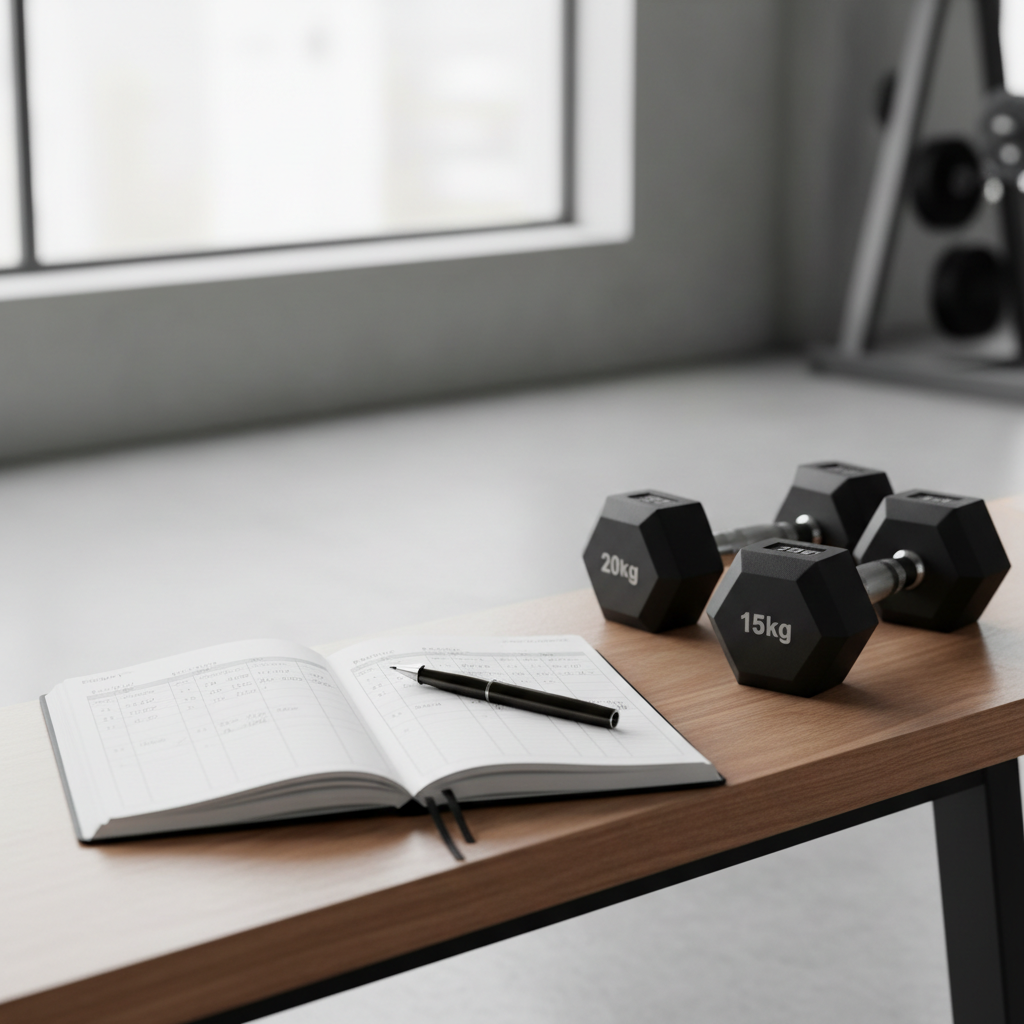
- No tracking: if you don’t write down weights and reps, progression becomes random.
If you’re dealing with pain (sharp, nerve-like, or worsening), it’s wise to pause that movement and consider guidance from a qualified professional.
When to get help from a coach, trainer, or clinician
Plenty of beginners can run a gym training plan on their own, but some situations deserve extra eyes. In many cases, one or two sessions with a good trainer can save months of confusion.
- Persistent joint pain, numbness, or symptoms that radiate down an arm or leg
- History of surgery, major injury, or a condition where exercise limits apply
- Big mismatch between effort and results, even with consistent training and sleep
- Anxiety in the weight room that stops you from executing the plan
According to ACSM (American College of Sports Medicine), beginners benefit from proper technique and gradual progression, and people with health concerns may need individualized advice. If you have medical conditions or take medications that affect exercise tolerance, consulting a healthcare professional is a safe move.
Conclusion: keep it boring enough to work
The point of a beginner routine isn’t to entertain you, it’s to build a base you can grow from. Pick the 3-day template, track your numbers, and give it four consistent weeks before you judge it.
Action step 1: put your three training days on your calendar now, like appointments.
Action step 2: choose your swaps from the table today, so you don’t improvise when the gym gets crowded.
Key takeaways
- A beginner plan works when it’s repeatable, not complicated.
- Stay 1–3 reps shy of failure for most sets, form comes first.
- Progress by adding reps, then small weight increases.
- Use machines when needed, consistency beats “perfect” exercise selection.
FAQ
- How long should a gym training plan for beginners last?
Most people do well running the same framework for 8–12 weeks, swapping only when equipment or comfort demands it. Frequent total overhauls usually slow skill building. - Should I do full-body or a split as a beginner?
If you train 2–3 days per week, full-body is usually simpler and more effective. If you can reliably train 4 days, an upper/lower split can add practice without marathon sessions. - Do I need to use barbells right away?
No. Dumbbells and machines can build plenty of strength while you learn control. Barbells can be great later, but they’re not mandatory in week one. - How sore is “normal” after starting?
Mild to moderate soreness is common early on, especially after new movements. If soreness is severe, lasts many days, or changes how you walk and sleep, reduce volume and load next session. - How do I know if I’m lifting heavy enough?
If you finish most working sets with 1–3 reps left in the tank and your form stays consistent, you’re in a productive zone. If every set feels like a max, you’re likely overshooting. - Can I lose fat and gain muscle with this plan?
Many beginners can see both changes, but results vary by diet, sleep, stress, and starting point. If fat loss is your priority, nutrition and daily activity matter as much as training. - What if I miss a workout?
Don’t “make up” by doubling sessions. Just do the next workout in order, and keep the week moving, consistency over perfection.
If you’re starting a new gym routine and want a more hands-off way to organize your week, a simple tracker or coach-built template can make the gym training plan feel less mental, especially when you’re learning form and figuring out what equipment your gym actually has.