
Swimming Fitness works as a full-body workout when you treat your swim like training, not just “laps until tired.” If you’ve ever left the pool feeling relaxed but not stronger or fitter, it’s usually a structure problem: intensity, rest, and technique are not dialed in.
That matters because swimming can build cardio capacity, muscular endurance, and shoulder-to-hip coordination with low impact. It’s one of the few workouts that can be challenging without pounding your knees or back, which is why a lot of adults return to it when running or lifting feels rough.
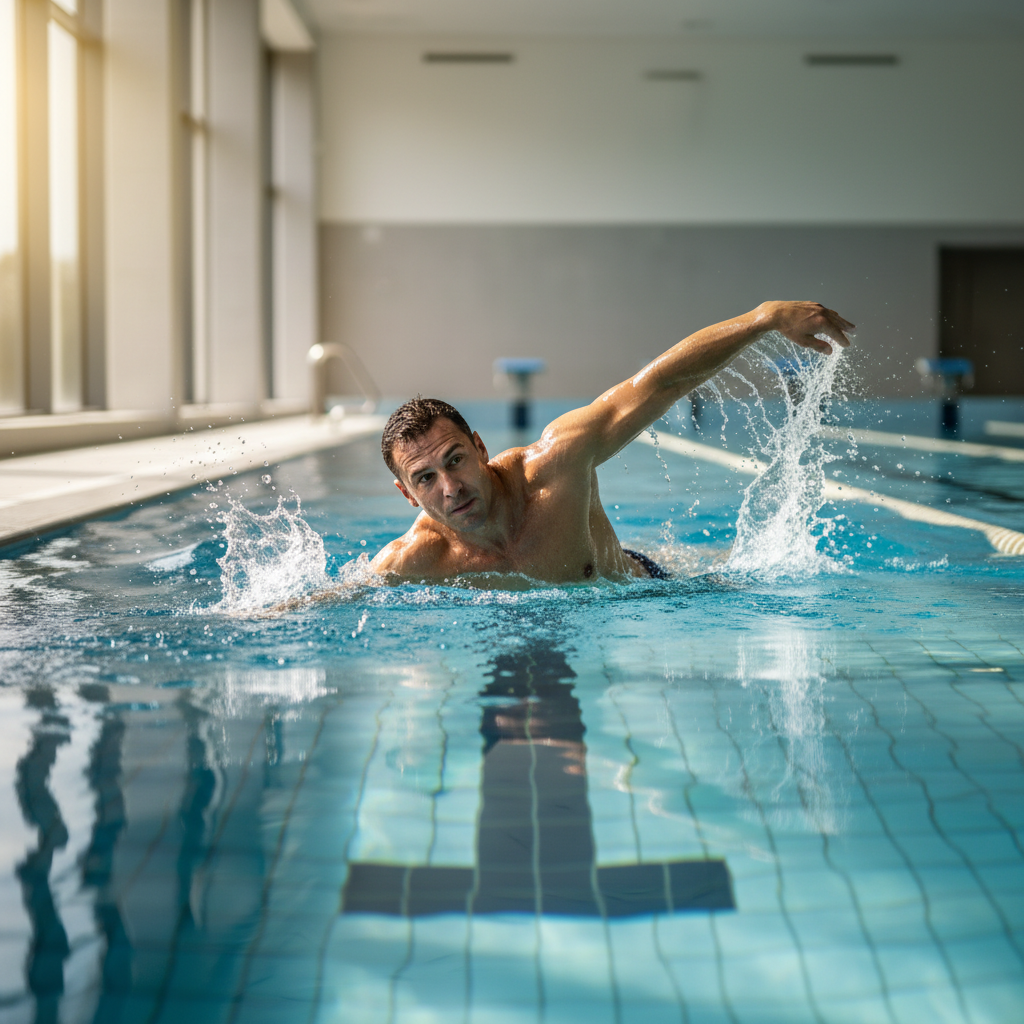
One more honest point: swimming is technical. If your form falls apart, you’ll feel “gassed” in the wrong places, and progress stalls. This guide keeps it practical, you’ll learn why swimming hits the whole body, how to judge your current level, and how to build sessions that actually move the needle.
Why Swimming Can Be a True Full-Body Workout
Swimming uses the upper body, core, and lower body in one continuous chain, and water adds resistance in every direction. That combination makes it unique compared with most gym cardio.
- Upper body pulling: lats, upper back, shoulders, and arms drive propulsion in freestyle, backstroke, and butterfly.
- Core control: rotation, balance, and body line demand trunk stability, especially when breathing.
- Leg drive: kicking works hips, glutes, quads, and calves, plus it elevates heart rate fast.
- Cardio + muscular endurance: sustained efforts train your heart and lungs while muscles work under steady resistance.
According to the Centers for Disease Control and Prevention (CDC), swimming is a low-impact activity that can improve health and is often suitable for many ages and fitness levels. That “low-impact” part is why many people can train more frequently, which often leads to steadier results.
The Mistake Most People Make With Swimming Fitness
Many swimmers default to one pace: moderate, continuous, minimal rest. It feels productive, but it usually stops producing adaptation after a few weeks because the body gets used to the same stimulus.
If you want Swimming Fitness to feel like a full-body session, you typically need at least one of these levers:
- Higher intensity (shorter, faster repeats)
- More density (same work, less rest over time)
- Strength emphasis (tools like paddles/buoy used carefully, or kick sets)
- Better efficiency (technique upgrades so you can hold speed longer)
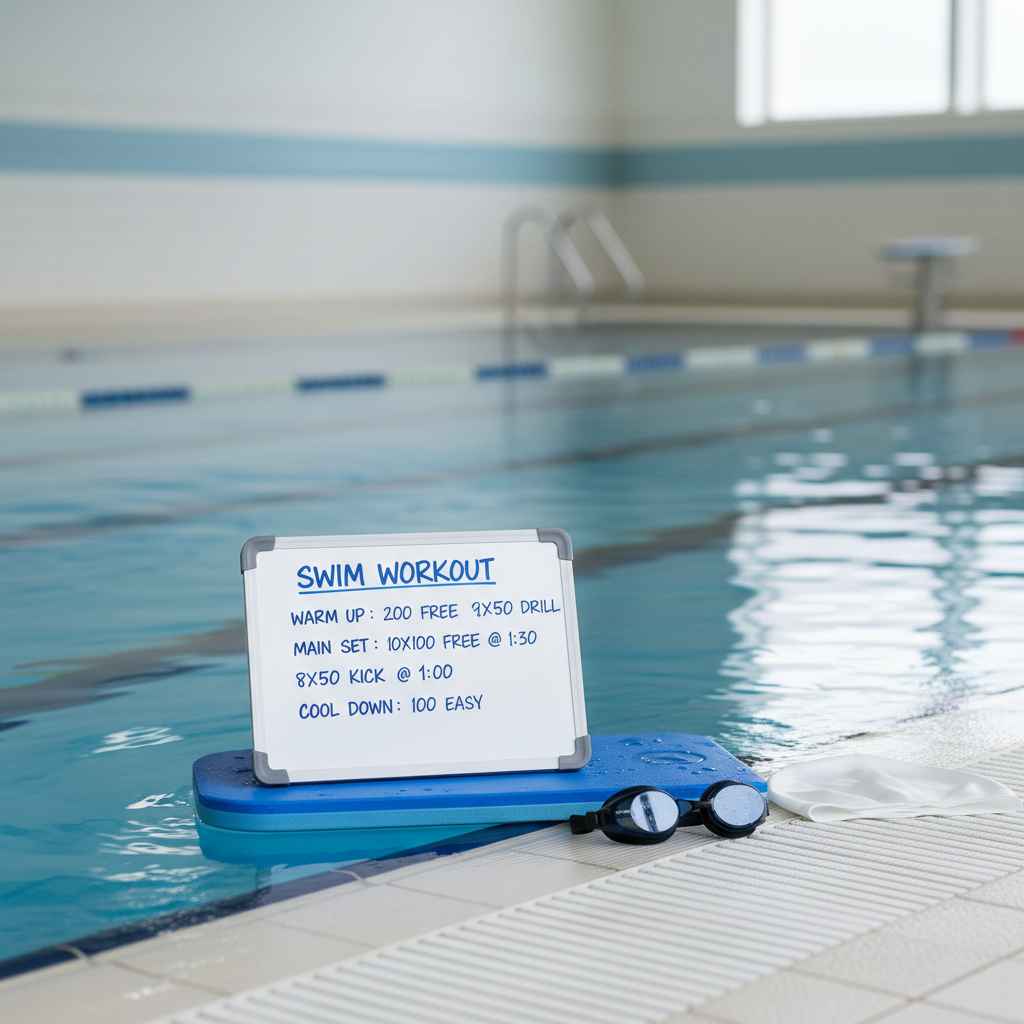
Also, swimming hard with sloppy mechanics can irritate shoulders or neck. “More intensity” only works when you keep form stable enough that the right muscles do the work.
Quick Self-Check: What Kind of Swimmer Are You Right Now?
Pick the closest match. This helps you choose sets that challenge you without turning every session into survival mode.
- Just starting: you need frequent breaks, breathing feels stressful, and your legs sink when you get tired.
- Recreational base: you can swim 10–20 minutes continuously, but speed changes feel dramatic and form fades late.
- Fitness-focused: you can hold repeatable times on intervals (even if slow), and you recover within 20–40 seconds.
- Competitive background: you can hit paces on send-offs, you know how to descend, and you can tolerate hard sets weekly.
If you’re in the first two groups, technique and pacing create the fastest payoff. If you’re in the last two, programming details and recovery become the limiter.
Full-Body Swimming Workout Structure (That Actually Works)
A solid Swimming Fitness session usually has four parts: warm-up, skill or activation, main set, and cool-down. The goal is not complexity, it’s consistency and progressive challenge.
1) Warm-up (8–12 minutes)
- Easy swim, mix strokes if you can
- Include a few 15–25 yard “builds” where you gradually speed up
2) Skill/Activation (5–10 minutes)
- Drills that improve body position or breathing (example: side-kick drill, 6-kick switch)
- Light kick or pull to “wake up” hips and lats
3) Main set (15–30 minutes)
This is where the training effect happens. Pick one focus per day so you can measure progress.
4) Cool-down (3–8 minutes)
- Easy swim + relaxed breathing
- Stop before your stroke gets sloppy from fatigue
Sample Swim Sets for Strength + Cardio (Beginner to Advanced)
Use these as templates. Distances assume a 25-yard pool, but you can adapt to 25 meters by keeping the same pattern and using effort as the guide.
| Goal | Level | Main Set Example | Effort | Rest |
|---|---|---|---|---|
| Cardio base | Beginner | 12 x 50 easy/moderate | 6/10 | 20–30 sec |
| Full-body endurance | Intermediate | 8 x 100 steady, last 25 strong | 7/10 | 15–25 sec |
| Speed + power | Intermediate+ | 16 x 25 fast, easy 25 between | 8–9/10 | Walk-back or 20–40 sec |
| Strength emphasis | Advanced (careful) | 10 x 50 pull (buoy), last 15 yards strong | 7–8/10 | 20 sec |
| Leg + lungs | All levels | 8 x 25 kick + 1 x 100 easy swim, repeat twice | Kick 7/10 | 15–30 sec |
Key point: if you can’t repeat effort with roughly similar quality, the set is too hard for today, or rest is too short.
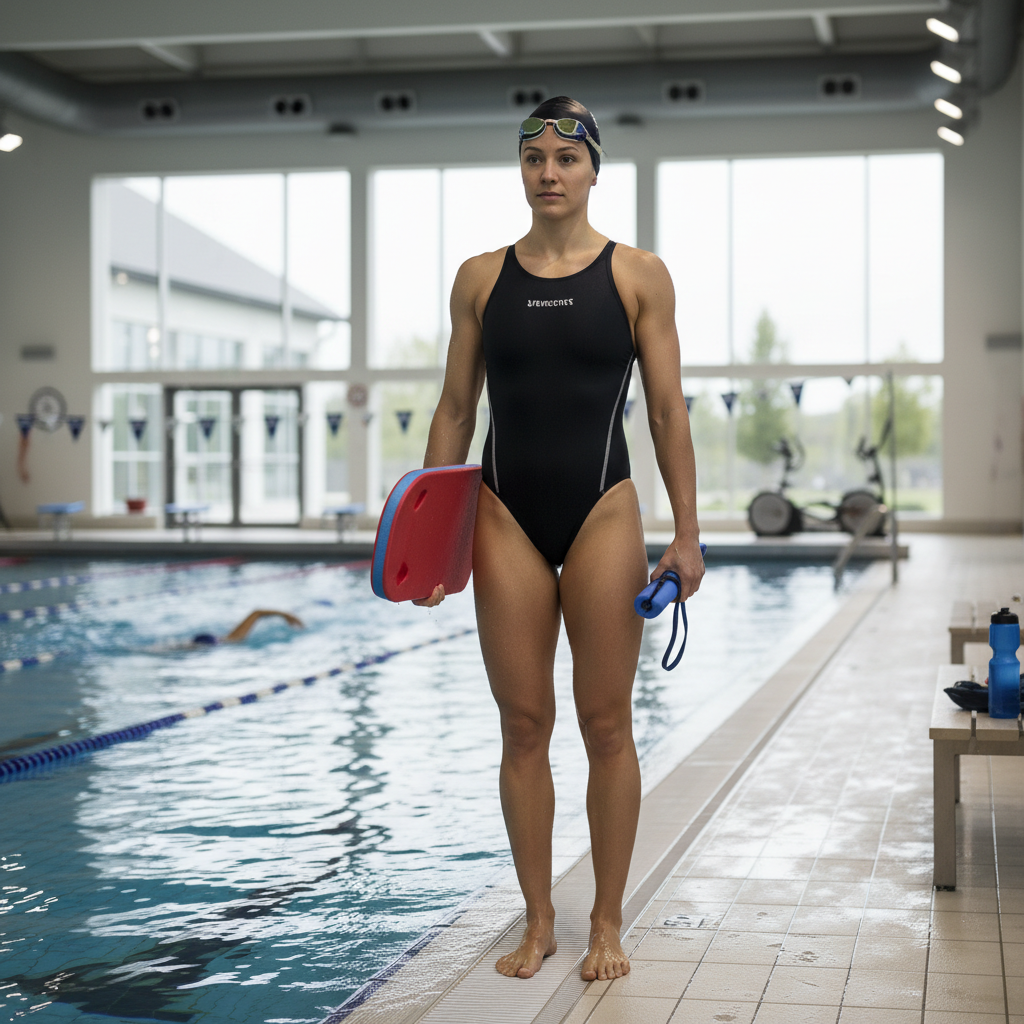
If you want a simple weekly rhythm, many people do well with 2–4 swims per week: one technique + easy aerobic day, one interval day, and optionally one pull/kick emphasis day.
Practical Progression: How to Get Better Without Burning Out
Progress in Swimming Fitness usually comes from small, boring improvements that stack up. Big jumps often come with sore shoulders or stalled motivation.
- Change one variable at a time: increase total distance, or shorten rest, or add a few fast repeats, not all at once.
- Track one “benchmark” set: for example, 10 x 50 at a consistent send-off, record how it feels and your approximate times.
- Use RPE (rate of perceived exertion): a 7/10 should feel sustainable with focus, an 9/10 is “I can’t hold this long.”
- Respect recovery: if shoulders feel crunchy or sleep runs poor, keep the next swim easy.
According to the American Heart Association, aerobic activity supports cardiovascular health, and swimming can be one way to get it. Realistically, consistency beats hero workouts, especially if your schedule already feels tight.
Safety, Technique Traps, and Common Misconceptions
This is where a lot of well-intentioned swimmers lose weeks.
- “I’ll just use paddles to get strong”: paddles can overload shoulders if catch mechanics are off. Start small, keep elbows from collapsing, and stop if pain shows up.
- Breathing every stroke: panic-breathing spikes tension and drops hips. Practice exhaling underwater, then inhale quick and calm.
- All kick, no hips: kicking from knees burns quads and goes nowhere. Think “small kick from the hips,” toes relaxed.
- Going hard every session: frequent high intensity can beat up joints and stall progress. Most people need more easy-to-moderate swimming than they expect.
If you have asthma, heart conditions, a history of shoulder injury, or you’re returning after a long break, it’s smart to check with a clinician or qualified coach for guidance that fits your situation.
When It’s Worth Getting Coaching or Professional Help
Some problems are hard to self-correct because you can’t feel what’s happening in the water.
- Persistent shoulder pain that shows up during or after swimming
- You can’t improve past a plateau even with consistent sessions and planned rest
- Breathing keeps triggering panic or you avoid deep water because of confidence
- You want triathlon performance and open-water skills, not just pool fitness
A few sessions with a coach, or even a filmed stroke review, can clarify what to focus on. If pain appears sharp, radiating, or worsening, a physical therapist who understands swimmers may be appropriate.
Conclusion: Make Swimming Fitness Feel Like a Full-Body Workout
Swimming Fitness becomes a real full-body workout when you combine smart structure with steady technique, a main set that has a purpose, and recovery that keeps you coming back. You don’t need fancy gear, you need repeatable sessions you can progress.
If you want a straightforward next step, pick one template set from the table, swim it once a week for three weeks, and keep notes on effort, rest, and how your shoulders feel. Then adjust one variable, not everything at once.
FAQ
- How long should a Swimming Fitness workout be?
Many adults do well with 30–45 minutes in the pool, including warm-up and cool-down. If you’re new, shorter swims with better form often beat long sessions that turn into flailing. - Is swimming enough for strength training?
It can build muscular endurance and some strength, especially with sprinting and controlled pull sets. If your goal is maximal strength or bone density, adding dryland resistance training may help, depending on your needs and medical context. - What stroke is best for a full-body workout?
Freestyle is the most practical for continuous work, but mixing strokes spreads stress and can reduce overuse. If butterfly irritates shoulders, keep it limited or skip it. - How do I know if I’m swimming hard enough?
A good sign is repeatability: you can hit the same distance multiple times with similar quality and controlled breathing. If your pace drops sharply every repeat, intensity or rest likely needs adjustment. - Should I use paddles, fins, or a pull buoy?
Tools can help, but they also magnify flaws. A pull buoy often feels safer than paddles for many swimmers, while fins can help body position but may hide weak kicking if overused. - Can swimming help with weight loss?
It can support a calorie deficit and improve fitness, but appetite and recovery vary a lot person to person. If weight change is the main goal, pairing swimming with nutrition habits you can sustain usually matters most. - What if I keep getting shoulder pain from swimming?
Back off intensity, reduce paddle use, and focus on relaxed recovery and better catch mechanics. If pain persists or limits daily activity, consider a clinician or PT evaluation rather than pushing through.
If you’re trying to turn casual laps into a consistent plan, it can help to write your next 2–3 pool sessions in advance and choose one clear focus each day, endurance, speed, or technique, so you leave the pool knowing what improved instead of just hoping it did.