
how to choose a hybrid bike size starts with one simple goal, a bike that feels stable and comfortable for your body, not just a number on a chart.
If the size is off, you usually notice it fast, sore wrists, a tight lower back, knees that feel “wrong,” or that constant sense you’re reaching for the bars. The tricky part is hybrid bikes sit in the middle of road and mountain geometry, so sizing rules people remember from one category can mislead them here.
This guide breaks it into practical checks you can do at home, what to look for on brand size charts, and how to use a short test ride to confirm you’re in the right range.

Why hybrid bike sizing feels confusing (and what “size” really means)
On many hybrids, “size” can refer to the frame size (often in centimeters), a letter size (S/M/L), or sometimes just a recommended rider height range. Those are related, but they’re not identical.
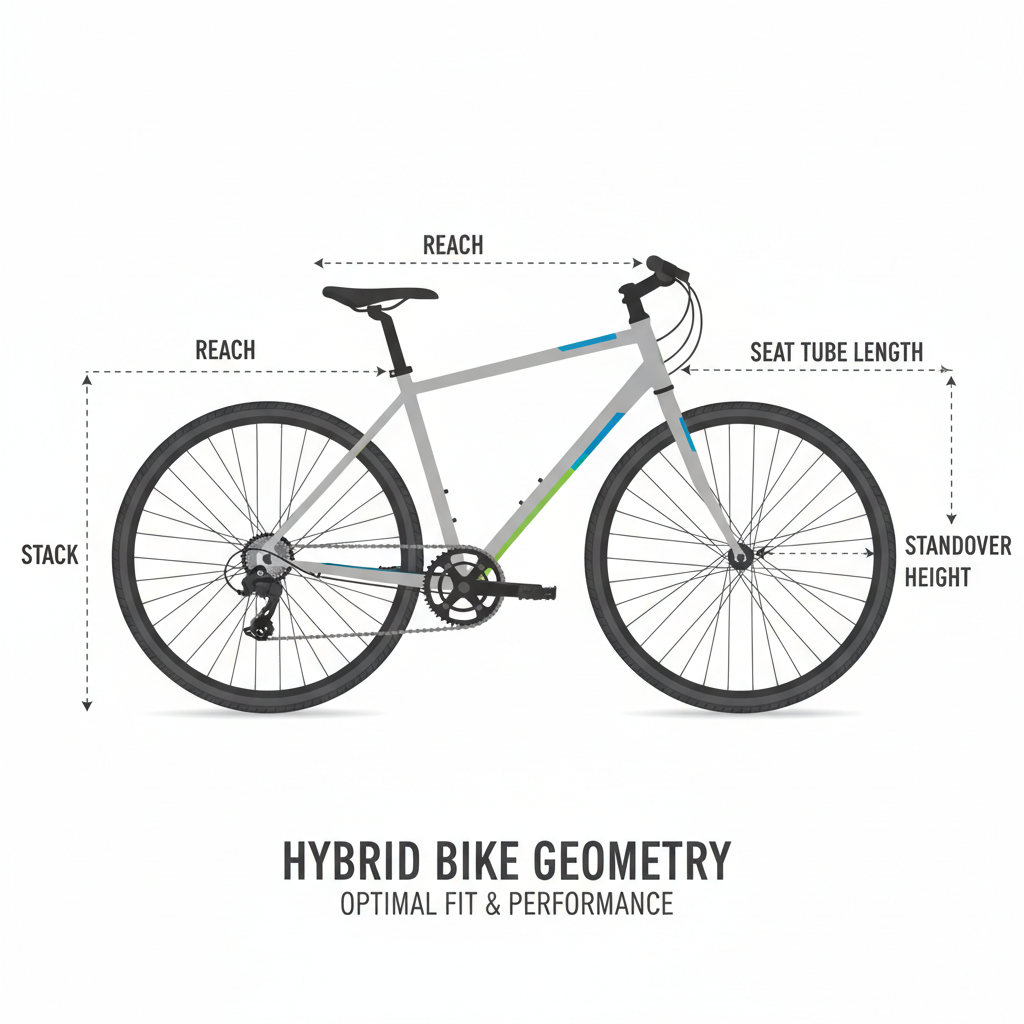
A hybrid’s fit depends on a few measurements working together, not one magic number:
- Standover height: clearance between you and the top tube when you stand over the bike.
- Reach: how far you stretch to the handlebar, this drives shoulder, neck, and wrist comfort.
- Stack: how tall the front end feels, this affects how upright you sit.
- Saddle position: height and fore-aft position, strongly tied to knee comfort and pedaling efficiency.
According to the International Bicycle Fund, correct saddle height and overall fit can help reduce overuse discomfort and improve control, which matters more on mixed terrain where hybrids live.
Start with two body measurements: height and inseam
You can get close to the right hybrid bike frame range with height and inseam, and you don’t need fancy tools.
How to measure inseam (quick and consistent)
Stand barefoot with your back to a wall, place a thin book between your legs like a saddle, then measure from the floor to the top edge of the book. Use that number as your cycling inseam.
- Measure twice, it’s common to be off by half an inch the first try.
- Wear the type of shorts you typically ride in if you want the number to feel more “real world.”
Height gets you into the right neighborhood, inseam tells you whether you’re likely to need a smaller frame with more seatpost showing, or a larger frame with more saddle-to-bar drop potential.
Use size charts, but read them like an editor, not like a contract
Brand charts are useful because they reflect that model’s geometry, but they’re still a simplification. If you’re between sizes, the better choice depends on how you want the bike to feel.
Here’s a practical “tie-breaker” table many riders find helpful:
| When you’re between sizes | Usually prefer the smaller size if you want… | Usually prefer the larger size if you want… |
|---|---|---|
| Comfort and control | More upright feel, easier handling at low speed | More stretched position, steadier feel at speed |
| Terrain and use | City stops, paths, light gravel, frequent starts | Longer rides, smoother surfaces, fewer stops |
| Body proportions | Shorter torso or arms, tight shoulders | Longer torso or arms, feel “cramped” easily |
| Flexibility | Lower back or hamstring tightness | Comfortable hinging at hips for longer periods |
One more nuance, step-through hybrids and traditional diamond frames can list the same “size,” but the fit can still feel different because standover and front-end height change.
A fast self-check list before you buy
If you only do one thing beyond reading a chart, do these checks. They catch most sizing mistakes quickly.
- Standover clearance: aim for a little space between you and the top tube, more clearance tends to feel safer for stop-and-go riding.
- Seated reach: with hands on grips, you should feel relaxed shoulders and a slight bend in elbows, not locked arms.
- Saddle height range: the seatpost should not be maxed out, and it shouldn’t be slammed all the way down either.
- Low-speed handling: a too-large frame often feels like it “falls” into turns, a too-small frame can feel twitchy.
- Front wheel overlap: some overlap can happen on smaller sizes, but if your toe regularly hits the front tire in slow turns, note it before committing.
If any two of these feel off, you’re probably looking at the wrong frame size, or at least the wrong cockpit setup for your body.
Dialing in fit: simple adjustments that change how a size feels
This is where a lot of people either save a purchase or ruin a perfectly good bike. Small adjustments can make a “close” size feel right, but they can’t turn the wrong size into the right size.
Adjustments that usually work (within reason)
- Saddle height: your knee should keep a slight bend at the bottom of the pedal stroke, not a straight leg. If you feel hip rocking, the saddle might be too high.
- Saddle fore-aft: helps knee tracking and weight balance, especially if your knees feel stressed on climbs.
- Handlebar height: many hybrids allow spacers or adjustable stems, higher bars reduce pressure on hands and lower back.
- Stem length: shorter stem reduces reach, longer stem increases it, small changes can be meaningful.
Adjustments that are red flags
- Needing an extremely short or extremely long stem just to feel “normal.”
- Saddle pushed all the way forward or all the way back to stop knee pain.
- Seatpost beyond minimum-insertion marks to get leg extension.
Those are signs the frame size or geometry mismatch is bigger than a tune-up can fix.
How to test ride a hybrid bike size in 10 minutes
When people ask how to choose a hybrid bike size, they often want a single measurement, but a short test ride tells you more than five specs on a product page.
Try this loop in a parking lot or quiet street:
- Start and stop several times, check confidence when you put a foot down.
- Ride seated, then stand up and pedal for 10–15 seconds, note any awkward bar contact or feeling cramped.
- Do a few slow, tight turns, then a faster gentle turn, feel whether steering is calm or nervous.
- Climb a small incline if possible, pay attention to knees and whether you slide forward on the saddle.
Key point: discomfort that shows up immediately during a short ride often becomes a real problem on longer rides, while mild “new bike weirdness” tends to fade after a couple of outings.

Common sizing mistakes (especially for new hybrid riders)
These show up constantly, and they’re easy to miss if you’re buying online or upgrading from an old bike.
- Choosing by wheel size: 700c vs 650b affects ride feel, but it’s not a frame size shortcut.
- Buying “bigger for speed”: a too-large bike can feel stable, but it often creates back and hand pain over time.
- Ignoring proportion: two riders with the same height can need different sizes due to inseam and torso length.
- Assuming all brands run the same: an M in one brand can match an S or L elsewhere.
- Over-focusing on standover: it matters, but reach and bar height often decide comfort on hybrids.
According to PeopleForBikes, choosing a bike that supports comfort and control helps keep riding consistent and enjoyable, which is the whole point for most hybrid owners.
When to get help from a bike shop or fitter
If you’re dealing with ongoing pain, a history of knee or back issues, or you’re planning longer rides, getting a second set of eyes can save money and frustration. A professional fitting might be worth considering, especially if you already tried basic adjustments without relief.
- Persistent numb hands or feet, even after bar and saddle tweaks
- Knee pain that worsens after each ride
- Neck or lower back pain that shows up early in rides
- You’re between sizes and unsure, and returns would be a hassle
Many shops will also help match saddle shape, grip style, and bar width to your body, those details often matter as much as the frame number.
Key takeaways and what to do next
If you remember nothing else, use height and inseam to narrow choices, then confirm with a real-world reach and handling check. That combo usually answers how to choose a hybrid bike size more reliably than chasing a single “perfect” measurement.
Next step, pull up the exact model’s size chart, pick the most likely size, then test ride with the checklist above. If you’re between sizes, decide whether you want a more upright, confidence-first feel or a slightly longer, steadier position for longer rides.
If you want, share your height, inseam, and the bike model you’re considering, and I can help you interpret the chart and spot common fit red flags before you order.