
How to pack a bike bag for commuting comes down to one thing: carrying only what you’ll actually use, then placing it so the ride feels stable and the unpacking feels effortless.
If your bag swings, your laptop feels like it’s punching your back, or you keep arriving with wrinkled clothes and a cable mess, it’s rarely “you need a bigger bag.” Most commuters just need a repeatable packing order, a couple of small organizers, and a rule for what never leaves the bag.
There’s also a quiet cost to bad packing, you waste time every morning, you forget essentials, and you end up overpacking “just in case.” This guide breaks it into practical steps, plus a table you can copy, and a quick self-check so you can adjust based on your route, weather, and whether you carry tech.
Start with the bag type and where the weight sits
Before you decide what to carry, be honest about where your bag rides, your body and bike feel weight very differently. A backpack is convenient but concentrates load on your shoulders, a pannier keeps weight off your back but can affect handling, a messenger bag is quick but can shift if it’s heavy.
According to NHTSA, visibility and predictability matter for roadway safety, so anything that throws off your balance or makes you weave is a real concern, not a comfort issue. If your current setup makes you unstable, it’s worth changing the carry style before optimizing the packing list.
- Backpack: best when you carry light-to-medium and want simple off-bike carry.
- Pannier: best when you carry a laptop, lunch, or heavier items, less sweat on your back.
- Handlebar bag: good for small valuables and quick-access, not great for heavy tech.
Rule that saves a lot of frustration: put the densest items as close to the bike and as low as the bag design allows, and keep soft items on the outside to reduce pressure points.
Pick a “commute core” and stop repacking every day
Most people who struggle with how to pack a bike bag for commuting are repacking from scratch daily, which invites forgetting things. A better approach is a commute core, a small set of items that live in your bag full-time, plus a short “today items” add-on.
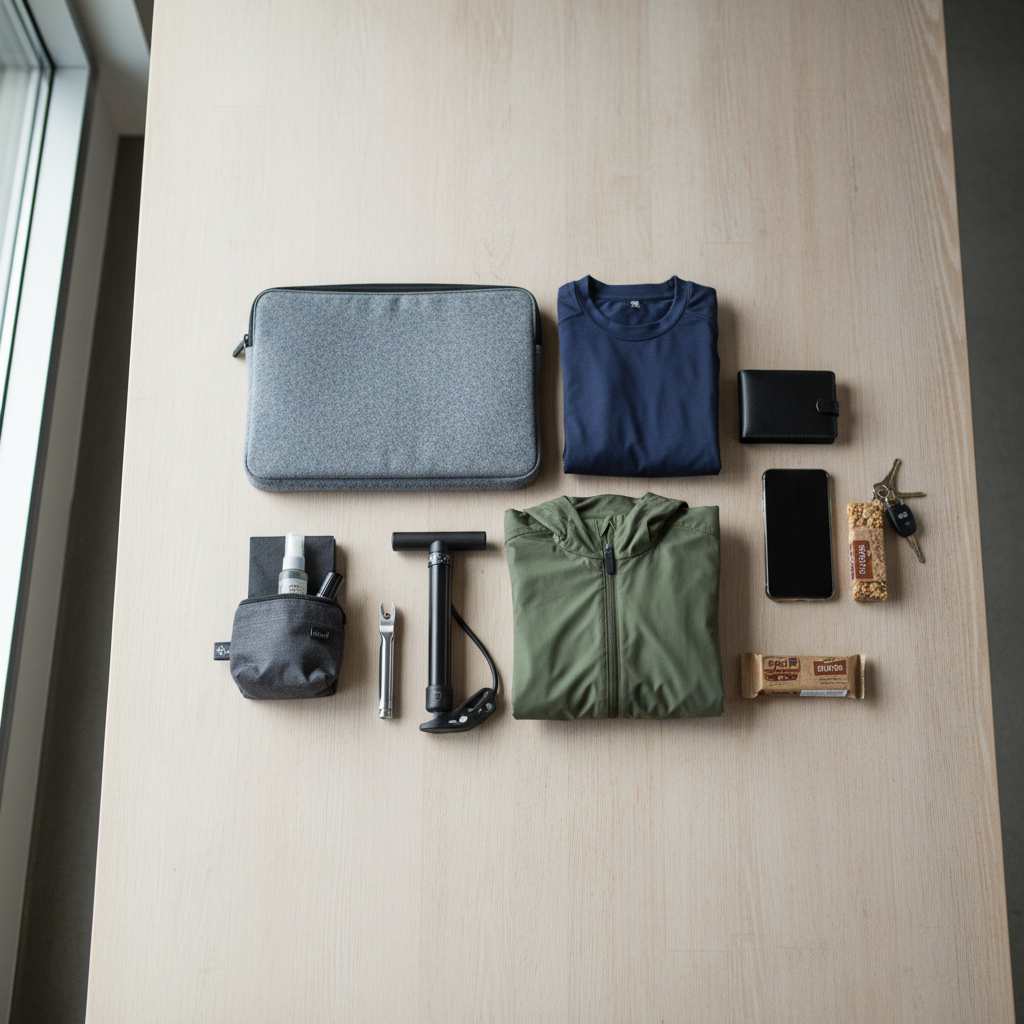
Commute core (stays in the bag)
- Flat kit: tube or plug kit, tire levers, mini pump or CO2 (check workplace rules), small patch kit
- Multitool, plus any odd-size bit your bike actually uses
- Small first-aid basics (bandage, antiseptic wipe), nothing fancy
- Lights (or a charging cable if you recharge at work)
- Emergency layer: compact shell or light gloves depending on your region
Today items (changes with plans and weather)
- Laptop/tablet and charger, badge, keys
- Lunch, coffee thermos, snacks
- Work clothes or shoes if you change on arrival
If you want this to feel easy, store “core” in a small pouch so you can lift it out when you deep-clean the bag, not every weekday morning.
A simple packing order that works on most commutes
Here’s the order that usually keeps things stable and easy to unpack. It’s not fancy, it’s just consistent, and consistency is what makes mornings feel shorter.
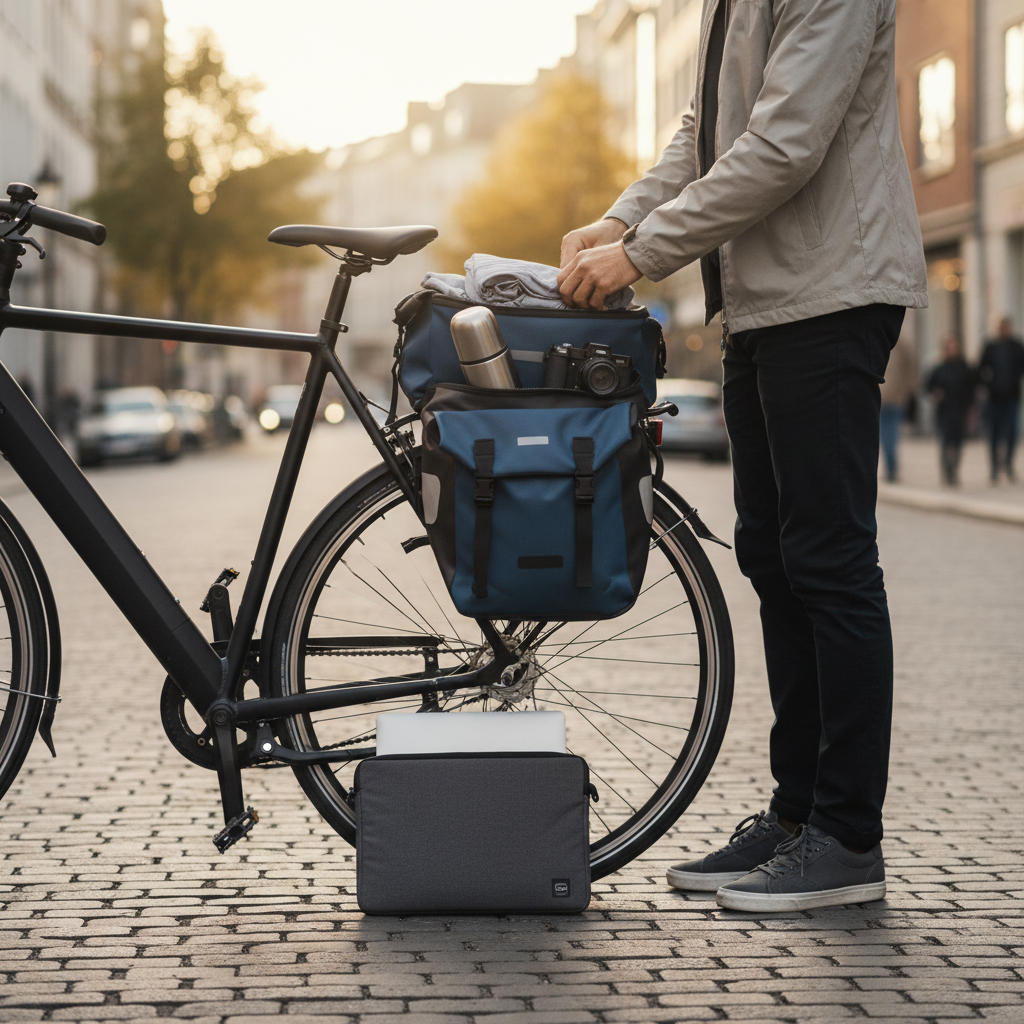
- Bottom layer: dense, rarely accessed items (lock, tool pouch, spare tube) in a corner or bottom compartment.
- Back panel (closest to you): laptop/tablet in a padded sleeve, flat and vertical so it doesn’t bow.
- Middle: lunch in a leakproof container, shoes (in a shoe bag) or a small packing cube.
- Top: rain layer, light gloves, or anything you might grab mid-ride.
- Quick pocket: keys, transit card, small wallet, lip balm, earbuds.
Two small upgrades do a lot of work: a laptop sleeve (even inside a “padded” bag) and one packing cube for clothes. The goal is fewer loose items migrating to the bottom.
Use this checklist to figure out what you actually need
If you’re still guessing, this is the quickest way to dial in your load. Answer these and you’ll know whether you’re underpacked, overpacked, or just packed in the wrong order.
- Do you arrive sweaty enough to need a change? If yes, pack a small towel or wet wipes, and keep clothes in a cube.
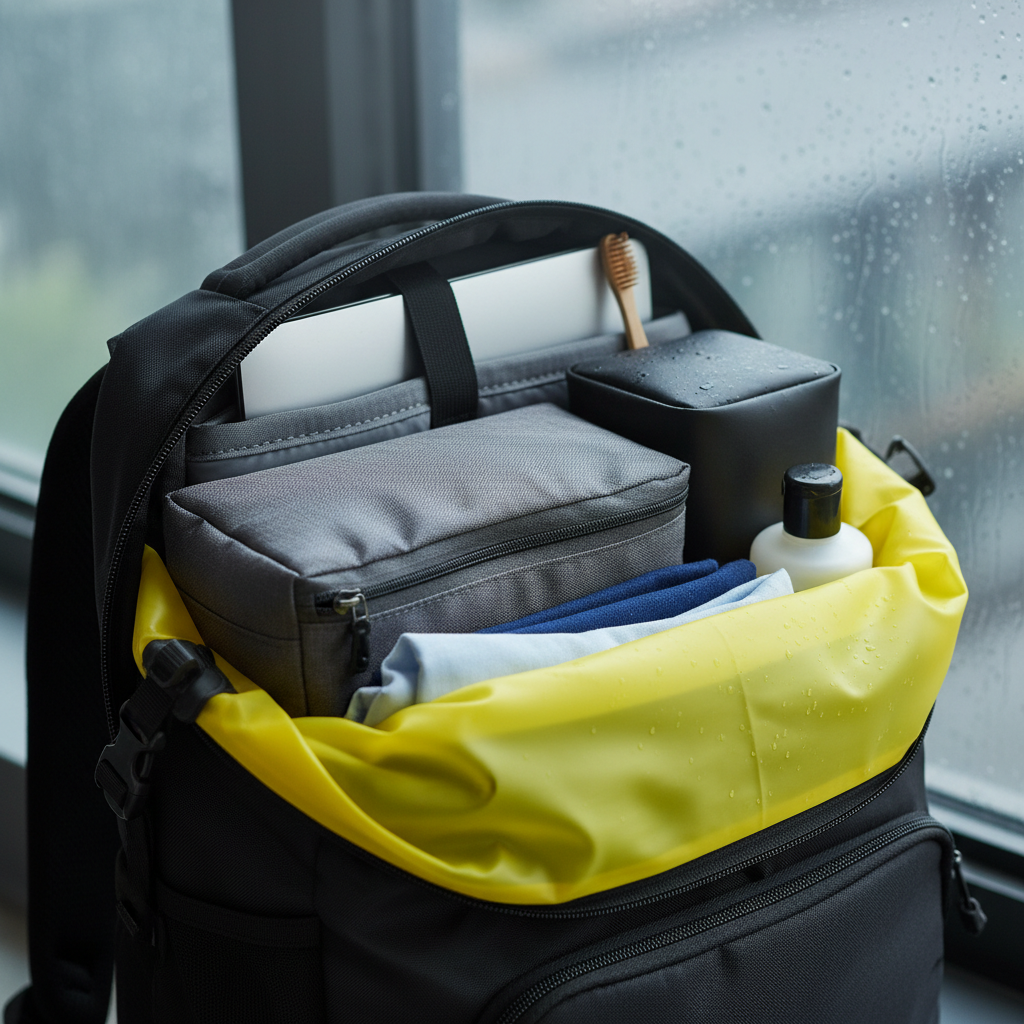
- Do you ride in rain a few times a month? If yes, prioritize a shell and a dry bag liner before adding more gadgets.
- Do you carry a laptop daily? If yes, stabilize it with a sleeve and place it closest to your back or the pannier’s inner wall.
- Do you stop for errands? If yes, leave a little “empty volume,” cramming the bag full makes every extra stop annoying.
- Do you forget small essentials? If yes, create a mini pouch for cables, meds, and hygiene, and never remove it.
One honest test: if you haven’t touched an item in two weeks of commuting, it probably belongs at home or at the office, not in the bag.
What to pack for common commuting scenarios (table)
This table isn’t a strict rulebook, but it’s a helpful starting point. Adjust for your distance, dress code, and whether you can store backups at work.
| Scenario | Carry | Pack it like this |
|---|---|---|
| Short ride (under ~20 min) | Keys, wallet, phone, lock, mini flat kit, light layer | Keep it minimal, dense items low, quick pocket for essentials |
| Laptop commute | Laptop in sleeve, charger, mouse, notebook, flat kit | Laptop closest to back/inner wall, cables in a zip pouch |
| Changing at work | Clothes cube, deodorant, small towel, hair tie/comb, shoes | Cube centered, shoes at bottom in a shoe bag, toiletries upright |
| Rainy season | Shell, rain pants (optional), waterproof shoe covers, dry bag liner | Shell on top, electronics inside liner, avoid loose paper |
| Errands after work | Reusable tote, bungee cord (if you know how to use it), extra snack | Leave space, keep tote in side pocket, don’t bury lock |
Practical steps for a clean, fast morning pack
If you want the easiest version of how to pack a bike bag for commuting, treat it like a routine you can do half-awake, because many mornings you will.
Step-by-step routine (3–5 minutes)
- Do a two-pocket reset: quick pocket has keys and ID, tech pouch has cables and charger, everything else can vary.
- Load dense items first: lock, tools, lunch, then soft items.
- Seal against leaks: lunch containers upright, liquids inside a zip bag, napkins nearby.
- Weather on top: shell and gloves where you can grab them without unloading the bag.
- Final check: tug the bag, if items shift, you’ll feel it right away.
Small but real tip: pack work clothes as a tight fold or roll inside a cube, and put the cube against a flat surface, loose fabric in a big main compartment gets crushed fast.
Mistakes that make bike bags feel heavier than they are
It’s rarely about total weight alone, it’s about movement and pressure points. These are the patterns that keep showing up.
- Heavy item far from your center: a U-lock at the top of a backpack makes the load “pull” backward.
- No internal grouping: loose cables, pens, and tiny items become a daily scavenger hunt.
- Paper with no protection: notebooks, forms, or mail get mangled unless you use a folder or sleeve.
- Rain plan equals “hope”: many bags claim water resistance, but zippers and seams often leak in real storms.
According to CDC, helmet use reduces the risk of head injury, and while that’s not “packing,” it’s part of the same mindset: set yourself up so the ride stays predictable, especially when weather or traffic gets messy. If you’re new to commuting, consider asking a local bike shop to check fit and handling, a too-low seat or unstable load can make the whole ride feel harder than it should.
Key takeaways and a simple conclusion
The best packing system is the one you repeat without thinking. Keep a small commute core in the bag, place dense items low and close to your body or the bike, and use one or two organizers so nothing migrates mid-ride.
If you do one thing today, set up a tech pouch and a clothes cube, then do a quick test ride around the block to see what shifts. Your future mornings will feel calmer, and your shoulders will notice.