
Home workout equipment can be the difference between “I’ll start Monday” and actually getting consistent, but only if you buy tools you will use in your space, with your schedule, and at your current fitness level.
A lot of people overbuy, then the gear becomes a coat rack. Others underbuy, then workouts feel repetitive or too easy. This guide aims for the middle: a small set of versatile essentials, plus smart upgrades depending on your goals, budget, and square footage.
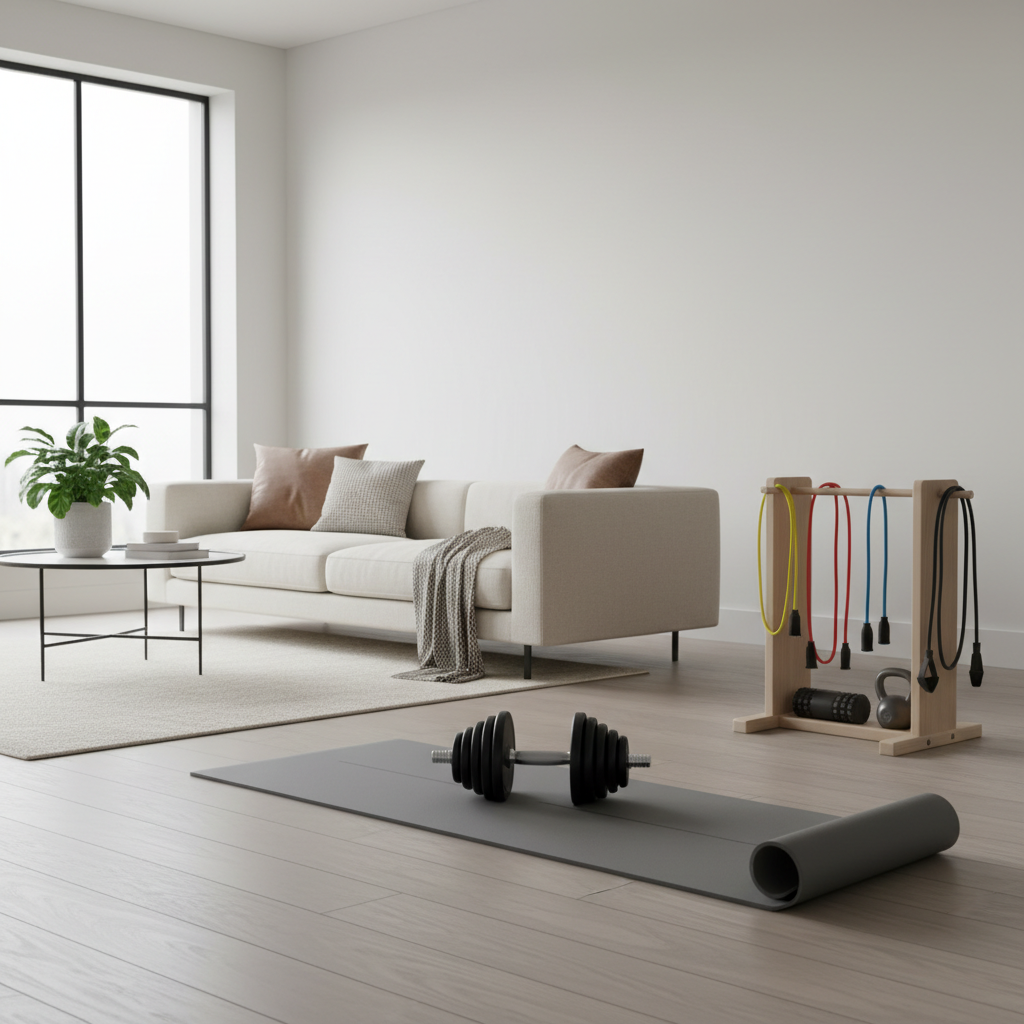
One more thing before we get into product types: “best” depends on trade-offs. Quiet vs. powerful, compact vs. stable, cheap vs. durable. I’ll call those out so you can choose on purpose, not just on hype.
Key takeaways (so you can shop faster)
If you want the short list, start here and come back for details.
- Most homes do well with 6–8 core items: adjustable dumbbells or kettlebells, bands, a mat, a bench or step, and a pull option.
- Adjustability beats “more stuff” in small spaces, especially for strength training.
- Joint comfort and safety matter: stable surfaces, good footwear, and realistic loading jumps.
- Pick equipment that matches your training style (strength, conditioning, mobility), not a generic “full body” promise.
How to choose home workout equipment that you’ll actually use
Before comparing features, nail your constraints. Most buying regret comes from ignoring one of these three.
1) Your goal: strength, fat loss, mobility, or “general fitness”
Strength usually needs load progression (heavier over time). Conditioning needs repeatable movement with manageable impact. Mobility needs consistency and comfort more than “cool” tools.
2) Your space and noise tolerance
A second-floor apartment changes the answer. So does a shared wall. Rubber flooring, controlled lowering, and quieter tools can matter as much as the training plan.
3) Your progression path
If you are new, avoid setups that force big jumps (for example, a fixed dumbbell set with gaps that feel too heavy). Adjustable systems or bands often make progression smoother.
The 2026 “core kit”: versatile gear that covers most workouts
If you want one shopping list that fits most households, build around these. They stack together into full-body training without filling a garage.
Adjustable dumbbells (or a pair of kettlebells)
For many people, this is the highest “workouts per dollar” choice. Adjustable dumbbells are compact and make progressive overload straightforward, while kettlebells shine for swings, carries, and conditioning.
- Choose adjustable dumbbells if you want easy strength programming and minimal floor space.
- Choose kettlebells if you like full-body power and fewer moving parts.
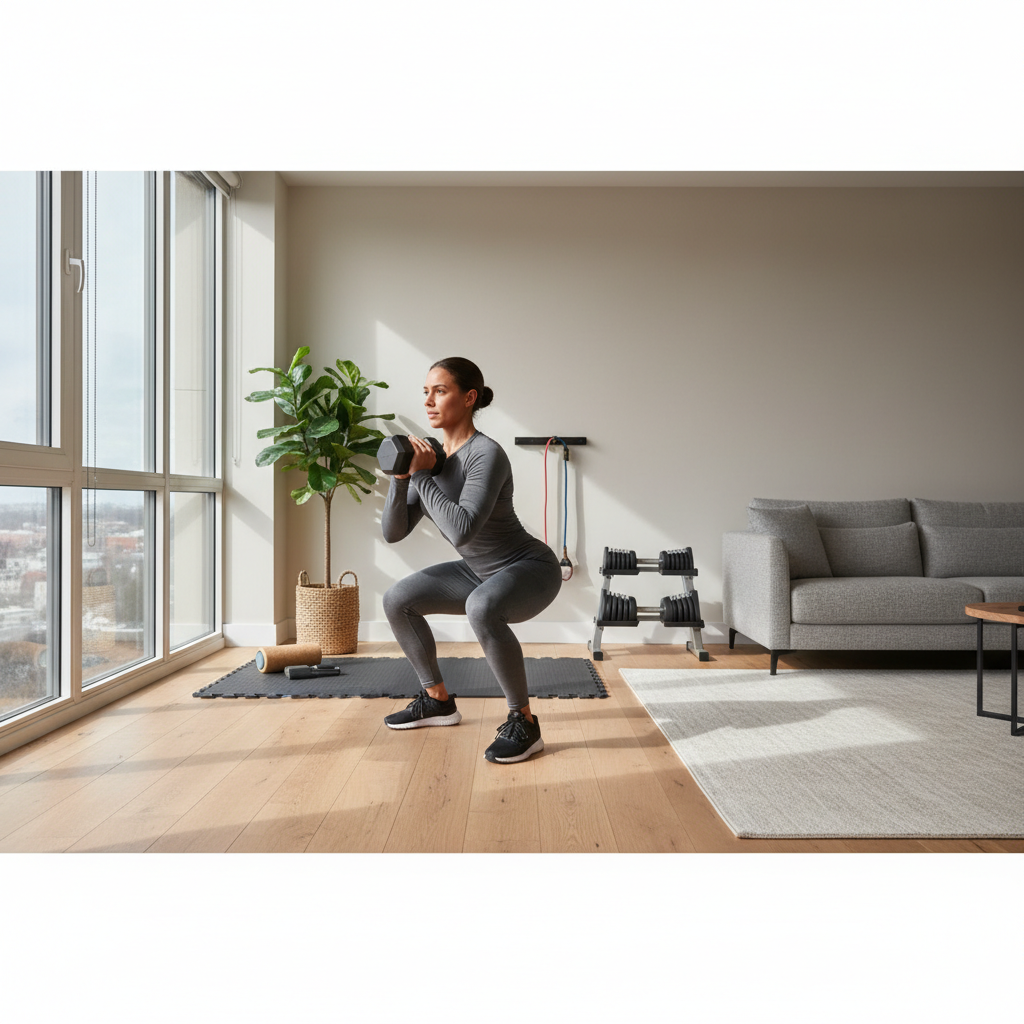
Resistance bands (loop + long bands)
Bands are not “only for beginners.” They’re useful for warm-ups, assistance on pull-ups, adding volume without wrecking joints, and travel workouts. They also pair well with home workout equipment like benches and door anchors.
- Loop bands for glutes and activation work
- Long bands for rows, presses, deadlift patterns, mobility
- Safety note: check bands for small tears, and keep anchors secure to avoid snap-back injuries
A grippy, stable exercise mat
This sounds boring until your hands slip in a plank or your knees hate lunges. Look for enough thickness for comfort but not so soft that you wobble during strength work.
Adjustable bench or sturdy step platform
A bench expands pressing, rows, split squats, step-ups, and core work. If budget is tight, a stable step platform can still open a lot of programming.
- Prioritize stability over fancy adjustments
- Check max load rating, especially for heavier lifters
A pull option: doorway bar or suspension trainer
Most home routines overdo pushing and underdo pulling, then shoulders complain. A doorway pull-up bar (if your door frame can handle it) or a suspension trainer helps balance the upper body.
According to American Council on Exercise (ACE), balanced strength training that includes major muscle groups can support overall fitness and injury risk reduction, and pulling work is a common missing piece in home routines.
Best equipment by goal (so you don’t buy the wrong category)
This is where “best” gets real. Your goal changes what you should spend on.
If your goal is muscle and strength
- Adjustable dumbbells or a small set of fixed dumbbells
- Bench for presses and supported rows
- Optional: barbell + plates if you have space, flooring, and experience
If you’re considering a barbell at home, build the safety layer too: quality collars, appropriate flooring, and a rack if you plan to squat or bench heavy. If form is uncertain, getting coaching (even a few sessions) tends to pay off.
If your goal is fat loss and conditioning
- Jump rope (if your joints and space allow)
- Adjustable kettlebell or moderate kettlebells for circuits
- Compact cardio option: foldable bike, walking pad, or rower depending on space and noise
According to Centers for Disease Control and Prevention (CDC), adults benefit from regular physical activity that includes both aerobic activity and muscle-strengthening activities, so a mixed setup often works better than cardio-only buys.
If your goal is mobility, posture, and “feel better” workouts
- Mat + foam roller or massage ball
- Light bands for controlled range-of-motion work
- Yoga blocks or a strap for positioning help
Mobility tools work when you use them often. If you hate floor work, you may do better with a short standing mobility routine plus bands, rather than buying a pile of recovery tools.
Quick comparison table: what to buy based on constraints
Use this as a practical filter when you’re stuck between options.
| Situation | Best pick | Why it works | Watch-outs |
|---|---|---|---|
| Small apartment, limited storage | Adjustable dumbbells + bands + mat | Big exercise library, tiny footprint | Choose durable adjustables; avoid big weight jumps |
| Shared walls, noise sensitive | Bands + bench + walking pad | Lower impact, less dropping risk | Walking pads vary; consider warranty and belt quality |
| Strength focus, dedicated space | Rack + barbell + plates + bench | Most scalable for heavy lifting | Flooring, ceiling height, technique, safety setup |
| Busy schedule, short sessions | Kettlebell + suspension trainer | Fast full-body workouts | Learn hinges and rows; avoid sloppy speed |
Self-check: what type of home gym buyer are you?
Answer honestly. This saves money.
- You skip workouts because setup feels annoying → prioritize “grab-and-go” tools (adjustable dumbbells, bands, mat).
- You get bored easily → choose equipment with many exercise variations (suspension trainer, adjustable bench).
- You love numbers and progression → you’ll likely use loadable systems (adjustables, plates) consistently.
- Your joints get cranky → favor controlled resistance (bands, cable-style resistance, incline walking) over high-impact.
- You travel or move often → bands + suspension trainer beat bulky gear.
Practical setup plan: build your kit in 3 tiers
Most people should not buy everything at once. Let your routine prove what deserves an upgrade.
Tier 1 (week 1): the minimum viable setup
- Mat
- Resistance bands
- One moderate weight option (adjustable dumbbells or kettlebell)
Do 3 workouts per week for two weeks. If that doesn’t happen, more gear won’t fix it, but a simpler plan might.
Tier 2 (month 1): add comfort and exercise variety
- Bench or step
- Pull option (doorway bar or suspension trainer)
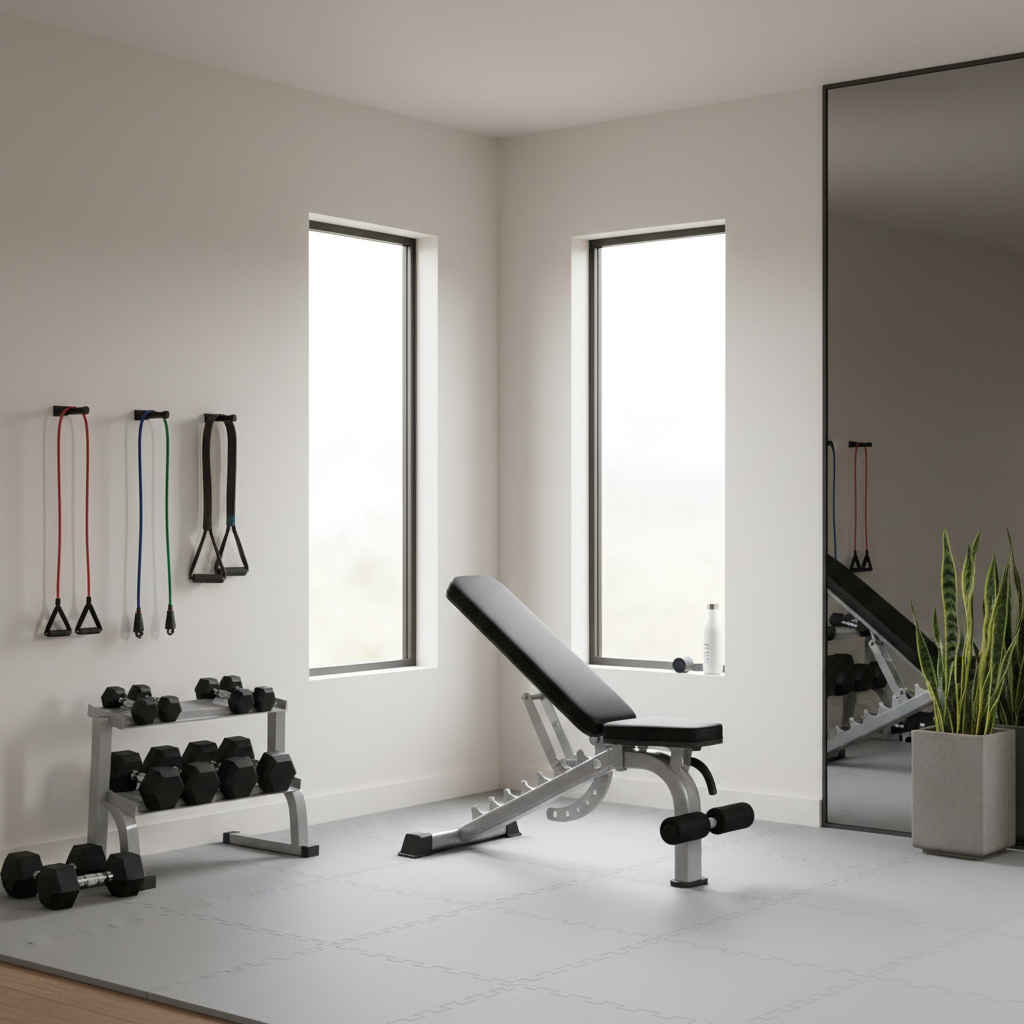
- Basic storage (basket or small rack) so equipment stops floating around the house
Tier 3 (month 2+): invest based on what you repeat
- If you repeat strength workouts: heavier load options, better bench, maybe a rack
- If you repeat cardio: a cardio machine that matches your joints and noise tolerance
- If you repeat mobility: higher-quality mat, roller, and a simple routine you can keep
Safety and buying mistakes that waste money
Some warnings sound obvious, yet they’re exactly where people get stuck.
- Buying for “future you” without a current habit. Start small, then scale.
- Ignoring load ratings on benches, doorway bars, and anchors. If you are near limits, choose sturdier options.
- Too much impact too soon. Jump rope and plyometrics can be great, but many cases call for gradual build-up, especially with knee or Achilles history.
- No plan for pulling. If you push a lot and pull little, shoulders often complain over time.
- Skipping flooring. Even a modest rubber layer can protect joints, reduce noise, and save your subfloor.
If you have pain, a prior injury, or a medical condition, it’s smart to check with a qualified healthcare professional or certified trainer before increasing intensity or load.
Conclusion: what to buy first in 2026
The best home workout equipment for 2026 still looks a lot like the best setup from any year: tools that fit your space, support steady progression, and feel easy to use on a random Tuesday.
If you want one clear move, build a compact strength base with adjustable dumbbells (or kettlebells), bands, and a solid mat, then add a bench and a pull option once you prove consistency for a few weeks.
Action step: write down your top goal and your biggest constraint (space, noise, time, or joints), then buy only the Tier 1 items that directly address both.
FAQ
What is the most versatile home workout equipment to start with?
For most homes, adjustable dumbbells plus a set of resistance bands cover a huge range of movements, and they scale as you get stronger without taking over your living space.
Is a cardio machine worth it or should I just walk outside?
If you enjoy outdoor walking and can do it consistently, you may not need a machine. A treadmill or walking pad tends to make sense when schedule, weather, or safety blocks consistency.
How much home workout equipment do I need for full-body workouts?
You can train full-body with surprisingly little: one load option (dumbbells or kettlebell), bands, and a mat. A bench and pull option add variety, but they’re not required on day one.
Are resistance bands effective for building muscle?
They can be, especially for higher-rep work and accessory training. Many people still prefer free weights for heavy loading and simple progression, so bands often work best as a companion tool.
What should I buy if I have knee pain?
It depends on the cause, so it’s wise to consult a professional. Many people do better with low-impact conditioning (incline walking, cycling) and controlled strength work, plus avoiding sudden jumping volume.
Do I need a squat rack at home?
Only if you are committed to barbell training and have the space and safety setup. Plenty of strength progress happens with dumbbells, kettlebells, split squats, hinges, and presses.
How do I keep my home gym from becoming clutter?
Choose fewer, more flexible tools and give them a “home” location. A small rack or storage bin sounds minor, but it removes friction, which is usually the real problem.
If you’re trying to choose home workout equipment without overspending, it helps to list your top 5 exercises and buy gear that makes those easier and safer, then expand only after your routine feels automatic.