
Home gym equipment doesn’t need to be complicated, but most beginners get stuck in the same spot: too many choices, too much hype, and no clear idea what actually matches their space, budget, and goals.
This guide narrows it down to a practical starter setup you can grow over time, with a few “buy once, use for years” picks and a couple of items you can skip until you know you’ll stick with training.
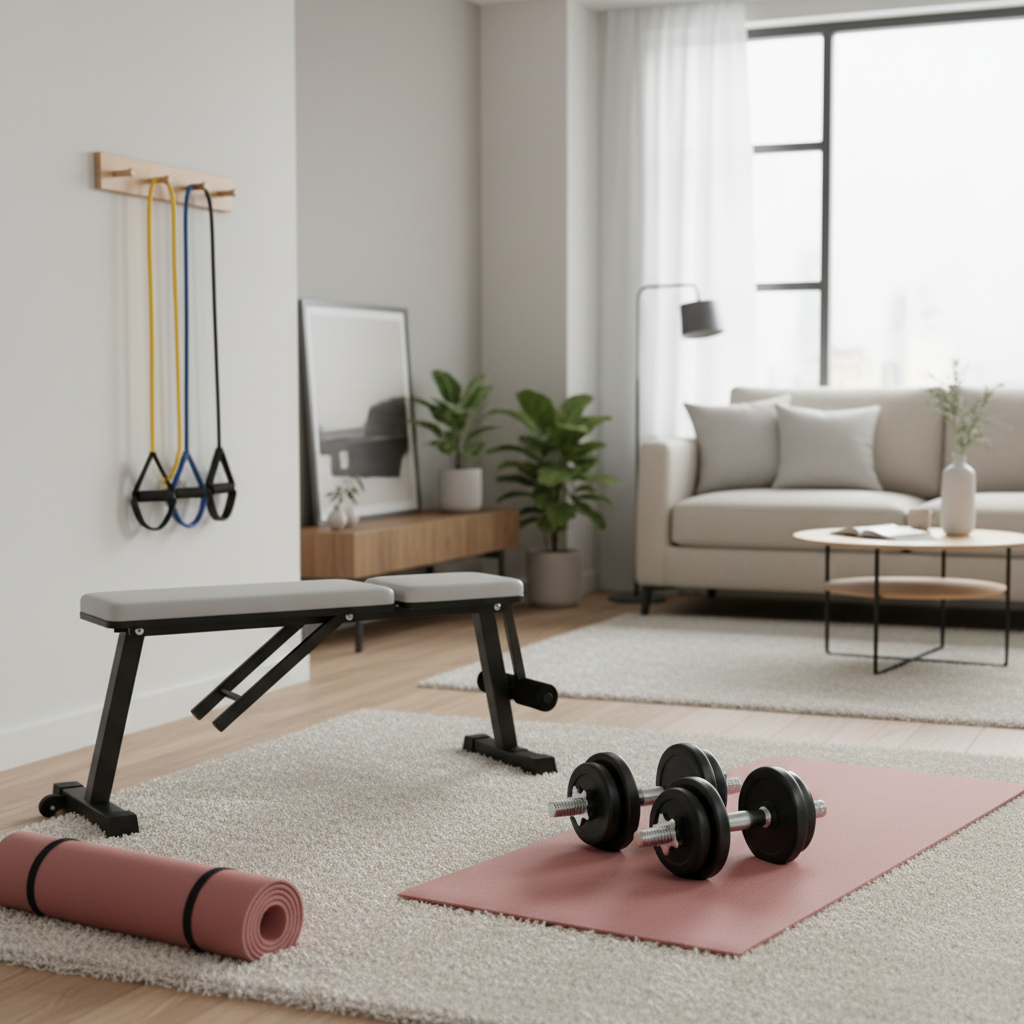
You’ll also see a simple decision checklist, a comparison table, and a “what to buy next” path, because real life changes after week two. Motivation fades, schedules get messy, and equipment that feels fun on day one can turn into a coat rack.
Start with your goal, space, and “friction” level
Before buying anything, decide what your training week will realistically look like. Not your ideal week, your real one. Beginners usually succeed when setup is fast and the routine feels obvious.
- Goal: fat loss, general strength, muscle gain, mobility, or “I just want to move more.”
- Space: a corner of a bedroom, a garage, or a shared living room.
- Noise tolerance: apartment floors and downstairs neighbors change what makes sense.
- Time: 20 minutes three times a week beats 90 minutes once every two weeks.
Key point: if you’re unsure, default to versatile items you can use for full-body training, not single-purpose machines.
The beginner essentials: a small list that covers most workouts
If you want a starter kit that supports strength, conditioning, and basic mobility, these are the pieces that usually deliver the best value per square foot.
1) Adjustable dumbbells or a light dumbbell set
Dumbbells are the workhorse for beginners because you can train push, pull, squat, hinge, carry, and core with the same tool. Adjustable sets cost more up front, but they save space and reduce clutter.
- Look for comfortable handles, secure locking, and weight jumps that don’t feel awkward.
- If you live upstairs, consider a mat or rubber flooring to reduce impact noise.
2) Resistance bands (loop + long band)
Bands are cheap, travel-friendly, and great for warmups, assisted pull-ups, glute work, and rehab-style movements. According to American Council on Exercise (ACE), resistance bands can be used to build strength when applied progressively and with proper technique.
- Get at least one long band with handles and one set of mini loop bands.
- Check for tearing or dry cracks, replace when they look worn.
3) A stable exercise mat
A mat makes floor work more comfortable and reduces slipping. It also nudges you to actually do mobility and core work, which many beginners skip until something hurts.
- Thicker isn’t always better, too much cushion can feel unstable for lunges.
- Wipe it down regularly, especially if you do barefoot work.
4) A jump rope (optional, but high payoff)
If your joints tolerate it and your neighbors do too, a jump rope is one of the simplest ways to add conditioning without buying a big cardio machine.
- Begin with short intervals and plenty of rest.
- If you have knee/ankle issues, choose low-impact options instead and consider asking a clinician.
5) A doorframe pull-up bar or suspension trainer (choose based on space)
Pulling strength is where home setups often fall short. A pull-up bar or suspension trainer helps balance all the pushing work beginners naturally gravitate toward.
- Doorframe bars vary by trim and wall construction, follow manufacturer guidance carefully.
- Suspension trainers work well for rows, assisted squats, and core, and they pack away fast.
Quick comparison table: what each item really does for you
If you’re trying to prioritize spending, this table is the shortest way to see what’s versatile and what’s more “nice to have.”
| Equipment | Main benefit | Space needed | Beginner friendliness | Common mistake |
|---|---|---|---|---|
| Adjustable dumbbells | Full-body strength and progression | Low | High | Buying too heavy, skipping form basics |
| Resistance bands | Warmups, accessories, joint-friendly load | Very low | High | Using poor anchors or letting bands snap back |
| Exercise mat | Comfort, grip, mobility consistency | Low | High | Too thick for balance work |
| Jump rope | Cardio in minimal time | Medium | Medium | Too much volume too soon |
| Pull-up bar / suspension trainer | Back strength, posture support | Low | Medium | Unsafe installation or rushing pull-ups |
A simple self-check: what should you buy first?
If you want a fast answer, use this list. You don’t need to “win” every item, you just need a setup that removes excuses.
- If you have very limited space, start with bands + mat + adjustable dumbbells.
- If you get bored easily, add a jump rope or suspension trainer for variety.
- If your main goal is strength and muscle, prioritize dumbbells and a way to do rows.
- If you have joint concerns, choose lower-impact conditioning and consider professional guidance.
- If you hate setup time, avoid complex racks at first, keep everything within arm’s reach.
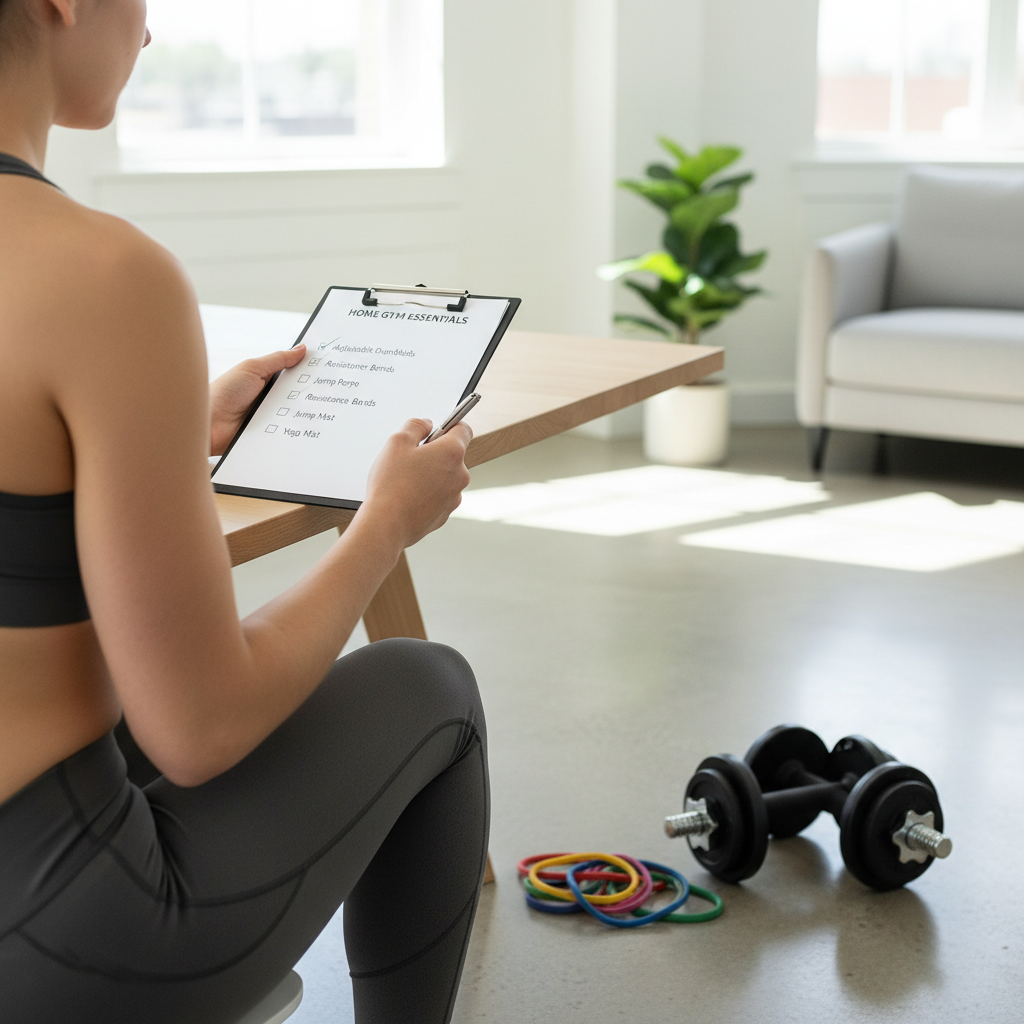
One more honest filter: are you training at home because you love it, or because you want to remove barriers to consistency? If it’s the second one, prioritize equipment that makes workouts faster to start.
How to build a beginner plan around your equipment (no fancy programming)
Good home gym equipment only matters if you use it. A basic three-day routine can cover most beginner needs without turning your week into a project.
A simple 3-day full-body template
- Lower body: goblet squat or split squat (dumbbell)
- Hinge: Romanian deadlift (dumbbells) or band pull-through
- Push: dumbbell floor press or push-ups
- Pull: one-arm row (dumbbell) or suspension row
- Carry/core: farmer carry, dead bug, or plank
Pick 4–5 movements, do 2–4 sets each, and stop a couple reps before form breaks down. If you feel pain rather than normal effort, adjust the movement and consider asking a qualified professional.
What to add next (only after 4–6 consistent weeks)
Most beginner purchases go wrong here: buying “the next cool thing” before you’ve learned what you actually repeat every week. After a month or so of consistent training, upgrades make more sense.
- Adjustable bench: expands presses, rows, step-ups, and incline work.
- Kettlebell: great for swings, carries, and simple conditioning blocks.
- Small cardio machine: walking pad, bike, or rower if you truly prefer indoor cardio.
- Rubber flooring: protects joints and floors, lowers noise, makes the space feel “real.”
According to Centers for Disease Control and Prevention (CDC), adults benefit from muscle-strengthening activities at least two days per week, so adding tools that make strength training easier to repeat often has more payoff than chasing novelty.
Safety and setup details beginners often miss
Even basic gear can cause problems if setup is sloppy or progression moves too fast. These are the issues that show up again and again.
- Unstable anchors: bands and suspension trainers need reliable attachment points, avoid improvised setups.
- Too much load too soon: soreness feels like progress until it stops you from training for a week.
- Grip and wrist irritation: adjust handle thickness, use neutral grips, and reduce volume temporarily.
- Skipping warmups: 3–5 minutes of easy movement plus a couple lighter sets usually helps.
- Ignoring form cues: if you can’t control the lowering phase, the weight is probably too heavy.
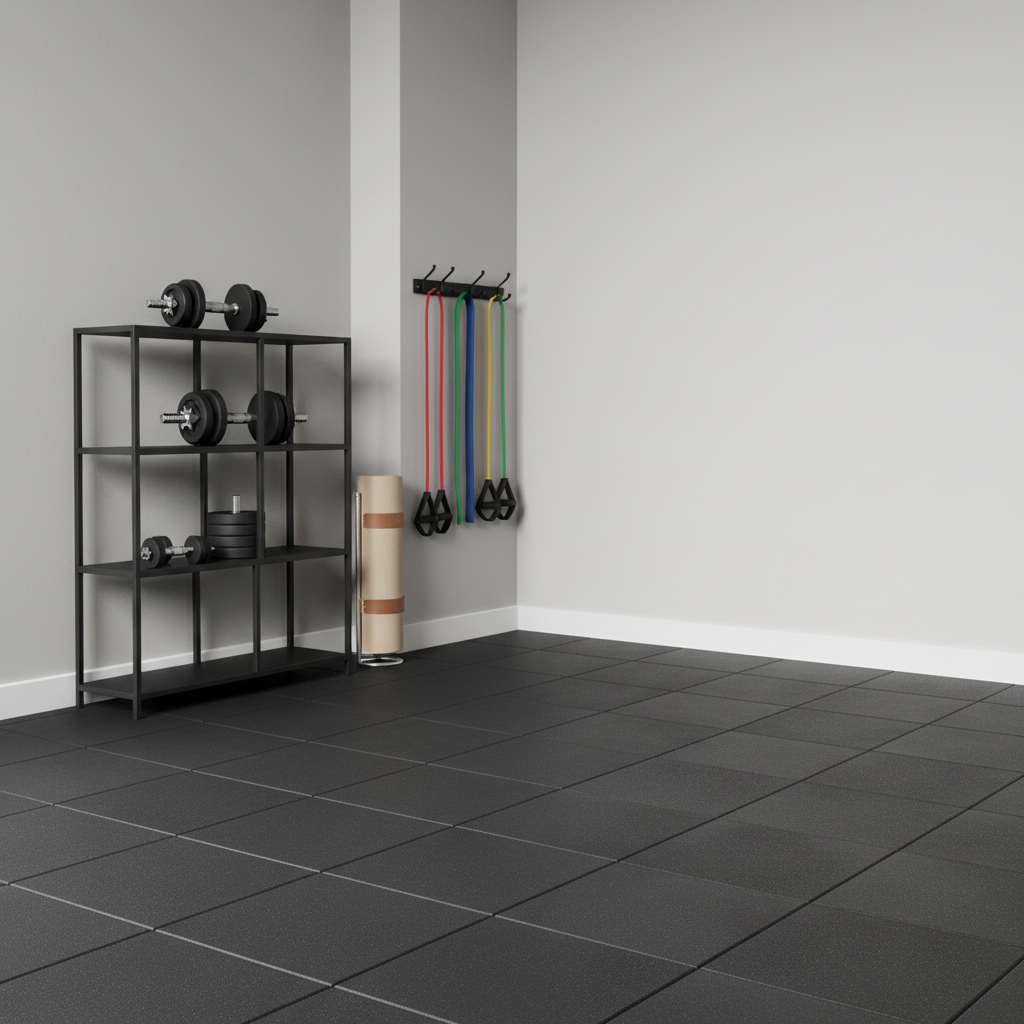
If you’re training in a small space, treat your workout zone like a “no trip hazards” area. It sounds obvious, but it’s usually the jump rope, the band, or the loose plate that causes the dumb injury.
Conclusion: the best beginner setup is the one you’ll actually use
You don’t need a perfect shopping list to get started, you need a small set of home gym equipment that supports full-body training and feels easy to pull out on a busy day. For many beginners, adjustable dumbbells, bands, and a mat cover most of the work, then you add a bench or pulling option once consistency is real.
If you want one action to take today, write down three 20–30 minute workout windows for next week, then buy only the gear that makes those sessions possible with minimal setup.
FAQ
What is the most essential home gym equipment for beginners?
Usually a pair of dumbbells (or adjustable dumbbells), resistance bands, and a mat. That combo supports full-body training without needing much space, and it’s easier to progress than bodyweight alone for many people.
How much should I spend on home gym equipment to start?
Enough to cover the basics without stressing your budget. Many beginners do well starting small, then upgrading after a few consistent weeks, because your preferences become clearer once you’re actually training.
Are resistance bands enough for building muscle at home?
They can be, especially for beginners, as long as you increase difficulty over time and keep good form. That said, some people find dumbbells easier for consistent progression on big movements.
Do I need a bench for a beginner home gym?
Not on day one. A bench becomes useful once you know you’ll stick with training, because it expands exercise options, but you can do plenty with floor presses, rows, and split squats first.
What home gym equipment is best for small apartments?
Adjustable dumbbells, bands, a mat, and a suspension trainer tend to work well because they store easily. If noise is an issue, skip high-impact cardio and focus on strength circuits and low-impact conditioning.
Is a pull-up bar safe in a rental?
It depends on the doorframe and the specific product. Follow manufacturer instructions closely and avoid setups that feel unstable, when in doubt, a suspension trainer anchored to a sturdy door can be a safer option.
How do I know if I’m progressing with a home setup?
If reps increase, rest time decreases, form improves, or you can use slightly heavier resistance while staying controlled, you’re moving forward. Progress isn’t always adding weight every week, especially early on.
Want a simpler path from “buying stuff” to actually training?
If you’re building a starter setup and want it to feel less random, it may help to map your equipment to a short weekly plan before you purchase anything, that way each item has a job and your home gym equipment grows with your routine instead of your impulse buys.