
Body strength training works best when you stop chasing random workouts and start repeating a simple, full-body structure long enough to get measurably stronger.
If you feel like you “work hard” but your numbers never move, it’s usually not effort, it’s the plan: too many exercises, not enough progression, and no clear idea what a good week should look like.
This guide gives you a practical full-body strength routine you can run for 8–12 weeks, with options for gym or home, a progression method that stays realistic, and a few guardrails so you don’t get sidelined by nagging aches.
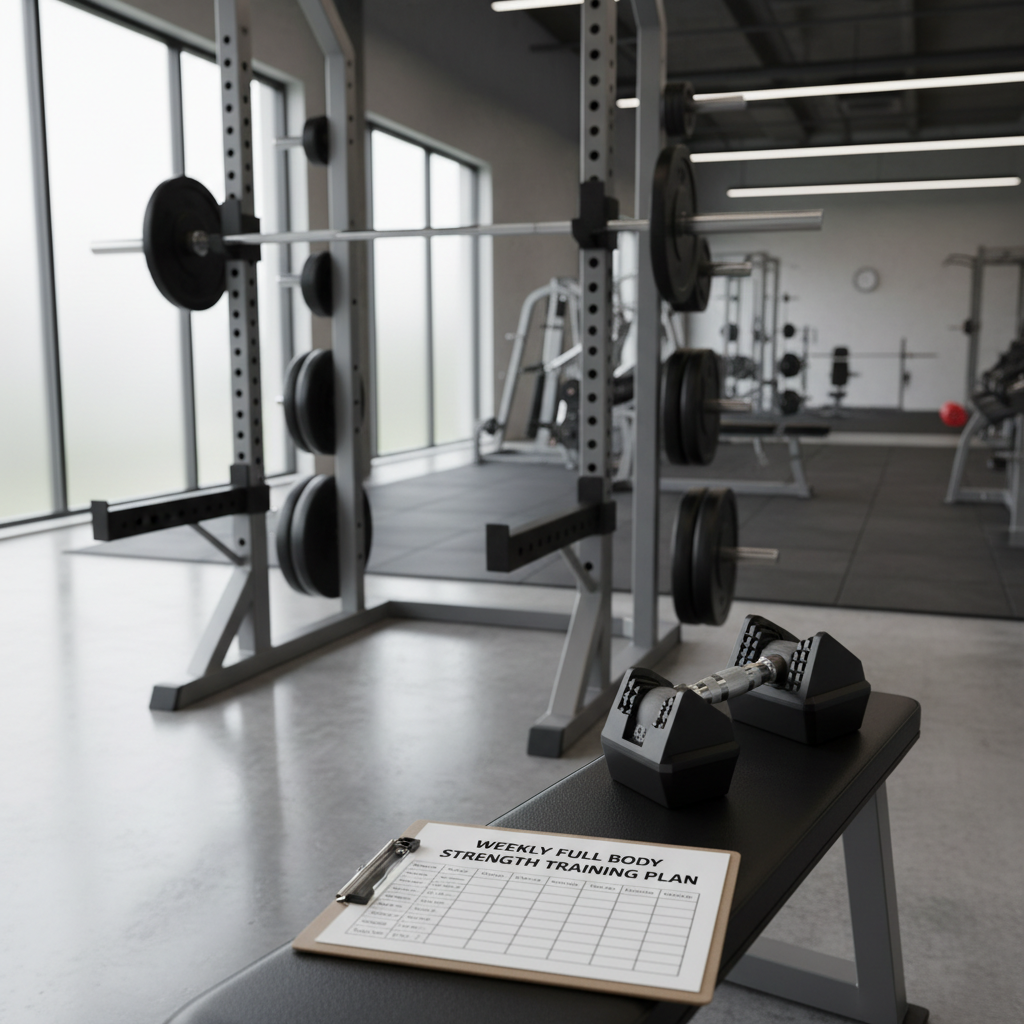
What a “full-body strength plan” really means
Full-body training is less about doing “everything” in one session and more about hitting the big movement patterns multiple times per week with enough recovery to come back stronger.
A solid week usually includes:
- Squat pattern (squat, front squat, goblet squat)
- Hinge pattern (deadlift, Romanian deadlift, hip thrust)
- Push (bench, push-up, overhead press)
- Pull (row, pull-up/lat pulldown)
- Carry or core (farmer carry, plank variations)
According to the Centers for Disease Control and Prevention (CDC), adults should do muscle-strengthening activities on 2 or more days per week, targeting major muscle groups. A full-body plan makes that guideline easier to execute because you repeat the essentials instead of “splitting” them across too many days.
Why most people stall: the common plan problems
Stalls happen for boring reasons, which is good news because boring fixes work.
- No progression rule: you lift similar weights for months because nothing tells you when to add load or reps.
- Too much variety: new exercises every week means your technique never settles, so strength can’t stack.
- All intensity, no balance: grinding heavy sets every session tends to flare elbows, shoulders, low back, or just fatigue.
- Weak “middle” work: skipping rows, single-leg work, and carries often shows up later as poor control and plateaued lifts.
Body strength training usually improves fastest when you keep the main lifts consistent and rotate only the accessories.

Quick self-check: is this plan a fit for you?
This full-body setup tends to work well if you match most of these:
- You can train 3 days per week most weeks (45–70 minutes per session).
- Your priority is getting stronger, not maximizing sweat or calorie burn.
- You want a plan with clear numbers (sets, reps, progression).
- You’re okay repeating the same main lifts for at least 6–8 weeks.
It may need adjustment if you have persistent pain, recent surgery, pregnancy/postpartum considerations, or medical conditions that affect exercise tolerance. In those cases, it’s smart to consult a qualified clinician or strength professional before you push intensity.
The 3-day full-body strength training plan (8–12 weeks)
Run this on non-consecutive days (for example Mon/Wed/Fri). Start slightly easier than you think you “should,” then build. Most people overshoot week one, then miss workouts week three.
How hard should sets feel?
Use RPE (rate of perceived exertion). Aim for RPE 7–8 on main lifts, meaning you finish a set with about 2–3 reps “in the tank.” It keeps technique clean and still drives progress.
Plan overview (save this table)
| Day | Main Lower | Main Upper | Secondary + Accessories |
|---|---|---|---|
| Workout A | Back Squat | Bench Press | Row, Split Squat, Core |
| Workout B | Deadlift (or RDL) | Overhead Press | Pull-up/Lat Pulldown, Hip Thrust, Carry |
| Workout C | Front Squat (or Goblet) | Incline DB Press (or Push-ups) | Row variation, Hamstring curl, Core |
Workout A (strength emphasis)
- Back Squat: 4 sets x 4–6 reps @ RPE 7–8
- Bench Press: 4 sets x 4–6 reps @ RPE 7–8
- Row (cable, DB, or barbell): 3 sets x 8–12 reps
- Split Squat: 2–3 sets x 8–10 reps each side
- Core (dead bug or plank): 2–3 sets, controlled
Workout B (hinge + overhead)
- Deadlift: 3 sets x 3–5 reps @ RPE 7–8
Or Romanian Deadlift: 4 sets x 5–8 reps if conventional pulls beat you up - Overhead Press: 4 sets x 4–6 reps
- Pull-up or Lat Pulldown: 3 sets x 6–10 reps
- Hip Thrust or Glute Bridge: 3 sets x 8–12 reps
- Farmer Carry: 4 trips of 20–40 yards (or 30–45 seconds)
Workout C (volume + technique)
- Front Squat: 4 sets x 5–8 reps @ RPE 6–8
Swap to Goblet Squat if front rack position is limiting - Incline Dumbbell Press: 3–4 sets x 6–10 reps
- Row variation (chest-supported or single-arm): 3 sets x 10–12 reps
- Hamstring curl (machine, band, or slider): 2–3 sets x 10–15 reps
- Anti-rotation core (Pallof press): 2–3 sets x 8–12 each side
Progression that actually works (without maxing out)
Body strength training improves when you progress one variable at a time and keep your form honest.
Use “double progression” for most lifts
- Pick a rep range (example: 4–6 reps).
- Use the same weight until you can hit the top end of the range for all sets.
- Then add 2.5–10 lb next time, depending on the lift and your equipment.
When to deload (pull back)
If bar speed slows a lot, soreness hangs around for days, sleep and mood dip, or your reps drop two sessions in a row, take a deload week: cut working sets in half and keep weights moderate. It’s not “wasted,” it’s maintenance that lets you push again.
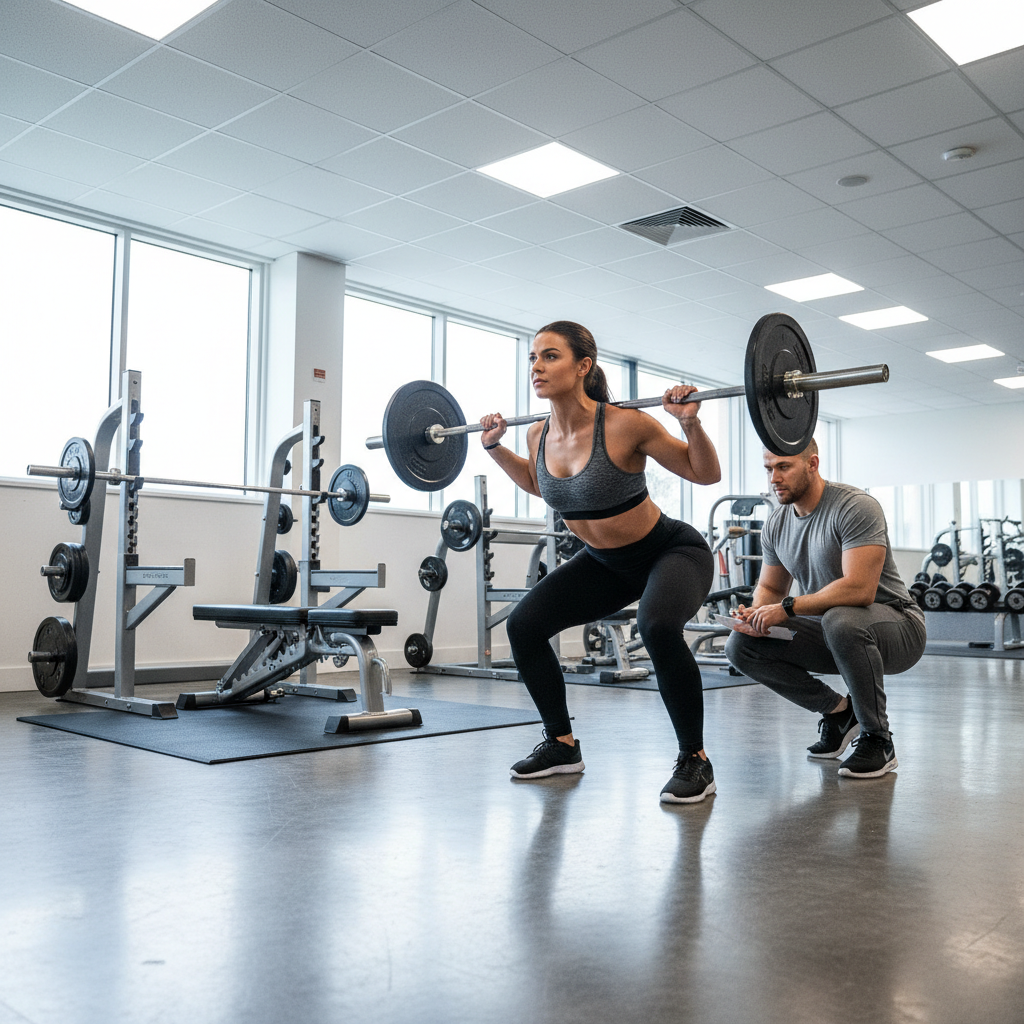
Practical details: warm-up, rest times, and weekly schedule
This part looks basic, but it’s where consistency lives.
- Warm-up: 5–8 minutes easy cardio, then 2–4 ramp-up sets for the first main lift (light to working weight).
- Rest times: 2–3 minutes for main lifts, 60–90 seconds for accessories.
- Weekly layout: lift Mon/Wed/Fri or Tue/Thu/Sat, keep at least one rest day between.
- Cardio (optional): 1–2 easy sessions on off days; keep it light enough that legs recover.
According to the American College of Sports Medicine (ACSM), resistance training is typically performed 2–3 days per week for most adults, with recovery between sessions. A three-day full-body routine fits that reality well.
Common mistakes (and what to do instead)
- Turning every set into a test: save true grinders for occasional milestones, not every Monday.
- Ignoring small aches: swap variations early, like RDL instead of deadlift, neutral-grip pressing instead of straight bar.
- “Accessory chaos”: pick 2–4 accessories, keep them for a month, then rotate if you’re bored or stuck.
- Skipping pulling work: rows and pulldowns often keep shoulders happier as pressing loads rise.
If you want one simple rule, it’s this: your technique should look the same at rep 5 as it did at rep 1. When it doesn’t, the set is probably too heavy for the goal that day.
When to get professional help
Plenty of people can run this plan solo, but a few scenarios justify extra support.
- Pain that feels sharp, radiates, causes numbness/tingling, or changes your gait
- Repeated flare-ups that return every time you add load
- You’re not sure how to brace, hinge, or squat without discomfort
- You have medical considerations where exercise dose matters
A qualified strength coach can clean up technique fast, and a physical therapist can help when symptoms suggest an injury pattern. If in doubt, err on the cautious side.
Key takeaways and how to start this week
This plan works because it’s repeatable: a few big patterns, enough weekly practice, and a progression rule you can follow even on busy weeks.
- Pick 3 days, keep them consistent for 8–12 weeks.
- Start conservative, aim for clean reps at RPE 7–8.
- Track one thing: weight and reps on the main lifts, so progress is obvious.
If you want momentum quickly, do Workout A and B this week, then add Workout C next week once soreness and scheduling feel predictable.
FAQ
- Is full-body better than a split for strength?
Many people build strength well on either, but full-body training often wins on consistency because each lift pattern shows up more than once per week without needing 5–6 gym days. - How long should I run this plan before changing it?
Usually 8–12 weeks is a good window. If loads and reps keep moving and recovery feels decent, you can keep the structure and only rotate small accessories. - What if I can only train twice per week?
Keep two full-body sessions and rotate the “missing” workout each week, for example A/B one week, C/A next week. Progress may be slower, but it stays steady. - Can I do body strength training at home with limited equipment?
Yes, but exercise selection matters. Use goblet squats, RDLs, push-ups, one-arm rows, and loaded carries with dumbbells or kettlebells, then progress reps and load gradually. - Should I train to failure on sets?
Most strength-focused work goes better when you stop a couple reps short of failure, especially on squats, presses, and hinges. Failure has a place, but it can complicate recovery. - How do I choose starting weights?
Pick a load you can lift for the target reps with clean form and 2–3 reps left in the tank. If your last rep turns into a grind, back off and build from there. - What’s the safest way to add weight?
Small jumps and patience. Add 2.5–5 lb for upper-body lifts when possible, and 5–10 lb for lower-body lifts, but only after you earn the top end of the rep range.
If you’re already doing body strength training but your progress feels messy, it may help to plug your current exercises into this exact structure for a month and track only the main lifts, you’ll quickly see what’s working and what needs adjustment without reinventing your routine.